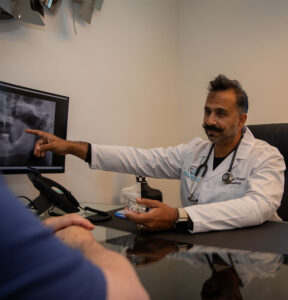
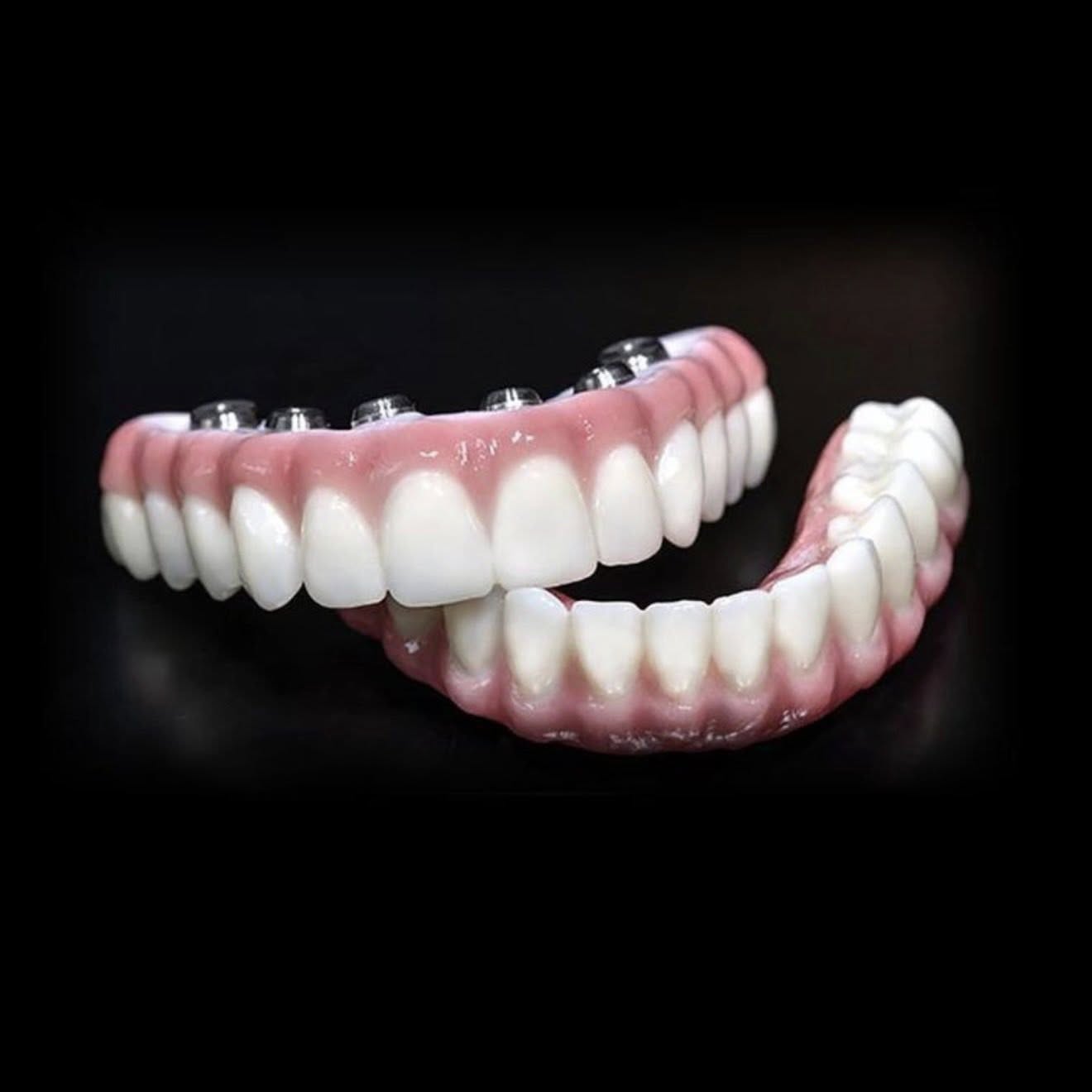
All-on-4® dental implant X-rays can remain an important part of your dental care even after your natural teeth have been replaced. Patients are sometimes surprised by this. If artificial teeth cannot get cavities, what exactly is the dentist looking for on an X-ray?
The answer is that All-on-4® treatment involves much more than the teeth you see when you smile.
Underneath your restoration are dental implants surrounded by living jawbone. That bone plays a major role in supporting your implants, and some changes cannot be seen simply by looking inside your mouth.
Dental imaging gives your dentist another way to monitor what is happening beneath the surface.
Why Would You Need X-Rays if You Don’t Have Natural Teeth?
Traditional dental X-rays are often associated with finding cavities.
That is only one of their uses.
X-rays can also provide information about bone, tooth roots, dental implants, and other structures that are hidden beneath the gums.
When you have All-on-4®, your dentist is no longer looking for decay in the artificial teeth.
Instead, the focus changes.
Your dental team may use imaging to evaluate the implants, surrounding bone, and other areas relevant to your oral health.
Replacing natural teeth does not make everything underneath the gums invisible to dental problems.
It simply changes what needs to be monitored.
All-on-4® Dental Implant X-Rays Can Help Monitor Bone
Bone is extremely important to dental implants.
The implants are positioned within your jawbone, where they provide support for your full arch restoration.
After implant placement, healing takes place around them through a process known as osseointegration.
Long after the initial healing period, maintaining healthy supporting bone remains important.
Your dentist cannot see all of that bone during an ordinary visual examination.
Imaging may provide information that complements what they can see and feel clinically.
This is one reason All-on-4® dental implant X-rays may continue to be recommended even when everything feels perfectly normal.
Can X-Rays Show if an Implant Is Failing?
Dental imaging can provide useful information about the bone surrounding an implant, but your dentist does not diagnose implant problems based on one X-ray alone.
They consider the entire clinical picture.
Is the implant stable?
Are the surrounding tissues healthy?
Has the patient noticed pain, swelling, bleeding, or movement?
How does the current image compare with previous imaging?
Are there changes in the supporting bone?
Your dentist combines these findings to understand what is happening.
An X-ray is a tool, not a crystal ball.
It provides information that helps your dental team make better clinical decisions.
Why Previous X-Rays Matter
One of the advantages of having imaging taken at appropriate intervals is comparison.
A single image shows your dentist what something looks like at one point in time.
Multiple images taken when clinically appropriate can help show whether something has changed.
That difference matters.
Your dentist may want to compare the bone around an implant with earlier records to determine whether it appears stable.
This is another reason staying consistent with your dental care is useful.
Your records create a history.
Instead of asking only, “What does this look like today?” your dental team may be able to ask, “How does this compare with what we saw previously?”
Do You Need an X-Ray at Every Appointment?
Not necessarily.
The appropriate timing for dental imaging depends on the individual patient and clinical situation.
Your dentist considers your oral health, implant history, symptoms, previous findings, treatment stage, and other risk factors when deciding what imaging is appropriate.
Someone experiencing a new problem may need imaging at a different time than a patient whose implants have remained stable.
The goal is not to take X-rays simply because you walked through the door.
They should have a clinical purpose.
If you are curious about why an image is being recommended, ask.
Your dental team should be able to explain what they want to evaluate.
What About 3D Dental Imaging?
Not all dental imaging is the same.
In implant dentistry, three-dimensional imaging may sometimes be used to provide more detailed information about the jaw and surrounding anatomy.
You may hear the term CBCT, which stands for cone beam computed tomography.
This type of imaging is especially useful in certain stages of implant planning because it provides three-dimensional information that traditional two-dimensional dental X-rays cannot.
However, that does not mean every All-on-4® maintenance appointment requires a new 3D scan.
Your dentist determines which type of imaging is appropriate based on what they need to evaluate.
Can You Have Dental X-Rays With Titanium Implants?
Yes. Having dental implants does not prevent you from receiving dental X-rays.
In fact, imaging is commonly used as part of dental implant planning and follow-up care.
Your dental team knows that the implants are present and interprets the images accordingly.
If you received your implants somewhere else and are visiting a new dental office, tell them about your treatment and provide previous dental records when available.
Knowing the history of your implants can help the new dental team understand what they are seeing.
What if Everything Feels Fine?
This is where preventive care becomes important.
Patients often assume they only need dental treatment when something hurts.
Dental implants do not always work that way.
Changes in the tissues or bone surrounding an implant may not immediately produce severe pain.
Your All-on-4® restoration can also continue feeling functional while something underneath deserves closer attention.
That does not mean you should constantly worry that there is a hidden problem.
It means feeling good is not a replacement for professional maintenance.
Ideally, your appointments are uneventful.
Your dentist evaluates your implants and restoration, everything looks stable, and you continue with your normal routine.
That is a successful maintenance visit.
Do X-Rays Replace a Regular Examination?
No.
Imaging is only one part of evaluating All-on-4® dental implants.
Your dental team still needs to examine your mouth.
They may look at your gums, check the restoration, evaluate your bite, look for plaque buildup, and ask whether you have noticed any changes.
Your hygienist may also identify areas underneath the restoration that are difficult for you to clean.
An X-ray cannot tell your dentist everything about how your restoration feels when you chew.
It cannot replace a conversation about symptoms.
And it does not replace professional cleaning.
The strongest maintenance approach combines the information from your examination, your history, and imaging when appropriate.
What Symptoms Might Lead to Additional Imaging?
If something changes, your dentist may decide that imaging would help determine what is happening.
For example, tell your dental team if you notice new pain, swelling, persistent bleeding, drainage, movement, clicking, or a significant change in your bite.
These symptoms do not automatically mean you have an implant problem.
A restoration contains multiple components, and there can be several explanations for a change.
Your dentist may use an examination, imaging, or other diagnostic steps to determine the cause.
Avoid diagnosing yourself based on one symptom.
Let the dental team gather the information they need.
Are Dental X-Rays Safe?
Dental professionals consider both the benefits of imaging and radiation exposure when determining when X-rays are appropriate.
Modern dental imaging is designed to obtain useful diagnostic information while managing exposure.
The type and frequency of imaging should be based on your individual needs rather than an identical schedule for every patient.
If you have questions about radiation exposure, talk with your dental team.
They can explain why a particular image is being recommended and what information they expect it to provide.
Your Dental History Still Matters After All-on-4®
Receiving All-on-4® can feel like a completely fresh start, especially for someone who spent years dealing with failing teeth.
In many ways, it is.
But your dental history does not disappear.
If you previously had significant periodontal disease, tell your dental team.
If you smoke, they need to know.
If you grind your teeth, mention it.
Changes in your health and medications matter too.
All of these factors can help your dental team decide how your implants should be monitored over time.
Long-Term Implant Care Is More Than Cleaning
Daily brushing and cleaning underneath your restoration are essential, but maintaining All-on-4® is bigger than keeping the visible teeth clean.
Your dental team is also thinking about the foundation.
That includes the gums.
The supporting bone.
The implants.
The bite.
The components holding the restoration together.
And the restoration itself.
Imaging can provide another piece of that long-term picture.
This is why dental appointments do not suddenly become unnecessary once natural teeth are replaced.
The purpose of those appointments changes.
Keep Your Records if You Move
All-on-4® is a long-term treatment, and life can change.
You may eventually move to another city or state.
If you begin seeing a different dental provider, having access to previous treatment records and imaging can be valuable.
Ask how your records can be transferred.
Information about your implant system and restoration may also be useful for the dentist taking over your long-term care.
The more history they have, the easier it may be to understand what was done and compare future findings with earlier records.
Do All-on-4® Dental Implants Need X-Rays After Treatment?
All-on-4® dental implant X-rays may continue to play an important role after treatment because your dentist is monitoring much more than artificial teeth. The dental implants and supporting jawbone are located beneath the gums, where a visual examination alone cannot provide every piece of information.
How often imaging is appropriate depends on your individual situation. Your dentist should determine the type and timing based on your treatment history, symptoms, examination, and risk factors.
At Full Arch Dental Implant Center in Lake Havasu City, long-term care means paying attention to both the smile patients see and the foundation underneath it. Regular examinations, proper home care, professional maintenance, and imaging when clinically appropriate can work together to help monitor your All-on-4® treatment for years to come.
Why Do Some Patients Need More Than Four Dental Implants?
Why Do Some Patients Need More Than Four Dental Implants? If you have been researching full arch dental implants, you