Can You Get All-on-4® Dental Implants if You Have an Autoimmune Disease?
An All-on-4® autoimmune disease evaluation involves more than looking at your teeth and jawbone. If you have rheumatoid arthritis, lupus, Sjögren’s disease, or another autoimmune condition, you may wonder whether your diagnosis could prevent you from receiving dental implants. The encouraging news is that having an autoimmune disease does not automatically disqualify you from treatment.
However, your medical history deserves careful consideration before undergoing oral surgery. Certain autoimmune conditions and the medications used to manage them can influence inflammation, immune function, bone health, and the body’s ability to recover.
For someone who has spent years struggling with failing teeth or uncomfortable dentures, the possibility of another obstacle can feel discouraging. Fortunately, dental implant candidacy is not determined by a diagnosis alone. Your current health, medications, oral condition, and individual treatment needs all contribute to the decision.
Understanding these factors can help you approach your consultation with realistic expectations and the right questions.
What Is an Autoimmune Disease?
An autoimmune disease develops when the immune system mistakenly attacks healthy tissues within the body. Normally, the immune system helps protect us against infections and other threats. With an autoimmune disorder, that response becomes misdirected.
There are many different autoimmune conditions, and their effects vary considerably.
Rheumatoid arthritis primarily affects the joints but can also involve other parts of the body. Lupus may affect the skin, joints, kidneys, and other organs. Sjögren’s disease commonly affects the glands responsible for producing saliva and tears.
Some people experience relatively mild symptoms that remain well controlled with treatment. Others deal with recurring flare-ups, significant inflammation, or complications involving multiple areas of the body.
Because these conditions differ so much, there is no universal answer that applies to every patient considering dental implants.
All-on-4® Autoimmune Disease Considerations
When evaluating someone for All-on-4® treatment, the dental team must consider how the patient’s overall health could influence surgery and recovery.
Dental implants are placed within the jawbone, where they must develop a stable biological connection with the surrounding bone. This process, called osseointegration, is essential to long-term implant stability.
The surrounding gum tissue must also heal following surgery.
Certain autoimmune conditions can influence inflammation and tissue health, while some medications used to control these diseases may affect immune responses.
This does not mean implant healing will automatically be unsuccessful.
Instead, it means your dentist needs an accurate understanding of your medical circumstances before recommending treatment.
An All-on-4® autoimmune disease assessment may include reviewing your diagnosis, current symptoms, medication history, bone health, and whether your condition is being managed by a specialist.
Why Your Current Health Matters More Than the Diagnosis Alone
Two people with the same autoimmune condition may have very different treatment considerations.
For example, one person with rheumatoid arthritis may have stable symptoms and a consistent medication routine. Another may be experiencing a significant flare-up or managing additional health complications.
Although they share a diagnosis, their current medical circumstances are not identical.
Your dental team needs to understand how your condition affects you personally.
This includes discussing whether your symptoms are controlled, whether your medications have recently changed, and whether there are any medical concerns that could influence elective surgery.
A complete medical history allows your providers to evaluate your situation rather than making assumptions based on the name of your condition.
Can You Get All-on-4® if You Have Rheumatoid Arthritis?
Rheumatoid arthritis does not automatically prevent someone from receiving dental implants.
However, the disease and its treatments can create additional considerations.
Rheumatoid arthritis involves chronic inflammation and is often managed with medications that influence immune system activity.
Your dentist may want to understand how well your condition is controlled and whether any medications or additional health concerns could affect your recovery.
There is also a practical consideration that patients sometimes overlook.
If arthritis affects your hands or fingers, certain oral hygiene techniques may become difficult. Cleaning around a full arch implant restoration requires consistent attention, and your dental team may recommend specialized tools to help you maintain the area.
A successful treatment plan should consider not only whether implants can be placed, but also how comfortably you can care for them afterward.
What About Lupus and Dental Implants?
Lupus is another condition that requires an individualized approach.
Because lupus can affect different organs and tissues, its impact on dental treatment varies from patient to patient.
Someone with mild, well-managed symptoms may have different considerations from someone experiencing significant systemic complications.
Medications used to manage lupus may also be relevant when planning oral surgery.
If you have lupus and are considering All-on-4®, your dental team may recommend communicating with the physician managing your condition.
This helps ensure that treatment decisions account for your current health rather than relying on general assumptions about the disease.
How Sjögren’s Disease Can Affect Your Oral Health
Sjögren’s disease deserves particular attention because it commonly affects saliva production.
Saliva plays an important role in keeping the mouth comfortable, helping with swallowing, and protecting natural teeth.
When saliva production decreases, patients may experience persistent dry mouth, irritation, difficulty eating certain foods, and an increased risk of tooth decay.
For some individuals, these complications contribute to the deterioration of their natural teeth over time.
Replacing failing teeth with All-on-4® may address certain dental problems, but it does not cure Sjögren’s disease or restore normal saliva production.
Dry mouth may remain an ongoing concern after treatment.
Your dental team should consider how this condition could influence comfort, oral hygiene, and the long-term maintenance of your restoration.
Can Autoimmune Medications Affect Dental Implant Surgery?
Medication history is one of the most important parts of an All-on-4® autoimmune disease consultation.
Some autoimmune conditions are managed using corticosteroids, disease-modifying medications, biologic therapies, or other drugs that affect immune system activity.
Depending on the medication, dosage, and individual medical circumstances, additional precautions may be necessary when planning surgery.
Certain patients may also take medications that influence bone metabolism, which can introduce separate considerations for procedures involving the jawbone.
This is why your dentist needs a complete medication list, including prescriptions that may not seem directly related to your oral health.
Never stop taking prescribed medication simply because you are considering dental implants.
If medication changes are necessary, those decisions should be coordinated with the healthcare professional managing your condition.
Should Your Rheumatologist Be Involved in Treatment Planning?
In some circumstances, communication between your dentist and rheumatologist may be appropriate.
Your specialist can provide information about your current disease activity, medication regimen, and any medical concerns relevant to surgery.
This does not mean every patient with an autoimmune disease requires an extensive clearance process.
The level of medical coordination depends on the individual.
If your dentist requests additional information from your physician, it is part of developing a treatment plan that considers your overall health.
Dental implant surgery should not be planned independently of significant medical conditions that could influence the procedure or recovery.
Can Autoimmune Conditions Affect Implant Healing?
Healing is an important consideration for every dental implant patient.
After placement, the implants must integrate with the surrounding bone while the surgical tissues recover.
Inflammation is a normal part of this process. However, certain medical conditions and treatments can influence how the body responds.
For someone with an autoimmune disorder, the dental team may consider whether the disease is currently stable and whether any medications could affect recovery.
Other factors matter as well.
Smoking, diabetes control, gum health, bone quality, oral hygiene, and following postoperative instructions can all influence implant outcomes.
Having an autoimmune condition does not automatically mean your implants will fail, and no single diagnosis can predict the outcome of treatment.
What if You Experience Frequent Flare-Ups?
If your autoimmune condition regularly changes in severity, the timing of elective dental surgery may require additional planning.
A patient experiencing significant symptoms or a recent change in medication may need a different approach from someone whose condition has remained stable.
Tell your dental team if you are currently experiencing a flare-up or if your health has changed since your consultation.
Depending on the circumstances, your dentist may recommend coordinating with your medical provider before proceeding.
The priority is choosing an appropriate time for treatment based on your individual health.
Can You Receive Same-Day Temporary Teeth?
Some All-on-4® treatment plans allow patients to receive a fixed temporary restoration shortly after implant placement.
However, immediate loading is not appropriate for everyone.
Your dental team must evaluate factors such as available bone, implant stability, surgical findings, and the overall treatment plan.
Your medical history may also influence the approach.
An autoimmune diagnosis alone does not determine whether same-day temporary teeth are possible.
The decision must be based on whether the implants can appropriately support the planned restoration during the healing period.
Long-Term Care With All-on-4® and an Autoimmune Disease
Receiving dental implants does not eliminate the need for ongoing oral healthcare.
Although replacement teeth cannot develop cavities, the gums and bone supporting your implants remain vulnerable to inflammation and other complications.
Plaque and bacteria can accumulate around implant restorations when they are not cleaned properly.
Regular professional maintenance allows your dental team to monitor the surrounding tissues, restoration, and overall implant health.
If your autoimmune condition or medication regimen changes over time, keep your dentist informed.
Your maintenance routine may also need to evolve as your health changes.
What if Arthritis Makes Cleaning Your Implants Difficult?
For patients with rheumatoid arthritis or another condition affecting hand mobility, maintaining a detailed oral hygiene routine can sometimes be challenging.
If you struggle to hold a toothbrush or use traditional cleaning tools, tell your dental team.
Depending on your restoration, they may recommend specialized brushes, modified handles, or other cleaning aids that are easier to manage.
The goal is to develop a routine that works for your physical abilities.
You should not have to choose between properly caring for your implants and struggling through an uncomfortable cleaning process every day.
What Happens During Your All-on-4® Consultation?
An All-on-4® autoimmune disease consultation begins with understanding your dental needs and medical history.
Your dental team will evaluate your existing teeth, gum health, and available jawbone while reviewing any medical conditions that may influence treatment.
Be prepared to discuss your autoimmune diagnosis, current medications, recent changes in your health, and whether your condition is managed by a specialist.
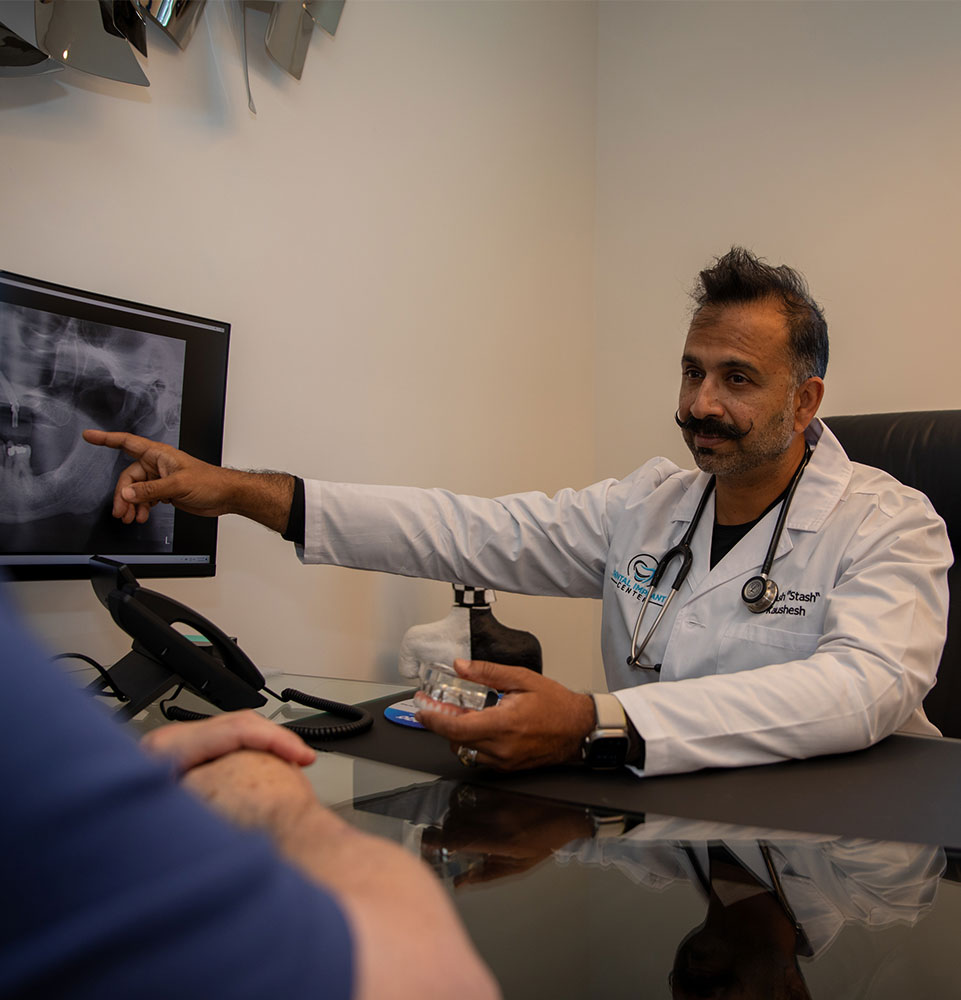
Dental imaging may be used to evaluate the jawbone and help determine whether implant placement is anatomically appropriate.
If additional medical information is necessary, your dentist may recommend coordinating with your treating physician.
The purpose is to determine whether All-on-4® is suitable for your individual circumstances and whether any additional precautions should be considered.
Is All-on-4® Right for Someone With an Autoimmune Disease?
Living with an autoimmune condition does not mean you should automatically rule out dental implants.
At the same time, treatment should never be recommended without considering your complete medical history.
An All-on-4® autoimmune disease evaluation helps identify factors that may influence surgical planning, healing, and long-term maintenance.
Some patients may be appropriate candidates, while others may benefit from additional medical coordination or consideration of alternative restorative options.
At Full Arch Dental Implant Center in Lake Havasu City, we believe that understanding the person behind the smile is an important part of dental implant planning. If you have an autoimmune condition and are considering replacing missing or failing teeth, an individualized consultation can help you better understand your options.
Your diagnosis is an important part of your medical history, but it should not replace a thoughtful evaluation of your individual needs, health, and treatment goals.