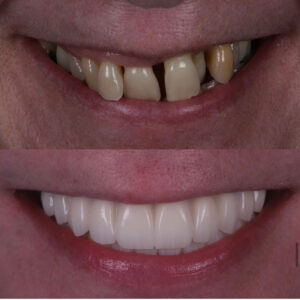
When patients imagine receiving a new smile with dental implants, they often focus on the replacement teeth. They think about smiling confidently, enjoying their favorite meals, and no longer dealing with the discomfort of failing teeth or removable dentures.
However, beneath those new teeth, an important healing process takes place.
All-on-4® gum healing is an essential part of recovery because the soft tissues surrounding dental implants help protect the underlying structures and contribute to the long-term health of the restoration.
While dental implants rely on the jawbone for support, the gums create a protective barrier around the implant components. Following surgery, these tissues must recover from the procedure and adapt to the new restorative environment.
For patients who have experienced years of gum disease, missing teeth, or uncomfortable dentures, the changes can be especially noticeable.
Understanding how the gums heal after All-on-4® treatment can help patients recognize what to expect, why proper cleaning matters, and when changes deserve professional attention.
Why Your Gums Matter After Dental Implant Surgery
Healthy gums play an important role in maintaining dental implants.
Although the implants themselves are placed within the jawbone, the surrounding soft tissues help form a protective seal around the components that pass through the gums.
This tissue barrier helps separate the deeper implant structures from the bacteria naturally present in the mouth.
When the gums remain healthy, they contribute to a stable environment around the implants.
However, plaque can accumulate near the gumline and around implant-supported restorations.
If plaque is not adequately controlled, inflammation may develop.
Over time, certain inflammatory conditions can affect the tissues and bone supporting dental implants.
This is why gum health remains important even when a patient no longer has natural teeth.
Replacing missing teeth does not eliminate the need for daily oral hygiene or professional dental care.
What Happens to the Gums During All-on-4® Surgery?
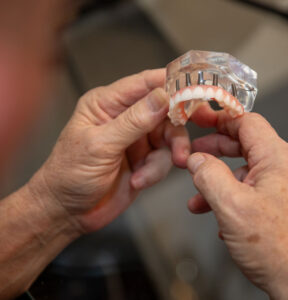
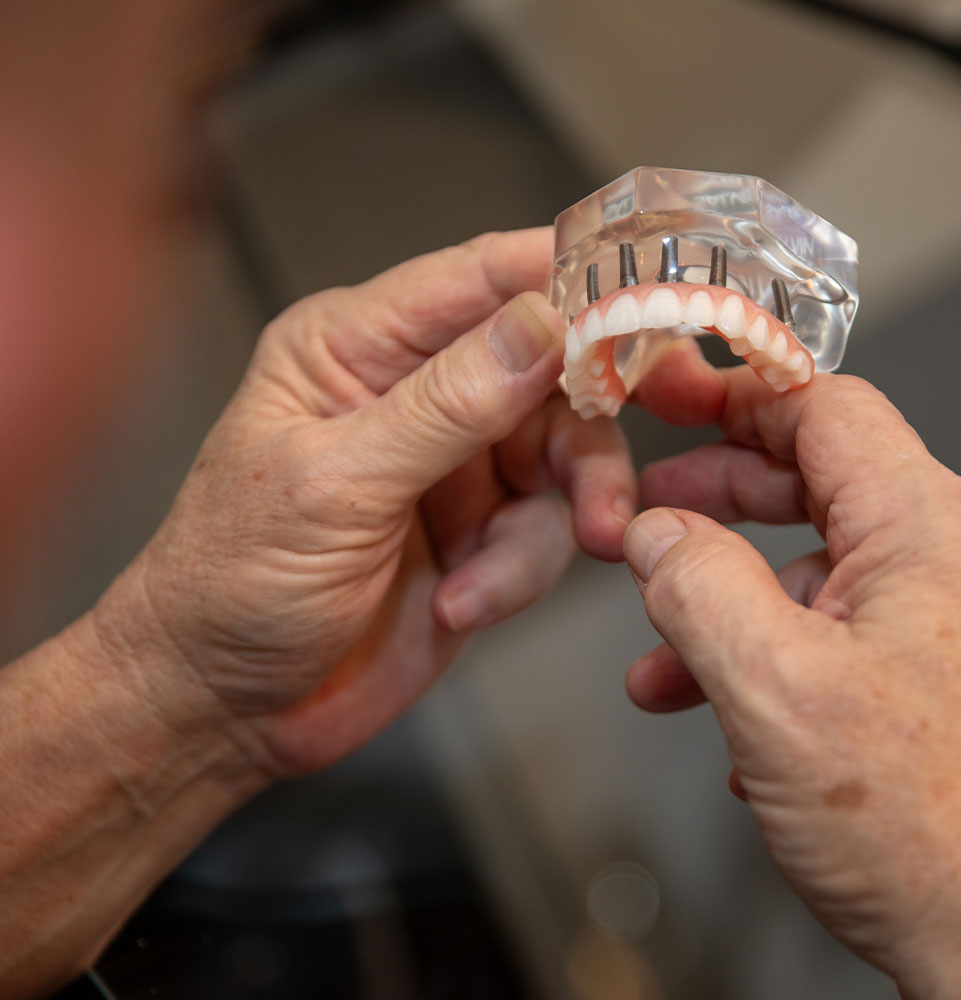
All-on-4® treatment involves placing dental implants into carefully planned positions within the jawbone.
For patients who still have severely damaged or failing teeth, extractions may be performed as part of the treatment plan.
Depending on the surgical approach, the dentist may need to carefully reflect or reshape portions of the gum tissue to access the underlying bone.
The specific procedures vary according to the patient’s anatomy and restorative needs.
Once the implants are positioned, the surgical tissues are managed to support healing.
Sutures may be used when appropriate.
For selected patients, a temporary fixed restoration may be attached during the initial treatment period.
Although the replacement teeth may be visible immediately, the gums and underlying bone still require time to recover.
This distinction is important because the appearance of a completed smile does not mean that healing has finished.
All-on-4® Gum Healing During the First Few Days
The first several days following surgery are an important part of All-on-4® gum healing.
During this period, the body begins responding to the surgical procedure.
Some swelling, tenderness, and minor bleeding or oozing may occur.
These symptoms can be expected after oral surgery, although their severity varies.
Patients may also notice that the gum tissues feel sensitive or swollen around the temporary restoration.
The appearance of the gums may change as postoperative inflammation develops and gradually decreases.
Your dental team will provide instructions for managing discomfort, protecting the surgical areas, and maintaining appropriate oral hygiene.
Patients should follow those instructions rather than attempting to clean or manipulate the surgical tissues aggressively.
If bleeding is heavy, persistent, or difficult to control, contact the dental team promptly.
Why Swelling Happens After Surgery
Swelling is part of the body’s normal inflammatory response to tissue injury.
Following dental implant surgery, the body increases blood flow and activates biological processes involved in healing.
This can cause temporary swelling in the gums and surrounding facial tissues.
Swelling often becomes more noticeable during the first two or three days before gradually improving.
However, the exact pattern varies depending on the extent of surgery and the individual patient.
Some people experience relatively mild swelling.
Others may notice more significant changes, particularly when multiple extractions or additional procedures were performed.
Your dentist may recommend specific measures to help manage swelling.
Patients should follow the provided instructions and avoid assuming that every increase in swelling is normal.
Swelling that worsens after initially improving, especially when accompanied by fever or increasing pain, deserves professional evaluation.
How Long Does It Take for the Gums to Heal?
The healing timeline varies from patient to patient.
The surface tissues may show substantial improvement within the first several weeks.
However, deeper tissue remodeling and changes in the underlying bone can continue for months.
Patients should understand that gum healing and implant integration are related but different processes.
The gums recover from surgical manipulation and adapt to the restorative components.
Meanwhile, the jawbone undergoes osseointegration, the biological process through which bone establishes a direct connection with the implant surfaces.
These processes do not necessarily finish at the same time.
Your dentist will monitor healing and determine when the tissues and implants are ready for subsequent treatment stages.
Patients should avoid using a general timeline as a substitute for individualized postoperative guidance.
Why Your Gums May Look Different After Surgery
Patients sometimes notice that their gums look different after receiving full arch dental implants.
This can occur for several reasons.
If damaged teeth were removed, the tissues that previously surrounded those teeth may change as the extraction sites heal.
Swelling can temporarily alter the appearance of the gums.
As inflammation decreases, the tissue contours may become more defined.
In some cases, the surgical and restorative plan may involve reshaping the gum and bone contours to create appropriate space for the restoration.
The appearance of the gums also depends on the design of the temporary prosthesis.
Patients should not assume that the gum contours seen immediately after surgery represent their final appearance.
Healing and tissue remodeling may continue for an extended period.
Your dental team can explain which changes are expected and whether additional evaluation is necessary.
What Happens to the Gums After Tooth Extractions?
Many patients receiving All-on-4® have remaining teeth that are severely damaged or affected by advanced periodontal disease.
When these teeth cannot be predictably maintained, extractions may be included in the treatment plan.
Following extraction, the surrounding tissues begin healing.
The gums gradually close over the extraction areas, while the underlying bone undergoes remodeling.
These changes can influence the shape of the tissues beneath the temporary restoration.
For some patients, the amount of tissue change may be more noticeable because several teeth were removed during the same procedure.
The dental team considers these expected changes when designing the temporary and final restorations.
This is one reason the final teeth are often fabricated after an appropriate healing period.
The objective is to create a restoration that accommodates the healed tissues and supports long-term function.
Can the Gums Shrink After All-on-4®?
Patients sometimes describe changes in their gum contours as shrinking.
Following tooth extraction and implant surgery, the soft tissues and underlying bone can undergo remodeling.
As swelling decreases, the gums may appear smaller or more closely adapted to the underlying structures.
Some changes are expected during healing.
However, significant tissue recession or progressive changes around implant components may require evaluation.
It is important to distinguish normal postoperative remodeling from problems involving inflammation or loss of supporting tissues.
Your dentist can assess whether the observed changes are consistent with healing.
Patients should report new areas of discomfort, persistent bleeding, or visible changes that seem to be progressing.
Regular follow-up appointments help the dental team monitor tissue health throughout recovery.
Why Temporary Teeth May Feel Different as the Gums Heal
Many patients receive a temporary fixed restoration during the healing stage.
This restoration is designed to provide replacement teeth while the implants and surrounding tissues recover.
As swelling decreases and the gum contours change, patients may notice differences in how the temporary teeth feel.
Some areas may become easier to access for cleaning.
Other spaces may become more noticeable as the tissues settle.
These changes do not necessarily indicate a problem.
However, persistent pressure, irritation, or difficulty cleaning should be discussed with the dental team.
The temporary restoration may require professional evaluation or modification depending on the clinical findings.
Patients should never attempt to reshape or adjust the prosthesis themselves.
How Gum Healing Influences the Final Restoration
The final All-on-4® restoration is designed around the patient’s healed anatomy.
During treatment, the dental team evaluates the relationship between the implants, surrounding tissues, and replacement teeth.
As the gums recover, their contours may become more stable.
This provides useful information for designing the final prosthesis.
The restoration must allow appropriate access for cleaning while maintaining acceptable function and appearance.
If the contours are poorly designed, certain areas may be difficult to clean or may trap excessive plaque.
The dental team must balance appearance, structural requirements, and maintenance access.
This is why gum healing is an important consideration during the restorative process.
The final teeth are not simply a stronger version of the temporary restoration.
They are designed using information gathered throughout healing and treatment.
Can Food Get Trapped Near the Gums?
Food trapping can occur around certain implant-supported restorations.
The extent depends on the design of the prosthesis, the shape of the surrounding tissues, and the foods being eaten.
Some patients notice small spaces beneath portions of their fixed bridge.
These spaces may be necessary to provide cleaning access.
However, they can also allow food particles to collect.
This does not automatically mean the restoration was placed incorrectly.
The dental team must evaluate whether the contours are appropriate and whether the patient can clean the area effectively.
If food trapping becomes excessive or difficult to manage, contact your dentist.
Professional evaluation can determine whether additional hygiene instruction or a restorative adjustment is appropriate.
Why Plaque Control Is Essential After Healing
Once the surgical tissues have healed sufficiently, maintaining clean implant surfaces and surrounding gums becomes a major priority.
Plaque is a bacterial biofilm that naturally develops on surfaces inside the mouth.
It can accumulate around dental implants and restorative components.
When plaque remains near the gumline, it can contribute to inflammation.
One inflammatory condition affecting implant tissues is peri-implant mucositis.
This involves inflammation of the soft tissues surrounding an implant without the progressive supporting bone loss characteristic of peri-implantitis.
If inflammation is not addressed, some patients may develop more serious complications.
Consistent plaque control and professional monitoring help support healthy implant tissues.
Patients should follow cleaning instructions specific to their restoration.
When Can You Start Brushing Around the Implants?
The timing and technique for brushing after surgery depend on the procedure and the dentist’s instructions.
During the earliest healing period, certain surgical areas may require special care.
Patients may be instructed to avoid brushing directly over sensitive sites temporarily.
Other areas of the mouth may still need routine cleaning.
As healing progresses, the dental team will explain when and how to clean around the implant-supported restoration.
A soft toothbrush may be recommended.
Specialized brushes or other cleaning aids may also become part of the routine.
Patients should not assume that vigorous brushing will improve healing.
Aggressive cleaning can irritate sensitive tissues.
The goal is to maintain appropriate hygiene without disrupting the recovery process.
Can You Use a Water Flosser During Recovery?
Water flossers can be useful for cleaning certain implant-supported restorations.
However, they should not automatically be used around fresh surgical sites immediately after implant placement.
The pressure from a water flosser may be inappropriate during the early healing period.
Your dental team will explain when its use can begin and which settings or techniques are suitable.
Once healing has progressed, a water flosser may help remove food debris from accessible areas beneath the restoration.
However, it should be used as part of a comprehensive hygiene routine rather than assumed to replace every other cleaning method.
The appropriate approach depends on the design of the prosthesis and the condition of the surrounding tissues.
Patients should follow individualized instructions rather than relying on general recommendations.
What Should Healthy Gums Around Implants Look Like?
Healthy gum tissue around dental implants generally should not show persistent swelling, bleeding, or signs of active inflammation.
However, normal tissue appearance varies between individuals.
Gum color can differ naturally depending on pigmentation and other factors.
The absence of pain also does not guarantee that the tissues are healthy.
Certain inflammatory conditions can develop without producing significant discomfort.
This is why professional examinations remain important.
Your dental team may evaluate tissue appearance, bleeding, plaque accumulation, and other clinical findings during maintenance appointments.
Patients should pay attention to changes rather than relying only on whether the gums look pink.
Persistent bleeding, swelling, discharge, or tenderness should be reported.
Can Gum Disease Affect Dental Implants?
Dental implants cannot develop cavities, but the tissues surrounding them can develop inflammatory disease.
Peri-implant mucositis affects the soft tissues around an implant.
Peri-implantitis involves inflammation accompanied by progressive loss of supporting bone.
These conditions are different from conventional periodontal disease affecting natural teeth, although they share certain risk factors.
Patients with a history of periodontal disease may have an increased risk of peri-implant complications.
Smoking, poor plaque control, and certain systemic conditions can also influence risk.
The dental team must evaluate individual factors when developing a maintenance plan.
Regular cleaning and professional monitoring are important for protecting the surrounding tissues.
Replacing teeth affected by gum disease does not automatically eliminate the patient’s susceptibility to inflammatory problems.
What if Your Gums Bleed After Healing?
Minor bleeding may occur during the initial postoperative period.
However, bleeding that begins or persists after the tissues have healed deserves attention.
Bleeding during cleaning may indicate inflammation.
It can also occur because of mechanical irritation or other causes.
Patients should not assume that bleeding is normal simply because they have dental implants.
A dental examination can help determine whether the gums are inflamed or whether another issue is present.
The dental team may recommend changes to the cleaning routine or additional treatment depending on the findings.
Early evaluation is important because inflammatory problems are often easier to manage before significant tissue damage develops.
What if the Gums Become Swollen Months Later?
New swelling around dental implants months or years after surgery should be evaluated.
Although temporary swelling is expected after the original procedure, new inflammation later in treatment may indicate a different concern.
Possible causes include plaque accumulation, mechanical irritation, infection, or other tissue problems.
The appearance of swelling alone cannot establish the diagnosis.
Your dentist may examine the tissues, evaluate the restoration, and recommend imaging when appropriate.
Treatment depends on the underlying cause.
Patients should avoid attempting to treat persistent swelling with home remedies alone.
If swelling is accompanied by fever, rapidly increasing pain, or difficulty swallowing or breathing, urgent medical evaluation may be necessary.
Why Smoking Can Affect Gum Healing
Smoking is an important consideration for patients undergoing dental implant treatment.
Tobacco exposure can affect blood circulation, immune responses, and tissue healing.
Smoking is also associated with an increased risk of complications involving dental implants and surrounding tissues.
Patients who smoke should discuss their tobacco use honestly during the consultation.
Your dental team can explain how smoking may influence treatment and recovery.
Stopping smoking can provide important health benefits, although the effects depend on the individual’s circumstances.
Patients should not assume that avoiding cigarettes for only a brief period eliminates all associated risks.
A comprehensive approach to tobacco cessation and oral health is beneficial.
How Diabetes May Influence Gum Health
Diabetes can influence wound healing and the body’s response to infection.
Patients with poorly controlled blood glucose may face increased risks during surgical recovery.
Diabetes can also affect susceptibility to certain inflammatory conditions involving the gums.
However, having diabetes does not automatically prevent successful dental implant treatment.
The dental team must consider the patient’s overall health and how well the condition is managed.
Patients should provide accurate medical information and follow recommendations from their healthcare providers.
Good plaque control and regular dental maintenance remain important.
For patients with diabetes, coordination between dental and medical care may help support safer treatment planning.
Why Professional Maintenance Matters
One of the most important aspects of All-on-4® gum healing and long-term care is attending recommended follow-up appointments.
During the early healing period, the dental team monitors the surgical tissues and evaluates recovery.
Once the final restoration is delivered, maintenance appointments continue to play an important role.
The dentist or dental hygienist may assess the gums, check for inflammation, and evaluate areas that are difficult to clean at home.
The restoration and its components may also be examined for signs of wear or mechanical problems.
Professional cleaning methods should be appropriate for the implant surfaces and restorative materials.
The recommended appointment schedule depends on the patient’s oral health, medical history, and individual risk factors.
Patients with a history of periodontal disease may require additional monitoring.
What Happens if Gum Tissue Recedes Around an Implant?
Gum recession can occur around dental implants in certain circumstances.
Patients may notice that more of a restorative component becomes visible or that the tissue contour has changed.
Several factors may contribute, including tissue characteristics, inflammation, implant positioning, or changes in the surrounding structures.
Not every visible change indicates implant failure.
However, progressive recession deserves evaluation.
The dental team must determine whether the change affects tissue health, appearance, or the ability to clean the area.
Treatment options depend on the underlying cause and the condition of the supporting structures.
Patients should avoid ignoring changes simply because the implant itself does not hurt.
Early assessment can help clarify whether intervention is necessary.
Can Healthy Gums Help Dental Implants Last Longer?
Healthy surrounding tissues are an important part of long-term dental implant care.
Dental implants rely on stable supporting bone, and the surrounding soft tissues help protect that environment.
When plaque is controlled and inflammation is monitored, patients can reduce certain preventable risks.
However, gum health is only one factor influencing implant longevity.
Bite forces, restorative design, medical conditions, smoking, and other factors also contribute.
No cleaning routine can guarantee that an implant will last forever.
Nevertheless, consistent home care and professional maintenance are among the most important responsibilities patients can control.
The goal is to support a stable environment around the implants and identify potential concerns early.
What Should You Ask About Gum Healing?
Before undergoing All-on-4® treatment, patients should understand what recovery may involve.
Ask your dental team how the gums are expected to change after surgery.
Discuss when brushing and other cleaning methods can safely resume.
You may also want to know whether the temporary restoration will require adjustments as the tissues heal.
Ask which symptoms are expected during recovery and which should prompt a call to the office.
If you have a history of gum disease, smoking, or medical conditions that affect healing, discuss those concerns during the consultation.
Understanding the recovery process can help patients feel more prepared and recognize the importance of ongoing care.
Healthy Gums Are Part of a Healthy New Smile
All-on-4® gum healing is an important part of the full arch dental implant process.
Although the replacement teeth often receive the most attention, the surrounding gum tissues play a significant role in protecting the implants and supporting long-term oral health.
During recovery, patients may experience swelling, tenderness, and gradual changes in gum contours.
As healing progresses, the dental team evaluates the tissues and develops the final restoration around the patient’s individual anatomy.
At Full Arch Dental Implant Center in Lake Havasu City, Dr. Kaushesh and the dental team recognize that successful full arch treatment involves caring for both the dental implants and the tissues surrounding them.
For patients considering All-on-4®, understanding gum healing can provide a clearer picture of what happens beneath their new smile.
With appropriate postoperative care, consistent oral hygiene, and regular professional monitoring, patients can take meaningful steps toward protecting their restored teeth and supporting long-term oral health.