Can All-on-4® Dental Implants Affect Your Sense of Taste?
Imagine finally being able to enjoy a meal without worrying about loose dentures, painful teeth, or struggling to chew. For many people considering full arch dental implants, returning to a more comfortable eating experience is one of their biggest motivations. But there is another question patients sometimes have: will food actually taste the same after getting new teeth?
The relationship between All-on-4® and taste is worth understanding, especially for patients who have worn traditional dentures for years or experienced significant dental problems before treatment.
Dental implants themselves are not designed to change how your taste buds function. However, changes in the way your mouth feels, the restoration you receive, and your recovery experience can influence how you perceive and enjoy food.
For some patients, replacing uncomfortable or unstable teeth may make eating a more enjoyable experience. Others may notice temporary changes in their mouth during healing.
Understanding what affects taste can help you know what to expect before and after treatment.
How Does Your Sense of Taste Actually Work?
Taste is more complicated than simply having taste buds on your tongue.
Your taste buds contain specialized cells that help detect different taste qualities, including sweet, salty, sour, bitter, and umami.
However, much of what people describe as flavor also involves their sense of smell.
The aroma of food, its temperature, texture, and the sensations experienced while chewing all contribute to how enjoyable a meal feels.
Saliva also plays an important role by helping dissolve substances in food so they can interact with taste receptors.
This means that changes in your oral environment can influence your eating experience even when your taste buds themselves are functioning normally.
For someone receiving a full arch restoration, understanding this distinction is particularly useful.
All-on-4® and Taste: What Actually Changes?
When discussing All-on-4® and taste, it is important to distinguish between a direct change in taste sensation and a change in the overall experience of eating.
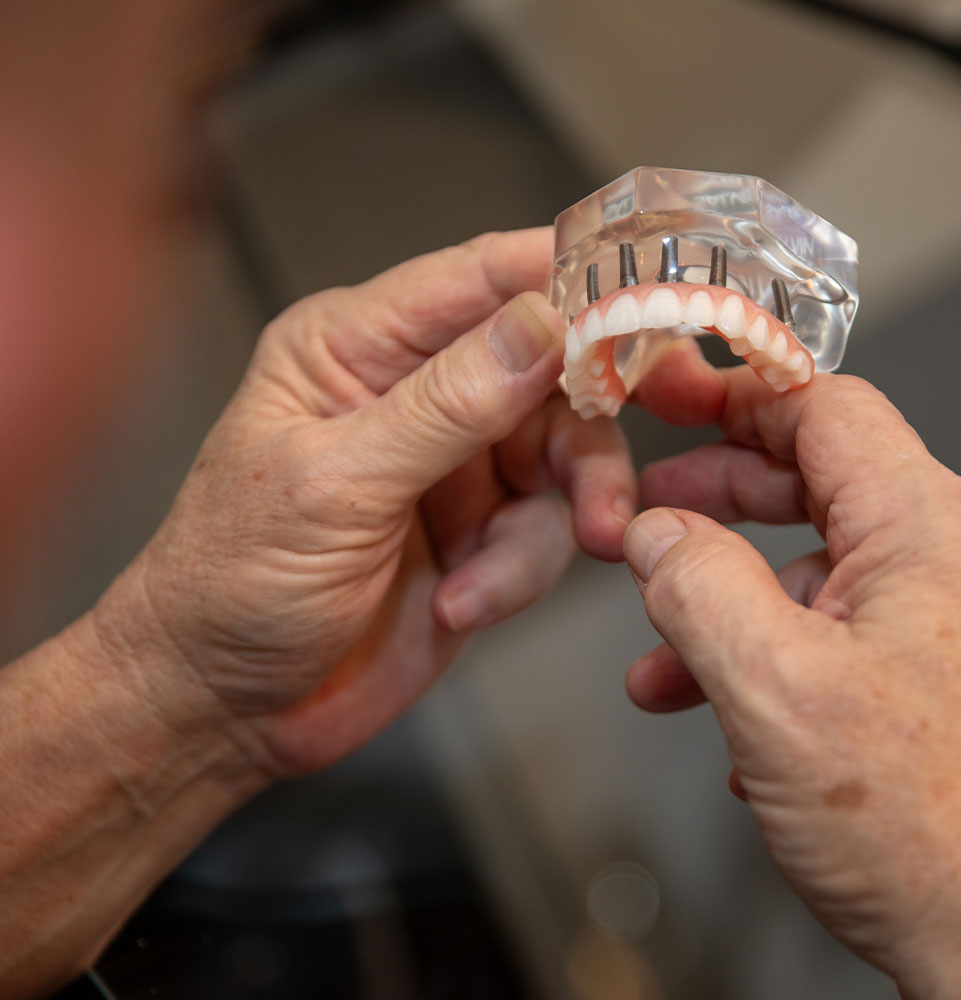
All-on-4® involves placing dental implants within the jawbone to support a fixed arch of replacement teeth.
The implants do not replace or directly interact with the taste buds on your tongue.
However, your new restoration may feel different from your natural teeth or previous dentures.
The shape of the replacement teeth, the amount of space available for your tongue, and the way food moves around your mouth may initially feel unfamiliar.
These differences can affect your perception of eating without necessarily changing your ability to detect flavors.
Most importantly, a dental implant restoration should not be expected to improve or reduce your sense of taste automatically.
Why Traditional Dentures Can Change the Eating Experience
Patients who have worn conventional dentures may already be familiar with changes in how food feels and tastes.
Some upper dentures cover a substantial portion of the palate, or roof of the mouth.
Although the tongue contains most taste buds, the palate contributes to the overall sensory experience of eating through touch, temperature, and other sensations.
A denture covering this area may influence how food feels in the mouth.
Traditional dentures can also create challenges when chewing certain foods.
If a denture shifts while eating, patients may begin avoiding foods they once enjoyed.
Some people become accustomed to choosing softer meals or cutting their food into very small pieces.
Over time, these adjustments can affect the variety and enjoyment of their diet.
A fixed implant restoration may offer a different eating experience, particularly when compared with a bulky removable denture.
Can All-on-4® Make Food More Enjoyable?
For appropriately selected patients, All-on-4® can provide a stable replacement for missing or failing teeth.
Once healing is complete and normal chewing has been approved by the dental team, a fixed restoration may make certain foods easier to manage than they were with unstable dentures.
This can improve the overall experience of eating.
However, improved chewing function should not be confused with a guaranteed improvement in taste sensation.
Someone who previously avoided vegetables, meats, or other foods because of dental discomfort may simply find those foods easier to enjoy again.
The benefit comes from improved function and comfort rather than a direct change to the taste buds.
Can Your Temporary Teeth Affect How Food Feels?
During the early stages of All-on-4® treatment, some patients receive a temporary fixed restoration while their implants heal.
Temporary teeth are designed to provide appearance and function during recovery, but they may feel different from the final restoration.
Your tongue needs time to adjust to the shape and contours of the new teeth.
You may initially notice differences in how food moves through your mouth or how your tongue interacts with the restoration.
These sensations can make eating feel unfamiliar.
However, the most important consideration during early recovery is protecting the healing implants.
Even if your temporary teeth feel strong, you must continue following your dental team’s dietary restrictions.
Why Food May Seem Different During Recovery
The first several days after dental implant surgery can involve swelling, tenderness, and changes in your normal eating routine.
You may be consuming softer foods than usual, which can make meals feel less satisfying.
Certain prescribed medications may also influence your appetite, mouth dryness, or taste perception.
These factors can contribute to the feeling that food is different after surgery.
However, a persistent or significant change in taste should not automatically be attributed to normal healing.
If you experience an unusual metallic taste, persistent bad taste, or a noticeable reduction in your ability to taste food, contact your dental team.
They can evaluate whether the symptoms may be related to medication, oral health, healing, or another cause.
All-on-4® and Taste Changes From Dry Mouth
One important connection between All-on-4® and taste involves saliva.
Saliva helps dissolve food particles and allows flavor-producing substances to reach the taste receptors.
When your mouth becomes unusually dry, food may taste different or seem less flavorful.
Dry mouth can occur for many reasons, including medications, certain medical conditions, dehydration, and changes in salivary gland function.
Some patients already experience dry mouth before dental implant treatment.
Others may notice temporary dryness during recovery.
All-on-4® does not directly treat the underlying causes of dry mouth.
If you regularly experience dryness, discuss it with your dentist so they can recommend appropriate management strategies.
Can Dental Implant Materials Cause a Metallic Taste?
Dental implants are commonly made from biocompatible materials such as titanium.
These materials are selected because of their established use in implant dentistry and their ability to integrate with bone.
A persistent metallic taste is not something patients should assume is a normal consequence of having titanium implants.
Taste disturbances can have many possible causes, including medications, oral infections, dry mouth, and other medical conditions.
If you develop an ongoing metallic taste after treatment, your dentist should evaluate the symptoms rather than assuming the implant material is responsible.
Your dental team can examine the restoration and surrounding tissues and determine whether further investigation is appropriate.
What if Food Tastes Bad After Surgery?
An unpleasant taste shortly after oral surgery can sometimes be associated with temporary changes in the mouth.
However, a persistent bad taste, especially when accompanied by swelling, increasing pain, drainage, fever, or an unpleasant odor, may indicate a problem that requires attention.
Do not ignore these symptoms or attempt to manage a possible infection with mouthwash alone.
Contact your dental team and explain what you are experiencing.
They can determine whether your symptoms are consistent with expected healing or whether an examination is necessary.
Prompt communication is particularly important when symptoms become worse rather than gradually improving.
Will Your Final All-on-4® Teeth Feel Different From Temporary Teeth?
Your final restoration may differ from your temporary teeth in material, contour, and other design details.
During treatment, your dental team evaluates factors such as bite, speech, appearance, and function.
The final restoration is designed to provide an appropriate long-term solution based on your individual treatment plan.
Some patients notice that the final teeth feel smoother or have a different shape compared with their temporary restoration.
Your tongue and chewing muscles may need a short adjustment period as you become accustomed to these differences.
However, the final restoration should not be expected to directly alter the biological function of your taste buds.
If you notice an unexpected change in taste or persistent discomfort, mention it during your follow-up appointments.
Does the Shape of Your New Teeth Affect Eating?
The shape of your replacement teeth plays an important role in chewing.
Your dentist must consider how the upper and lower teeth meet, how food is broken down, and how the restoration fits within your mouth.
A restoration that feels too bulky or interferes with tongue movement may affect comfort during meals.
Likewise, an uncomfortable bite can make chewing feel less natural.
These concerns are different from a true taste disorder, but they can still influence how enjoyable eating feels.
If your new teeth make chewing uncomfortable or interfere with normal tongue movement, tell your dental team.
They can evaluate the restoration and determine whether adjustments are appropriate.
Can You Enjoy Your Favorite Foods Again?
One of the most meaningful goals of full arch dental implant treatment is helping patients return to more comfortable daily activities.
For many people, that includes eating.
Someone who has struggled with loose dentures or painful natural teeth may have avoided certain foods for years.
After successful treatment and appropriate healing, a fixed restoration may allow them to enjoy a wider variety of meals.
However, dental implants and replacement teeth still require care.
Chewing ice, biting extremely hard objects, or using your teeth as tools can damage restorative components.
Your dentist will explain which foods are appropriate during recovery and how to protect your final restoration.
The goal is comfortable, dependable function rather than treating your new teeth as indestructible.
What if Your Sense of Taste Does Not Return to Normal?
If you experience a lasting change in taste, it is important to investigate the cause.
Taste disturbances can result from a variety of dental and medical factors.
Your dentist may evaluate your oral tissues, restoration, medications, and any signs of infection or dryness.
Depending on your symptoms, additional evaluation by your physician or another healthcare professional may be recommended.
Do not assume that a persistent change in taste is something you must accept after dental implant treatment.
Identifying the underlying cause is the first step toward determining whether treatment or management is available.
How to Make Eating More Comfortable After All-on-4®
During recovery, follow the diet recommended by your dental team.
Choose foods that are appropriate for your stage of healing and avoid placing excessive pressure on your temporary restoration.
Stay hydrated unless your healthcare provider has instructed otherwise.
Maintain your recommended oral hygiene routine, and take medications only as directed.
Once you are cleared to return to a broader diet, gradually become familiar with how your replacement teeth function.
If you experience discomfort, unusual pressure, or difficulty chewing, discuss those concerns with your dentist.
A comfortable eating experience depends on proper healing, an appropriately designed restoration, and ongoing care.
Can All-on-4® Dental Implants Affect Your Sense of Taste?
The relationship between All-on-4® and taste is primarily connected to changes in oral comfort, chewing function, saliva, and the overall experience of eating.
Dental implants do not directly replace or control your taste buds. However, transitioning from damaged teeth or removable dentures to a fixed restoration can change how food feels in your mouth.
For some patients, improved stability and chewing comfort may make meals more enjoyable after healing is complete.
At Full Arch Dental Implant Center in Lake Havasu City, we understand that replacing missing teeth is about more than appearance. Being able to sit down for a meal without worrying about uncomfortable dentures or failing teeth can make a meaningful difference in everyday life.
If you are considering All-on-4® and have questions about eating, recovery, or how your new teeth may feel, a personalized consultation can help you better understand what to expect.
The goal is not simply to give you a new smile. It is to help you regain comfortable function and enjoy the everyday experiences that make life fulfilling.