Halloween Candy and Dental Implants: Protecting Your Smile During the Holiday
Halloween is a time for family gatherings, neighborhood celebrations, costumes, and plenty of seasonal treats. Whether you are handing out candy, attending a Halloween party, or enjoying a few pieces of chocolate at home, the holiday often brings a noticeable change in eating habits.
For patients with dental implants, Halloween can also raise a few questions about which foods are safe to enjoy and which may place unnecessary stress on their restorations.
Understanding the relationship between Halloween candy and dental implants is important because replacement teeth, while designed to restore function, are not indestructible. Certain types of candy can place significant pressure on dental restorations, potentially causing chips, fractures, or other complications.
For patients who have received All-on-4® dental implants, protecting the restoration is especially important during the healing process and throughout long-term maintenance.
The good news is that enjoying Halloween does not necessarily mean avoiding every seasonal treat. It simply means understanding how different foods interact with your teeth and making thoughtful choices.
Why Halloween Matters for Dental Implant Patients
Halloween is one of the few holidays when candy becomes a central part of the celebration.
From caramel and hard candies to chocolate and chewy sweets, the variety of treats available can make it easy to forget about normal dietary habits.
For patients with natural teeth, frequent exposure to sugar can increase the risk of tooth decay.
Dental implants introduce a different set of considerations.
The artificial teeth attached to dental implants cannot develop cavities in the same way natural teeth do. However, the materials used in crowns, bridges, and full arch restorations can still experience damage.
Excessive biting forces, particularly when chewing hard or sticky foods, may place stress on the restorative components.
The gums and supporting bone surrounding dental implants also require consistent care.
Halloween is therefore a good opportunity to review how everyday food choices can affect the long-term condition of a dental implant restoration.
Halloween Candy and Dental Implants: What Should You Avoid?
When considering Halloween candy and dental implants, the texture of the candy is often just as important as its sugar content.
Hard candies are among the foods that deserve particular caution.
Biting directly into a hard candy can generate substantial force against a dental crown or bridge.
Although implant restorations are designed to withstand normal chewing, they are not intended to function as tools for cracking extremely hard objects.
A restoration may chip or fracture if exposed to excessive force.
Sticky candies can also create challenges.
Caramels, taffy, and certain chewy sweets may cling to restorative surfaces and place pulling forces on components.
This can be especially concerning for patients who have temporary teeth or restorations with existing mechanical problems.
The safest choices depend on your individual restoration, so patients should follow the recommendations provided by their dental team.
Are Chocolate Treats Safer for Dental Implants?
For patients who have completed healing and received their final restoration, softer chocolate may be easier to manage than hard or extremely sticky candy.
Plain chocolate generally requires less biting force than hard candy.
However, not every chocolate product has the same texture.
Chocolate bars containing hard nuts, brittle, or sticky caramel may present additional concerns.
Patients should also remember that sugar can still affect their overall oral environment, even when their artificial teeth cannot develop cavities.
Plaque can accumulate around dental implants, and maintaining healthy gums remains essential.
Choosing a softer treat and practicing consistent oral hygiene may be a more practical approach than assuming all candy is equally safe.
Can All-on-4® Dental Implants Break From Candy?
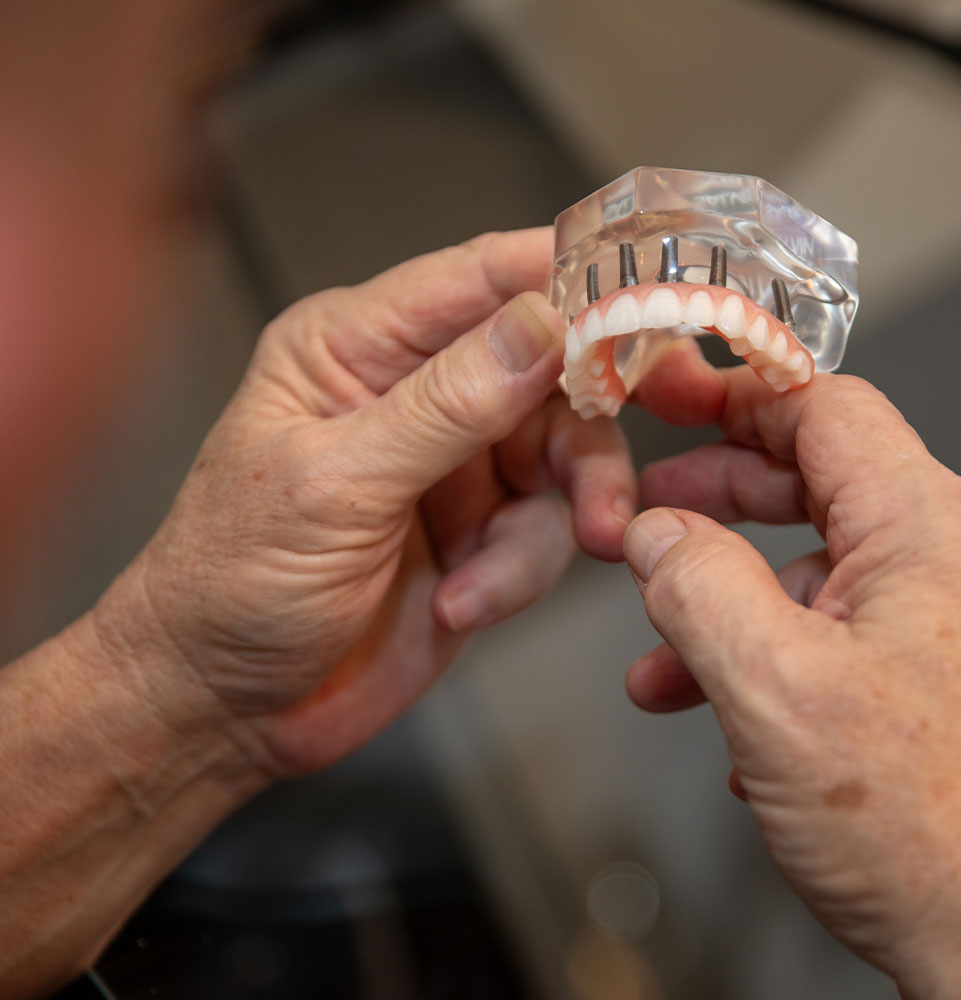
All-on-4® uses strategically positioned dental implants to support a complete arch of fixed replacement teeth.
The restoration is designed to provide functional replacement teeth, but its durability depends on several factors.
These include the restorative materials, bite forces, design, and overall condition of the prosthesis.
Biting into hard candy can create concentrated pressure on a small area of the restoration.
Under excessive force, certain restorative materials may chip, crack, or fracture.
Mechanical complications can also occur in other components of the restoration.
This does not mean that All-on-4® teeth are fragile or that patients must avoid every firm food permanently.
Rather, it means that using artificial teeth to bite extremely hard objects introduces unnecessary risk.
Protecting the restoration through reasonable eating habits is an important part of long-term care.
Why Temporary All-on-4® Teeth Require Extra Caution
Patients who have recently undergone All-on-4® surgery need to be especially careful during Halloween.
Some patients receive a fixed temporary restoration shortly after implant placement.
Although these temporary teeth may look and feel stable, the implants underneath are still healing.
During this period, the jawbone must develop a stable connection with the implants.
Excessive chewing forces can interfere with the healing process and may increase the risk of complications.
For this reason, patients are commonly instructed to follow a modified diet during early recovery.
Hard candy, chewy caramel, nuts, and other foods requiring substantial chewing should not be introduced simply because the temporary teeth feel strong.
If you are still following postoperative dietary restrictions, those instructions take priority over holiday food choices.
Your dental team will explain when it is appropriate to gradually return to a broader diet.
Does Sugar Affect Dental Implants?
One common misconception is that patients with dental implants no longer need to worry about sugar.
It is true that artificial replacement teeth do not contain natural enamel and therefore cannot develop conventional cavities.
However, the surrounding tissues remain vulnerable to oral health problems.
Plaque contains bacteria that can accumulate around implants and restorative components.
If plaque is not adequately removed, inflammation may develop in the surrounding gums.
In some circumstances, more serious inflammatory conditions can affect the tissues and bone supporting dental implants.
Sugar consumption alone does not determine whether someone develops peri-implant disease, but oral hygiene and plaque control remain essential.
Patients who still have natural teeth in another part of their mouth must also continue protecting those teeth from decay.
A full arch restoration does not eliminate the need for healthy daily habits.
What About Patients With Both Natural Teeth and Implants?
Not every dental implant patient has had all their natural teeth replaced.
Some patients receive an All-on-4® restoration in one jaw while retaining natural teeth in the opposing arch.
Others may have individual implants alongside healthy natural teeth.
For these patients, Halloween candy presents two different considerations.
Hard or sticky foods may place stress on implant restorations, while frequent sugar exposure can contribute to cavities in natural teeth.
Maintaining oral hygiene is important for both.
Brushing with fluoride toothpaste, cleaning between natural teeth, and following implant-specific cleaning instructions can help support oral health.
Your dentist may recommend additional hygiene tools depending on the design of your restoration.
Can Candy Get Stuck Under All-on-4® Teeth?
Even though All-on-4® restorations are fixed in place, small food particles can sometimes collect around or beneath the prosthesis.
The amount of space beneath a restoration varies depending on its design and the patient’s anatomy.
Sticky candy may be particularly difficult to remove from certain areas.
Patients should avoid using sharp objects, fingernails, or excessive force to remove trapped food.
These methods may irritate the gums or damage restorative components.
Instead, use the cleaning tools recommended by your dental team.
Depending on your restoration, these may include specialized brushes, flossing aids, or a water flosser.
If food frequently becomes trapped in a particular area, mention it during your next maintenance appointment.
Your dentist can evaluate whether the restoration requires additional attention.
What if You Accidentally Bite Something Too Hard?
Accidents can happen, especially during holidays when people are distracted by celebrations and unfamiliar foods.
If you accidentally bite into a hard piece of candy, it does not automatically mean your dental implants have been damaged.
However, pay attention to any changes in how your restoration feels.
A new sharp edge, visible chip, unusual movement, discomfort, or noticeable change in your bite may indicate a problem.
Avoid continuing to chew on a restoration that feels damaged or unstable.
Contact your dental team and explain what happened.
They can determine whether an examination is necessary.
Do not attempt to repair a chipped restoration with household adhesives or adjust any component yourself.
Professional evaluation is the safest way to determine whether damage has occurred.
Halloween Treats During Dental Implant Recovery
For patients recovering from implant surgery, Halloween may require a different approach to seasonal foods.
The early healing period is not the time to test the strength of a temporary restoration.
If your dental team has recommended a soft food diet, continue following those instructions.
Depending on your stage of recovery, appropriate options may include smooth yogurt, pudding, or other foods approved by your dentist.
Avoid assuming that a food is safe simply because it is soft.
Some foods may still be sticky, require substantial chewing, or contain hard pieces.
Your dental team’s specific instructions should guide your choices.
Healing properly is more important than participating in every holiday food tradition.
Why Routine Maintenance Still Matters
Dental implant maintenance is important throughout the year, not only during holidays.
Professional examinations allow your dental team to evaluate the condition of your restoration and surrounding tissues.
They may assess the gums, bite, implant stability, and restorative components.
Patients should also maintain a consistent cleaning routine at home.
Even when a restoration looks clean, plaque may accumulate in areas that are difficult to see.
Halloween can serve as a reminder that protecting dental implants involves more than avoiding certain foods.
Long-term care requires appropriate hygiene, professional monitoring, and attention to changes in oral comfort or function.
Making Halloween Enjoyable Without Compromising Your Smile
Halloween does not need to become a stressful occasion for patients with dental implants.
The goal is to enjoy the holiday while remaining mindful of your oral health.
Patients with completed, well-maintained restorations may be able to enjoy certain softer treats in moderation.
Those with temporary teeth or ongoing healing restrictions should continue following their prescribed diet.
Regardless of the type of restoration, avoiding extremely hard and sticky foods can help reduce unnecessary mechanical stress.
It is also important to maintain normal oral hygiene rather than allowing holiday celebrations to interrupt daily cleaning.
Small decisions can contribute to protecting the work that has gone into restoring your smile.
Halloween Candy and Dental Implants: A Healthy Perspective
Understanding Halloween candy and dental implants comes down to recognizing that replacement teeth require thoughtful care.
Dental implants can provide a stable foundation for restoring missing teeth, but the restorations they support are still subject to wear and potential damage.
Hard candies, sticky sweets, and foods requiring excessive biting force may create unnecessary risks, particularly for patients with temporary All-on-4® teeth.
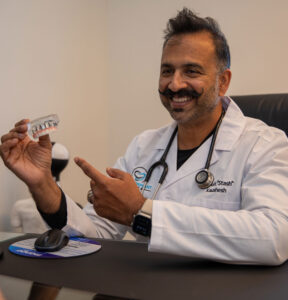
At Full Arch Dental Implant Center in Lake Havasu City, Dr. Kaushesh and the dental team emphasize the importance of patient education and long-term implant maintenance.
Halloween is a wonderful opportunity to enjoy time with family, friends, and the community. With appropriate food choices and consistent oral hygiene, patients can participate in the festivities while continuing to protect their dental health.
A healthy smile is worth caring for during every season, including the sweetest holiday of the year.