Gum disease around All-on-4® dental implants is possible even though your replacement teeth cannot develop cavities. This can be surprising for someone who has replaced an entire arch of failing teeth. After everything you went through to get new teeth, you may assume problems like gum disease are finally behind you.
The situation is a little different with dental implants.
Your replacement teeth are artificial, but the gums and bone surrounding your implants are very much alive. Those tissues are part of the foundation that helps keep your dental implants stable.
Plaque and bacteria still exist in your mouth. If they are allowed to accumulate around the implants, inflammation can develop in the surrounding tissues.
This is one of the biggest reasons daily cleaning and professional maintenance remain important after All-on-4® treatment.
Your Teeth Are Artificial, but Your Gums Are Not
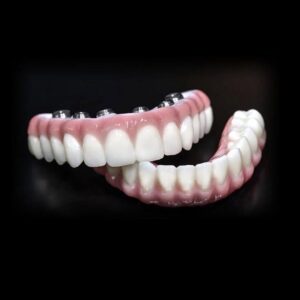
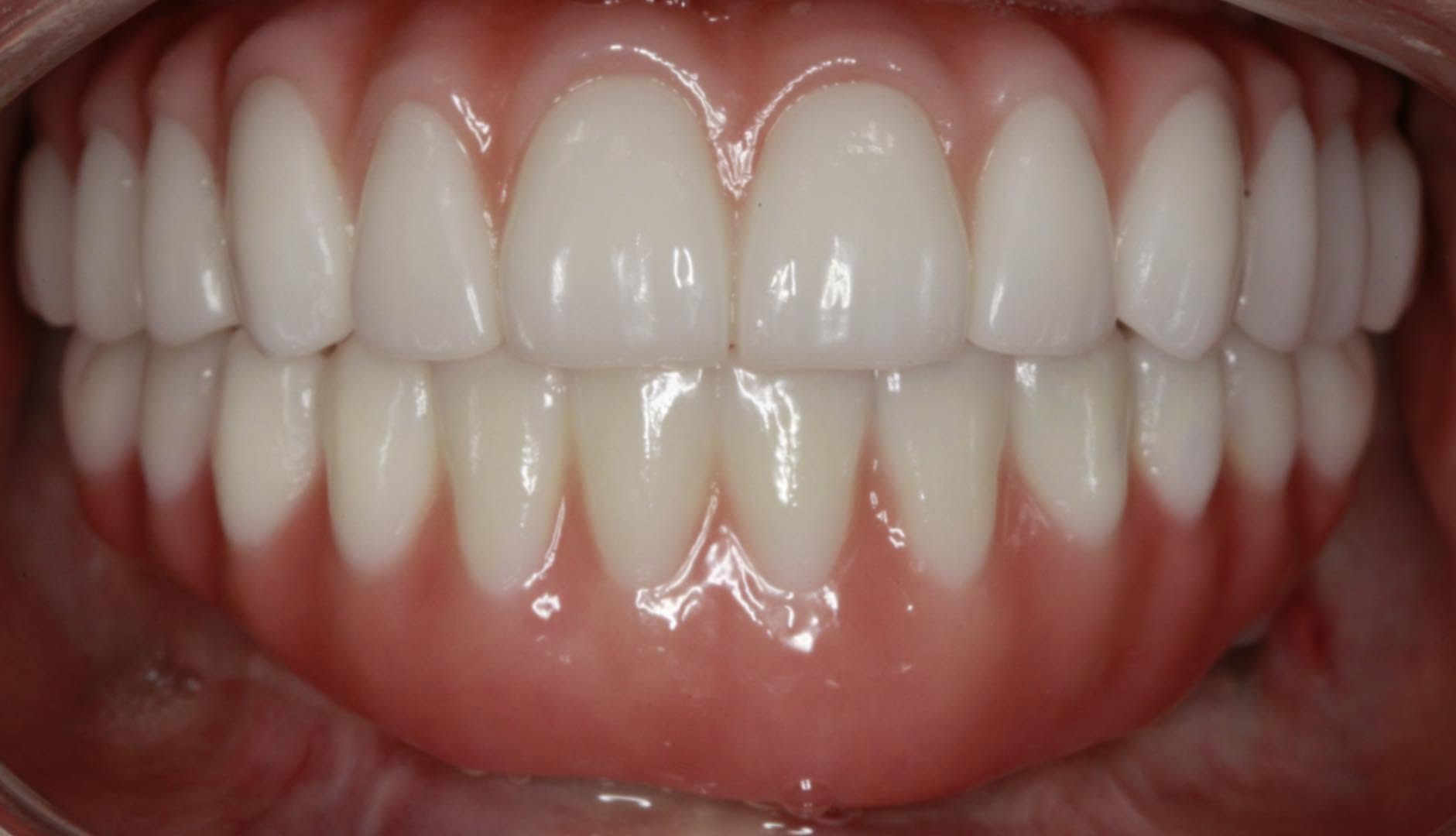
All-on-4® replaces an entire arch of teeth using a fixed restoration supported by dental implants.
The restoration itself cannot develop traditional gum disease. Neither can the titanium or other material used for the implant itself.
The concern is what surrounds those implants.
Each implant passes through gum tissue and is supported by jawbone. Those biological tissues need to remain healthy.
This is why receiving All-on-4® does not mean you are finished with oral hygiene.
You have changed what you are protecting.
With natural teeth, you are concerned about cavities, gum disease, tooth fractures, and other problems. With implant supported teeth, much of your attention shifts toward keeping the restoration clean and maintaining healthy tissues around the implants.
What Is Peri-Implant Mucositis?
You may hear your dental team use terms that sound unfamiliar after receiving implants.
One is peri-implant mucositis.
This refers to inflammation of the soft tissue surrounding a dental implant without the progressive bone loss associated with peri-implantitis.
Bleeding around an implant can be one of the warning signs.
The important part is that inflammation around an implant should not simply be ignored.
You may not have a natural tooth there anymore, but irritated gum tissue is still telling you that something needs attention.
Your dental team can evaluate the area and determine what is happening.
What Is Peri-Implantitis?
Peri-implantitis is more serious because it involves inflammation around the implant along with progressive loss of supporting bone.
Bone support is extremely important for dental implants.
That does not mean every episode of bleeding gums is peri-implantitis. There are several reasons gum tissue may become irritated, and a dentist needs to examine the area before determining what is wrong.
It does mean that changes around dental implants deserve attention.
If you notice persistent bleeding, swelling, tenderness, drainage, or another unusual change around your All-on-4® restoration, contact your dental team.
Finding a problem earlier is generally better than waiting until it becomes uncomfortable enough that you can no longer ignore it.
What Causes Gum Disease Around All-on-4® Dental Implants?
Plaque accumulation is an important factor in gum disease around All-on-4® dental implants.
Even though the replacement teeth are fixed in place, bacteria and food debris can collect around the gumline and underneath the restoration.
A regular toothbrush may not reach all of those areas.
That is why All-on-4® patients often need additional cleaning tools.
Depending on your restoration, your dental team may recommend a water flosser, specialized floss, floss threaders, interdental brushes, or another method for cleaning underneath the arch.
The exact routine can vary.
What matters is that the space underneath your restoration does not become an area you simply ignore because you cannot see it.
What Are the Warning Signs?
Healthy implants should not require you to constantly worry about every sensation in your mouth.
However, it helps to know which changes deserve attention.
Persistent bleeding is one.
Swollen, red, or tender gum tissue can also indicate inflammation.
Some people may notice an unpleasant taste or persistent bad breath.
Changes involving the restoration itself matter too. If something that has been stable begins moving, feels different when you bite, or suddenly becomes uncomfortable, contact your dental team.
These symptoms do not automatically mean your implants are failing.
They mean something has changed.
Let your dental team figure out why.
Can You Have a Problem Without Pain?
Yes, and this is an important reason not to rely on pain as your only warning sign.
People often think dental problems are obvious because they expect severe pain.
That is not always the case.
Inflammation around an implant may develop without the dramatic toothache you associate with an infected natural tooth.
Remember, a dental implant does not contain a nerve inside it the way a natural tooth does.
Waiting until an implant area becomes extremely painful is not a good maintenance strategy.
Routine dental visits allow your team to evaluate things you may not notice yourself.
Why Cleaning Under All-on-4® Matters
You can brush the visible surfaces of your All-on-4® teeth perfectly and still miss what is underneath them.
This is where your daily routine needs to be different from caring for natural teeth.
Food can occasionally become trapped beneath a full arch restoration.
Plaque can accumulate there too.
Cleaning underneath helps remove that material before it remains against the tissues for extended periods.
A water flosser can be useful for many patients once the surgical areas have healed and the dental team has cleared them to use one.
Specialized floss may also be recommended.
If you are not sure whether you are actually cleaning underneath your restoration effectively, ask your hygienist to show you.
There is no prize for figuring it out alone.
Smoking and Implant Gum Health
Smoking is an important risk factor when discussing dental implants and the tissues surrounding them.
Tobacco use can negatively affect oral health and healing.
If you smoke, tell your implant dentist.
Do not hide it because you are worried about being judged.
Your dental team needs accurate information to evaluate your risk and provide appropriate recommendations.
If you have already received All-on-4® treatment and continue to smoke, professional monitoring and consistent home care become especially important.
If you want to quit, talk with your healthcare providers about resources that may help.
What About a History of Gum Disease?
Many people considering All-on-4® have a history of serious dental problems, including periodontal disease.
Having that history does not mean you should assume your future implant treatment is doomed.
It does mean your dental history matters.
Your implant dentist will consider your previous dental disease, current oral health, bone condition, hygiene habits, smoking history, medical conditions, and other factors when planning treatment.
Once you receive implants, maintaining healthy tissues becomes a long-term responsibility.
Replacing teeth does not replace the need to care for the gums and bone around them.
Do You Still Need a Dental Hygienist?
Absolutely.
A common misconception is that once someone has a full arch of replacement teeth, there is nothing left for a dental hygienist to clean.
Professional implant maintenance is still important.
Your hygienist can evaluate the tissue around your implants and identify areas where plaque or debris is accumulating.
They can also help you improve your home cleaning technique.
Maybe you are using your water flosser but consistently missing one spot.
Maybe you need a different angle.
Maybe another cleaning tool would make the area easier to reach.
Professional maintenance is not an admission that you failed to clean your teeth properly.
It is part of caring for a complex dental restoration.
How Often Should All-on-4® Be Checked?
There is not one maintenance schedule that is perfect for every patient.
Your dentist will recommend a schedule based on your oral health, implant condition, hygiene, medical history, and individual risk factors.
Follow that schedule.
Do not decide that because your teeth feel good, you can skip appointments for several years.
Many of the things your dentist is checking are not things you can evaluate in your bathroom mirror.
They may examine the gum tissue, implant areas, bite, restoration, and supporting structures.
These appointments are about preventing small issues from becoming larger ones.
Can Gum Problems Cause an Implant to Fail?
Advanced disease affecting the bone around a dental implant can threaten the support the implant depends on.
That is one reason peri-implantitis is taken seriously.
However, inflammation does not automatically mean implant failure.
The condition needs to be evaluated.
Your dental team will consider the extent of inflammation, whether supporting bone has been affected, the stability of the implant, your hygiene, and other factors before discussing treatment.
Do not avoid making an appointment because you are afraid your dentist will tell you something is wrong.
If there is a problem, waiting usually does not make it easier to manage.
The best time to ask about a change is when you first notice it.
Long-Term All-on-4® Care Is About Consistency
Protecting All-on-4® dental implants does not require you to spend an hour cleaning your mouth every night.
It does require consistency.
Brush every day.
Clean underneath the restoration using the method your dental team recommends.
Pay attention to bleeding, swelling, odor, or changes in the way the restoration feels.
Attend your professional maintenance visits.
And keep your dental team updated about changes in your medical history, medications, and habits such as smoking.
These steps may sound simple.
That is because they are.
The challenge is continuing them years after the excitement of getting your new teeth has worn off.
Can All-on-4® Dental Implants Develop Gum Disease?
Gum disease around All-on-4® dental implants can occur because the gums and bone supporting your implants remain vulnerable to inflammation caused by plaque and bacteria. Your replacement teeth may not get cavities, but the foundation underneath them still needs daily care.
The good news is that you have a great deal of control over your maintenance routine.
At Full Arch Dental Implant Center in Lake Havasu City, we want patients to think about All-on-4® as a long-term relationship with their new smile rather than a treatment that ends the day the teeth are placed. Daily cleaning, professional maintenance, and paying attention when something changes can help protect the healthy foundation your implants depend on.