Can you get All on 4 if you have osteoporosis? It’s an understandable question, especially because successful dental implants depend on the jawbone for support. If you’ve been diagnosed with osteoporosis, you may have already been told that your bones are weaker or less dense than they once were. Hearing that can make the idea of placing implants into the jaw sound impossible, but osteoporosis does not automatically mean that you cannot have dental implants.
There is more to the decision than the name of your diagnosis. Your dentist needs to understand the condition of your jawbone, your overall health, the medications you take, and how those factors may influence healing. Two people with osteoporosis can have very different circumstances, so there isn’t a simple rule that applies to everyone.
If you’ve been putting off an implant consultation because you’re worried about your osteoporosis, learning what dentists actually evaluate may help clear up some of that uncertainty.
What Does Osteoporosis Have to Do With Dental Implants?
Osteoporosis is a condition that causes bones to become less dense and more fragile over time. Most conversations about osteoporosis focus on areas such as the hips, wrists, and spine because fractures in those locations can have serious consequences.
When you’re considering dental implants, however, it’s natural to start thinking about your jaw.
Dental implants are placed into the jawbone, where the surrounding bone gradually heals around the implant. This process, known as osseointegration, creates the stable foundation that eventually supports your replacement teeth.
Because bone plays such an important role, your dentist needs to understand its quality and quantity before treatment begins. That doesn’t mean an osteoporosis diagnosis immediately stops the conversation. It means your bone health becomes an important part of the treatment planning process.
How Does Your Dentist Check Your Jawbone?
You can’t tell whether someone has enough bone for dental implants simply by looking inside their mouth.
This is where modern imaging becomes extremely valuable.
A CBCT scan provides a three-dimensional view of the jaw and allows your dentist to examine areas that aren’t visible during a normal dental examination. Your dentist can evaluate the height and width of available bone while also identifying important anatomical structures that need to be considered during implant placement.
This information is much more useful than assuming your jawbone is unsuitable simply because you’ve been diagnosed with osteoporosis elsewhere in your body.
Your dentist can look at what is actually happening in your jaw and use that information to determine whether All on 4® treatment may be appropriate.
Can You Get All on 4 If You Have Osteoporosis?
For some patients, yes.
If you’re wondering can you get All on 4 if you have osteoporosis, it’s important to understand that osteoporosis is only one part of the evaluation. Your dentist will consider your bone quality along with your medical history, oral health, medications, lifestyle, and other factors that may affect healing.
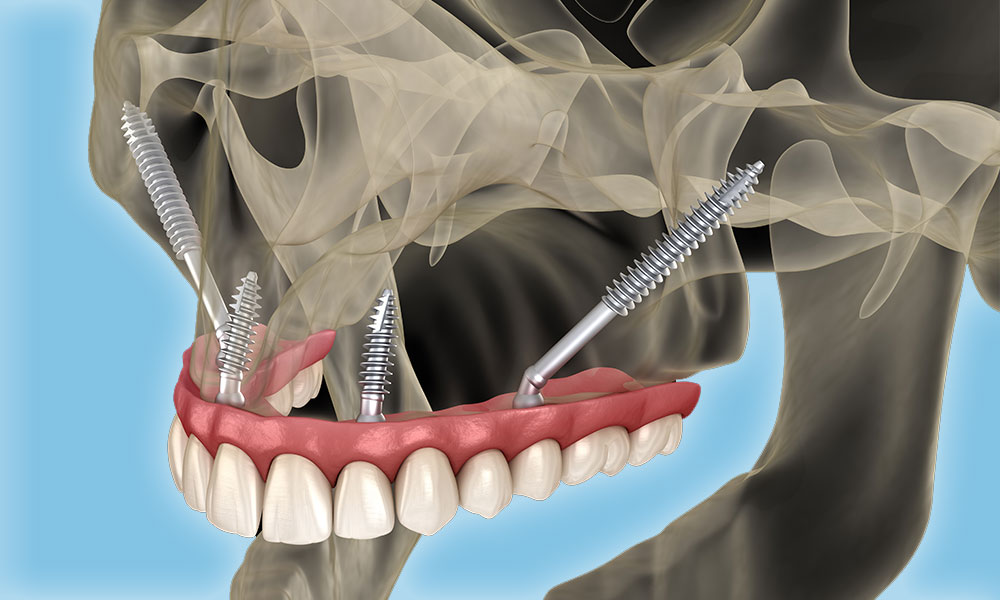
All on 4® treatment uses strategically positioned implants to support an entire arch of replacement teeth. The position of those implants is carefully planned based on each patient’s anatomy and available bone.
Some patients with osteoporosis may be candidates without major changes to the treatment plan. Others may require additional precautions or coordination with their physician. There may also be situations where implant treatment isn’t recommended.
The answer needs to come from your individual evaluation rather than a general statement about osteoporosis.
Your Medications Are an Important Part of the Conversation
This is one area patients should pay particularly close attention to.
Certain medications used to treat osteoporosis can affect the way bone remodels and heals. That doesn’t automatically mean someone taking these medications cannot receive dental implants, but your implant dentist needs to know exactly what you’re taking before planning surgery.
Bring a complete medication list to your consultation, including the name of the medication, how often you take it, and how long you’ve been taking it. If you’re unsure, check with your physician or pharmacy rather than trying to remember.
Some osteoporosis medications are taken by mouth, while others may be given by injection or infusion. Those details can matter when your dentist evaluates surgical risk.
Never stop taking an osteoporosis medication on your own because you’re considering dental implants. Any decision involving changes to a prescribed medication needs to be discussed with the healthcare professional who manages that medication. When appropriate, your dentist and physician can work together to determine the safest approach.
Why Your Medical History Matters So Much
Patients sometimes focus entirely on whether they have enough jawbone and forget that implant treatment involves the whole person.
Your medical history gives your dentist valuable information about how your body may respond to surgery and healing. In addition to osteoporosis, your dentist may ask about diabetes, cardiovascular conditions, previous surgeries, smoking, medications, and other factors that could affect treatment.
Be as honest and complete as possible.
Leaving out a medical condition or medication because you’re afraid it will prevent you from qualifying doesn’t improve your chances of treatment. It removes information your dentist needs to keep you safe.
The goal of a consultation isn’t to find reasons to say no. It’s to determine whether treatment can be performed safely and predictably.
What If You’ve Already Been Told You Have Bone Loss?
Osteoporosis and jawbone loss aren’t necessarily the same thing, but some patients may be dealing with both.
If you’ve been missing teeth for several years, the bone in those areas may have changed because it is no longer receiving stimulation from natural tooth roots. Gum disease can also contribute to bone loss around failing teeth.
Hearing that you have bone loss can sound discouraging, but it still doesn’t tell the entire story.
Modern implant treatment allows dentists to carefully evaluate where usable bone remains and determine whether implants can be positioned appropriately. In some situations, additional procedures may be considered. In others, the design of a full arch treatment may allow your dentist to work with the bone that is available.
This is another reason imaging is so important. Your treatment should be based on your anatomy, not assumptions.
Healing Doesn’t Stop When You Leave the Office
Implant surgery may take place on a particular day, but your body continues working for months afterward.
During that healing period, the jawbone is developing its connection with the implants. Your dental team may recommend changes to your diet while this process takes place because limiting excessive pressure can help protect the healing implants.
You’ll also receive instructions for keeping your mouth clean and caring for the surgical areas.
Follow-up appointments allow your dentist to monitor how you’re progressing rather than simply assuming everything is healing normally.
For someone with concerns about bone health, those appointments are particularly valuable. They give your dental team an opportunity to follow your progress and address concerns early.
What If You’re Older Too?
Osteoporosis becomes more common with age, so it’s understandable that some people worry they have two things working against them.
Age itself doesn’t automatically prevent someone from receiving dental implants.
A person’s overall health, healing ability, bone condition, medications, and individual risk factors generally provide much more useful information than age alone. A healthy older adult may still be an appropriate candidate for treatment.
Rather than asking whether you’re “too old,” a more useful question is whether your health and anatomy allow implant treatment to be performed safely.
That’s something a proper evaluation can answer.
Don’t Rule Yourself Out Before You’re Evaluated
It can be frustrating to spend hours researching dental implants only to repeatedly find lists of conditions that supposedly make treatment impossible.
Real healthcare is rarely that simple.
Having osteoporosis doesn’t mean you should assume you’re a candidate, but it also doesn’t mean you should assume you’re not.
If you’ve been living with loose dentures, missing teeth, or teeth that continue to fail, getting an evaluation can at least give you accurate information about your options. Even if All on 4® treatment isn’t recommended, you’ll understand why and can discuss other approaches that may be appropriate.
Can You Get All on 4 If You Have Osteoporosis?
So, can you get All on 4 if you have osteoporosis? For some patients, the answer may be yes, but the decision requires careful evaluation. Your dentist needs to consider the condition of your jawbone, your medical history, the medications you’re taking, and your ability to heal before recommending implant surgery.
Osteoporosis is an important part of that conversation, but it isn’t the entire conversation.
At Full Arch Dental Implant Center, we believe major dental decisions should be based on detailed information rather than assumptions. If osteoporosis has made you believe dental implants aren’t possible, a comprehensive evaluation can help you understand what’s actually happening with your jawbone and whether All on 4® treatment may be an option for you.