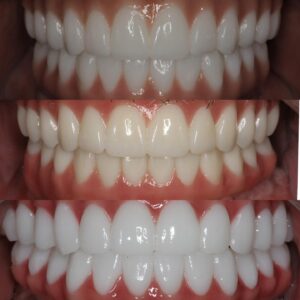
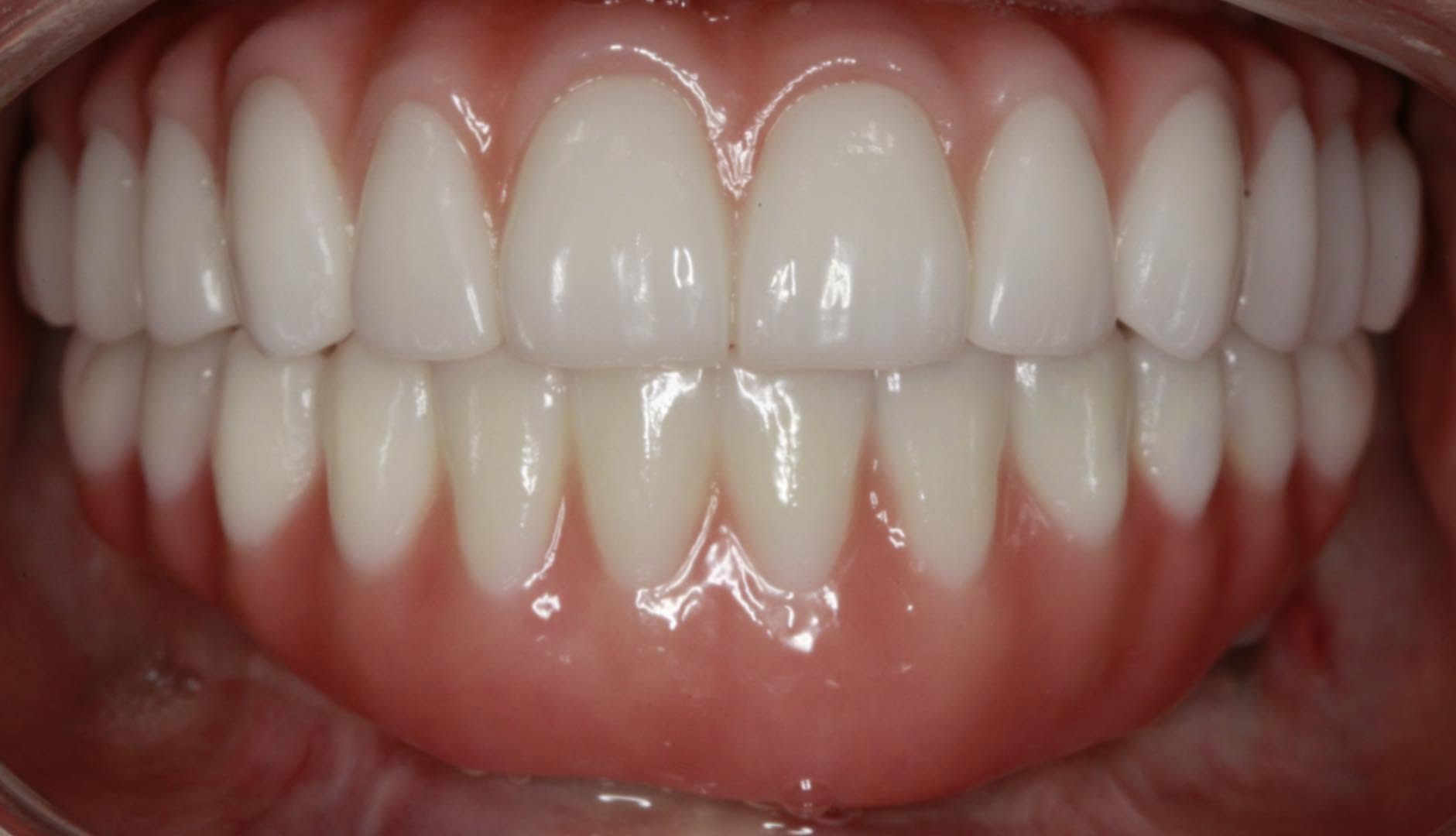
How do you clean under All-on-4® dental implants? It’s an important question that sometimes gets overlooked when people are researching full arch dental implants. It’s easy to focus on the surgery, what your new smile will look like, and what you’ll be able to eat. But once you have your new teeth, you also need to know how to take care of them every day.
All-on-4® teeth don’t develop cavities the way natural teeth do, but that doesn’t mean you can stop brushing or cleaning your mouth. Your implants are surrounded by living gum tissue and supported by your jawbone. Keeping those areas healthy is an important part of protecting your implants for the long term.
The good news is that caring for All-on-4® dental implants doesn’t have to be complicated. Your routine will be a little different from cleaning natural teeth, especially when it comes to getting underneath your full arch restoration, but once you learn how to do it, it can become a normal part of your day.
Why Do You Need to Clean Under All-on-4® Teeth?
An All-on-4® restoration is supported by dental implants rather than individual natural tooth roots. Because the restoration is one connected arch, you can’t floss between every tooth in exactly the same way you would with individual natural teeth.
There is also an area where the restoration meets your gums. Small particles of food and plaque can collect around and underneath this area if it isn’t cleaned regularly. You may not always be able to see what’s collecting there.
That’s why cleaning underneath the restoration is so important. The goal isn’t simply to keep the visible teeth looking clean. You’re trying to maintain healthy gum tissue around the implants supporting those teeth.
Think about it this way: the part of your smile everyone sees is only one part of your All-on-4® treatment. The implants and tissues underneath are the foundation, and that foundation needs care too.
Can All-on-4® Dental Implants Get Cavities?
The replacement teeth used with dental implants aren’t made from natural enamel, so they cannot develop cavities the way your natural teeth can.
That sounds like wonderful news, and it is. But sometimes people hear “no cavities” and assume that means “no dental problems.”
Those are two very different things.
Plaque and bacteria can still accumulate around dental implants. If those areas aren’t properly cleaned, the gums surrounding an implant can become irritated and inflamed. Over time, problems around the supporting tissues can threaten the health of an implant.
So while you aren’t brushing to prevent a cavity inside your All-on-4® teeth, you’re still cleaning to protect the gums and structures supporting your new smile.
How Do You Clean Under All-on-4® Dental Implants?
How do you clean under All-on-4® dental implants at home? Your exact routine may vary depending on the design of your restoration and your dentist’s recommendations, but most patients use a combination of brushing and tools designed to clean around and underneath implant supported teeth.
You’ll still brush your teeth every day. Pay particular attention to the area where your restoration meets the gums rather than quickly brushing only the visible surfaces.
Your dental team may also recommend special floss or floss threaders that can reach underneath the restoration. Instead of moving floss between two individual teeth, the floss is guided beneath the full arch so you can clean areas that a normal toothbrush cannot reach.
Some patients also use small interdental brushes designed to clean tight spaces. The right size matters because you don’t want to force a brush into an area where it doesn’t comfortably fit.
Your dental team should demonstrate these techniques rather than simply handing you a list of products and sending you home. Ask them to show you exactly where the cleaning tool needs to go and how to use it safely.
What About a Water Flosser?
Water flossers are popular among people with full arch dental implants because they can make it easier to flush debris from difficult to reach areas.
A water flosser uses a controlled stream of water to clean around the restoration and gumline. It can be especially useful for removing food particles that become trapped underneath your implant supported teeth.
However, a water flosser shouldn’t automatically be viewed as a replacement for every other part of your cleaning routine. Depending on your restoration, your dental team may recommend using it along with brushing and other cleaning methods.
If you’ve recently had surgery, ask your dentist when it’s appropriate to begin using one. Your cleaning instructions during the early healing period may be different from the routine you’ll follow once your mouth has fully healed.
What Kind of Toothbrush Should You Use?
You don’t need to attack your implants with the hardest toothbrush you can find.
Gentle and thorough is more important than aggressive.
A soft toothbrush can clean the surfaces of your restoration and along the gumline without unnecessary irritation. Some people prefer an electric toothbrush because it makes consistent brushing easier, while others are perfectly comfortable using a manual brush.
The best toothbrush is one you can use correctly and consistently.
Your dental team can also help you identify areas you’re missing. If plaque continues accumulating in a particular location, they may recommend changing your technique rather than simply brushing harder.
How Often Should You Clean Your All-on-4® Teeth?
Daily cleaning matters.
Just like natural teeth, plaque begins accumulating every day. Waiting until your mouth feels dirty or you notice food underneath your restoration allows that buildup to remain around the gums longer than it should.
Your dentist will give you recommendations based on your specific restoration, but brushing at least twice a day is commonly part of a healthy routine. Cleaning underneath the restoration should also become a regular habit.
Some people find it easiest to do their most thorough cleaning before bed when they aren’t rushing to get out the door.
The exact time matters less than consistency. Five careful minutes every day is much more valuable than an extremely thorough cleaning once every few weeks.
What If Food Keeps Getting Underneath?
Occasionally noticing food underneath an implant supported restoration doesn’t necessarily mean something is wrong. The shape of the restoration and the foods you’re eating can influence where particles collect.
However, if you’re constantly getting large amounts of food trapped underneath one particular area, mention it at your next appointment.
Your dentist can evaluate the restoration and surrounding tissues to determine whether what you’re experiencing is expected or whether an adjustment should be considered.
Don’t simply accept persistent discomfort because you assume it’s part of having implants. Your dental team wants to know about changes in the way your restoration feels and functions.
Do You Still Need Professional Cleanings?
Yes.
This surprises some patients because they assume replacing their natural teeth means they’re finished with dental cleanings.
Professional maintenance remains an important part of caring for All-on-4® dental implants.
During these appointments, your dental team can clean areas that are difficult to reach at home and evaluate the health of the tissues around your implants. They can also inspect your restoration, check your bite, and look for signs of wear or other changes.
These visits are also a great time to ask questions about your home care.
If you’re struggling to clean a particular area, tell your hygienist or dental team. They may be able to show you a different technique or recommend a tool that makes the process much easier.
What Signs Should You Watch For?
Once you become familiar with your All-on-4® smile, you’ll start to understand what feels normal.
Pay attention when something changes.
Persistent bleeding around an implant, swelling, unusual tenderness, a bad taste that doesn’t go away, or a change in how your restoration feels should be discussed with your dentist.
That doesn’t mean every small change is a serious problem. Gum tissue can occasionally become irritated for simple reasons. The important thing is not ignoring something that continues.
Dental problems are often easier to address when they’re found early, and routine maintenance gives your dental team the opportunity to monitor small changes before they become larger concerns.
Cleaning Gets Easier With Practice
If you’re new to All-on-4® treatment, your cleaning routine may feel awkward at first.
That’s normal.
Threading floss underneath a restoration or learning how to angle a water flosser isn’t something most people have done before. It may take a little practice before the routine feels natural.
Don’t become discouraged because you aren’t perfect immediately. Ask questions during your follow-up visits. Have someone demonstrate the technique again if necessary. Bring your cleaning tools with you if you’re unsure whether you’re using them correctly.
Eventually, caring for your implants becomes just another part of your normal morning and evening routine.
How Do You Clean Under All-on-4® Dental Implants?
How do you clean under All-on-4® dental implants? The most important thing is to clean both the visible restoration and the areas underneath it. Brushing, specialized flossing tools, interdental brushes, and water flossers may all be useful depending on the design of your smile and the recommendations of your dental team.
You don’t have to figure it out alone. Your implant provider should teach you how to care for your restoration and continue checking your technique during maintenance visits.
At Full Arch Dental Implant Center, we want patients to understand that receiving All-on-4® teeth is the beginning of caring for a new smile, not the end of dental care. A few minutes of consistent home cleaning, combined with professional maintenance, can help protect the gums and implants supporting your smile for years to come.