There comes a point where many people start asking themselves the same frustrating question.
“How many more times am I going to have to fix this?”
It might be a crown that has come loose for the second time. A root canal that still doesn’t feel right. Another cracked tooth that seemed perfectly fine just a few weeks ago. Maybe you’ve spent years bouncing from one dental appointment to the next, hoping each visit will finally solve the problem.
Instead, it feels like you’re stuck in a cycle.
A filling turns into a crown. The crown eventually needs a root canal. The tooth breaks anyway. Then another tooth starts bothering you. Before long, you’re not thinking about one bad tooth anymore. You’re wondering if your entire smile is beginning to fail.
If that sounds familiar, you’re not giving up by asking whether there’s another option. You’re asking a smart question that deserves an honest answer.
Fixing Teeth Isn’t the Problem
Let’s be clear about something first.
Dentists want to save natural teeth whenever they can.
Modern dentistry has incredible tools for restoring damaged teeth. Fillings, crowns, root canals, and gum treatments help millions of people keep their natural smiles for decades. If a tooth has a healthy long-term future, preserving it is usually the best choice.
The problem isn’t repairing teeth.
The problem is continuing to repair teeth that may no longer have a predictable future.
Sometimes a tooth simply reaches a point where every new procedure becomes another temporary solution instead of a lasting one.
Are You Treating One Tooth or Chasing Problems?
One broken tooth usually isn’t a reason to think about full mouth treatment.
But what happens when it’s no longer just one tooth?
Maybe you’ve had three crowns in the last five years.
Maybe you’ve lost two teeth already.
Maybe every dental visit seems to uncover another issue that needs attention.
This is where your dentist begins looking at the bigger picture.
Instead of asking, “Can we save this tooth?” they may begin asking, “What does this entire mouth look like five or ten years from now?”
That’s a very different conversation.
The Costs You Don’t Always Think About
When people compare treatment options, they usually compare dollar amounts.
That’s understandable.
Dental care is an investment, and cost matters.
But there are other costs that don’t appear on a treatment plan.
How many workdays have you missed because of dental appointments?
How many vacations have been interrupted by a broken tooth?
How often do you avoid eating certain foods because something might crack?
How much time have you spent worrying about what will happen next?
Those things have value too.
Living with constant uncertainty can become exhausting.
Sometimes the Strongest Decision Is Looking Ahead
Imagine patching a leaking roof every rainy season.
Each repair works for a while, but eventually another leak appears.
At some point, you stop asking how to patch the next hole and start asking whether the roof itself has reached the end of its life.
Your teeth can reach a similar point.
That doesn’t mean every damaged tooth should be removed.
It simply means there are situations where looking at the entire mouth instead of one tooth at a time makes more sense.
This is especially true when multiple teeth have large restorations, repeated infections, severe gum disease, or significant structural damage.
It Doesn’t Mean You’ve Failed
When to stop fixing your teeth? Many patients feel embarrassed when they hear they may need more extensive treatment.
They think they should have brushed better.
Gone to the dentist more often.
Taken better care of themselves.
The truth is, life happens.
Genetics matter.
Medications matter.
Old dental work eventually wears out.
Accidents happen.
Grinding your teeth while you sleep can slowly weaken even healthy teeth.
Needing a different solution doesn’t mean you’ve failed.
It simply means your dental needs have changed over time.
How Do You Know It’s Time?
There’s no magic number of crowns or root canals that automatically means you need dental implants.
Every situation is different.
But there are a few signs that it’s worth having a conversation with your dentist.
If you’re constantly repairing the same teeth, experiencing frequent dental emergencies, losing multiple teeth, or finding that your bite no longer feels stable, it may be time to look at the bigger picture instead of the next repair.
The goal isn’t to replace teeth unnecessarily.
The goal is to find the treatment that gives you the healthiest and most predictable future.
The Bottom Line
When to stop fixing your teeth? If you’ve been wondering when it’s time to stop fixing your teeth, you’re asking a question that many people eventually face.
For some patients, another filling or crown is absolutely the right answer.
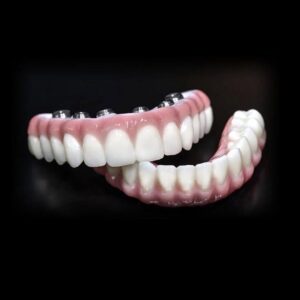
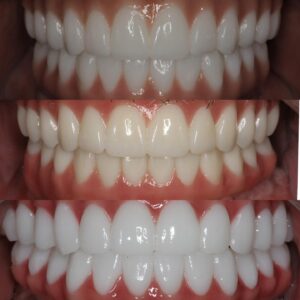
For others, years of repeated dental work may be a sign that it’s time to explore a more comprehensive solution.
At Full Arch Dental Implant Center, we believe treatment decisions should never be rushed. Every smile deserves an honest evaluation, thoughtful planning, and recommendations based on what’s best for your long-term health. Sometimes that means saving natural teeth. Sometimes it means looking at a new path forward. The important thing is understanding your options before making your decision.