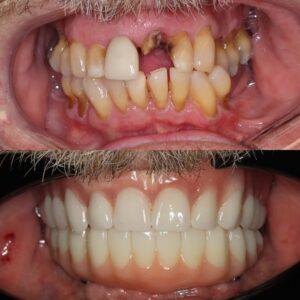

Can All-on-4® dental implants change your face shape? This is a question patients often have when considering full arch dental implant treatment, particularly if they have been living with missing teeth, severely worn teeth, or removable dentures for several years.
Your teeth do much more than help you chew. They also contribute to the appearance of your smile and provide support for the surrounding lips and facial tissues. When teeth are lost or significantly worn down, those relationships can change.
Replacing an entire arch of teeth may affect how your lower face looks, especially when the new restoration replaces tooth structure and support that have been missing for a long time.
However, All-on-4® is not cosmetic facial surgery, and the degree of visible change varies from person to person.
Understanding why your face may look different after treatment can help you develop realistic expectations before receiving your new smile.
Why Missing Teeth Can Change Your Appearance
Losing teeth affects more than the spaces inside your mouth.
Natural teeth help establish the relationship between your upper and lower jaws when you close your mouth. They also provide support for surrounding soft tissues.
When several teeth are missing, the appearance of the lower face can gradually change. Some people notice that their lips appear less supported. Others feel that their mouth looks more sunken or that their lower face appears shorter.
These changes can be particularly noticeable in people who have lost most or all of their teeth.
The extent depends on several factors, including how long the teeth have been missing, the condition of the jawbone, previous dental work, and individual facial anatomy. Not everyone experiences the same changes.
What Happens to Your Jawbone After Tooth Loss?
Your jawbone is living tissue that responds to the forces placed upon it.
Natural tooth roots help transfer chewing forces into the surrounding bone. When teeth are removed, the bone that previously supported them no longer receives stimulation in quite the same way.
Over time, the jawbone can undergo resorption, meaning some of its volume is gradually lost.
This process can contribute to changes in the shape of the jaw and surrounding facial tissues. It is one reason someone who has worn dentures for many years may notice that their dentures no longer fit the same way they once did.
The underlying foundation has changed.
Dental implants are designed to function as artificial tooth roots, providing support for replacement teeth while transferring functional forces to the surrounding bone.
Although implants cannot reverse every anatomical change caused by years of tooth loss, they may help preserve supporting bone around successfully integrated implants.
How All-on-4® Dental Implants Change Your Face Shape
When patients ask whether All-on-4® dental implants change your face shape, they are often asking whether their face will look fuller, younger, or more balanced after treatment.
The answer depends largely on what their mouth looked like before surgery.
If someone had a full set of teeth with relatively normal dimensions immediately before treatment, the visible change may be less dramatic. For someone who has been missing teeth for years, however, replacing those teeth may restore support that was previously absent.
A properly designed full arch restoration can help establish appropriate tooth position, bite relationships, and support for the lips. This can influence the appearance of the lower portion of the face.
It does not mean the implants themselves are reshaping your cheekbones or performing a facelift. Much of the visible difference comes from restoring the dental structures that contribute to facial appearance.
Can All-on-4® Make Your Lips Look Fuller?
Some patients notice that their lips appear better supported after receiving their new teeth.
This can happen when the restoration replaces missing or severely worn teeth that previously provided support behind the lips.
Think about how the appearance of your mouth changes when you remove a traditional denture. Without the denture in place, the lips may appear to sit farther inward.
Restoring the teeth can change that relationship.
The same general principle can apply to a fixed full arch restoration, although the design is different from a removable denture.
Your dental team considers tooth position, available space, bite, and facial proportions when planning your restoration.
The goal is to create an appropriate appearance and function for your individual anatomy rather than simply making every patient’s lips look fuller.
What About a Sunken Facial Appearance?
People who have experienced extensive tooth loss sometimes describe their face as looking sunken.
This appearance may be related to missing dental support, changes in jawbone volume, natural aging, or a combination of factors.
All-on-4® treatment can replace missing teeth and restore certain aspects of dental support. For some patients, this creates a noticeable improvement in the appearance of the mouth and lower face.
However, dental implants cannot restore all lost facial bone volume or eliminate every change associated with aging.
If facial appearance is one of your primary concerns, discuss it during your consultation. Your dental team can explain which changes may realistically be addressed through the design of your new teeth.
Why Your Bite Matters to Facial Appearance
Your bite is another important part of the discussion.
When your upper and lower teeth meet, they help establish the vertical relationship between your jaws.
If your teeth have become severely worn down or you have been missing teeth for a long time, that relationship may have changed.
You might notice that your lower face looks compressed or that your chin appears closer to your nose when your mouth is closed.
During full arch treatment, your dental team evaluates the appropriate dimensions and positioning of your new teeth.
Restoring those relationships may affect the appearance of your lower face.
However, determining the correct bite involves much more than making the teeth taller. Your dentist must consider comfort, jaw function, available space, facial proportions, and the overall restorative plan.
Will Your Face Look Different Immediately After Surgery?
Possibly, but the appearance immediately after surgery should not be treated as your final result.
All-on-4® surgery can cause postoperative swelling. Your cheeks, lips, and surrounding tissues may temporarily appear fuller than usual. Bruising can also occur.
As swelling decreases, your face may look noticeably different from how it did during the first few days.
At the same time, you are adjusting to an entirely new set of teeth.
Your smile may look unfamiliar simply because you have spent years seeing yourself with missing, damaged, or worn teeth.
Give yourself time to heal before deciding exactly how you feel about the change.
If you develop significant or worsening swelling, fever, increasing pain, or other concerning symptoms, contact your dental team rather than assuming every change is normal postoperative swelling.
Temporary Teeth Versus Final Teeth
Many All-on-4® treatment plans involve a temporary restoration during the healing period.
These teeth allow you to have a fixed smile while your implants and surrounding tissues recover.
The temporary stage can also provide valuable information about appearance. You may discover that you prefer a particular tooth length, shape, or smile appearance.
Your dental team can evaluate how the restoration supports your lips, how your bite functions, and how your mouth adapts.
This feedback can become part of the discussion as you move toward your final restoration.
If something about your temporary smile concerns you, mention it. Do not assume that every design decision is already permanent.
Can All-on-4® Make You Look Younger?
Some patients feel that replacing missing or severely damaged teeth gives them a more youthful appearance.
A complete smile can influence how someone looks when speaking, laughing, and smiling. Restoring lost dental support may also improve certain aspects of the lower facial profile.
However, it is important to keep expectations realistic.
All-on-4® is designed to replace teeth and restore dental function. It does not remove wrinkles, tighten skin, or reverse every anatomical change associated with aging.
A refreshed appearance may be a welcome benefit of treatment, but it should not be confused with a guaranteed cosmetic facial transformation.
What if You Do Not Want Your Face to Change Dramatically?
This is worth discussing before treatment.
Not everyone wants a dramatic transformation. Some patients simply want their smile restored while maintaining an appearance that feels familiar.
Bring photographs of yourself from a time when you liked your natural smile, if you have them.
Explain what you liked about your previous teeth. Maybe you preferred a particular tooth shape or did not want your smile to appear overly prominent.
Your dental team can discuss your preferences while considering the functional and anatomical requirements of your restoration.
A successful result should account for more than the appearance of the teeth in isolation.
The teeth need to work with your face.
Your New Smile Should Still Look Like You
One concern patients sometimes have is that receiving a complete set of replacement teeth will make them look like an entirely different person.
That is not the purpose of All-on-4® treatment.
The goal is to restore missing or failing teeth in a way that supports comfortable function and an appropriate appearance.
Your facial features, natural proportions, and treatment needs are individual. The smile that looks appropriate for one patient may not be the right design for another.
This is why personalized planning matters.
Tooth size, positioning, smile line, bite, and the relationship between the restoration and surrounding tissues all contribute to the overall result.
Will All-on-4® Dental Implants Change the Shape of Your Face?
All-on-4® dental implants may change the appearance of your lower face, particularly if missing or severely worn teeth have affected your bite and facial support.
Replacing an entire arch can help restore dental structure, support the lips, and establish appropriate relationships between the upper and lower jaws. The amount of visible change depends on your anatomy, existing bone loss, previous dental condition, and restoration design.
All-on-4® is not a facelift, but restoring the teeth that contribute to facial appearance can make a meaningful difference for some patients.
At Full Arch Dental Implant Center in Lake Havasu City, we believe planning a new smile involves looking at the entire person, not just the teeth. Understanding your facial proportions, dental history, functional needs, and appearance goals helps guide a restoration that feels appropriate for you.
The goal is not to give everyone the same smile. It is to help you regain a smile that fits your face and supports your everyday life.