When dental repairs are no longer enough, it can be difficult to know what to do next. Maybe you have spent years getting fillings, crowns, root canals, bridges, or extractions. Each appointment fixes one problem, but before long, something else seems to go wrong. For patients caught in this cycle, All on 4® treatment may become part of the conversation because the real issue is no longer one damaged tooth. It is the overall condition of the mouth.
This can be a hard situation to accept.
Most people want to save their natural teeth, and whenever teeth can be kept healthy with a good long term outlook, that is worth discussing with a dentist. However, there are times when a patient has so many serious problems happening at once that continuing to repair one tooth after another may not provide the stability they are looking for.
The important question is not simply, “Can this tooth be repaired?”
A better question may be, “What is the long term outlook for my entire mouth?”
The Cycle of Fixing One Tooth at a Time
For many patients, major dental problems do not happen all at once.
It may start with a filling.
Years later, that tooth needs a crown. Another tooth develops a deep cavity. Then a different tooth breaks while eating. A root canal may be needed. Later, another tooth becomes loose.
Each problem is treated separately because, at the time, it feels like an individual issue.
However, after years of repeated dental work, some patients begin to notice a pattern. They are spending more time at the dentist, but they do not feel like their mouth is becoming more stable.
This can be frustrating.
You may finish paying for one procedure just as another problem appears. You may avoid chewing on one side because of a painful tooth, only to put more pressure on the other side. You may feel like you are always waiting for the next problem.
When dental repairs are no longer enough to create long term stability, it may be time to look at the entire mouth instead of focusing only on the newest problem.
Repairable Does Not Always Mean Predictable
This is an important idea for patients to understand.
A tooth may technically be repairable, but that does not always mean another repair will provide a strong long term result.
Dentists consider many things when evaluating a tooth. They look at how much healthy tooth structure remains, the condition of the root, the health of the gums, the amount of bone supporting the tooth, and how the tooth fits into the patient’s overall bite.
The history of the tooth matters too.
For example, a tooth with a small cavity is very different from a tooth that has already had a large filling, a root canal, a crown, and another fracture.
That does not automatically mean the tooth cannot be saved. However, the entire history needs to be considered when discussing what may happen next.
The same idea applies to the whole mouth.
If one tooth has a problem and everything else is healthy, repairing that tooth may be a simple decision. If many teeth are loose, broken, infected, or heavily restored, the conversation becomes more complicated.
Why the Whole Mouth Matters
Teeth do not work alone.
They work together every time you bite and chew.
When several teeth are missing or damaged, the remaining teeth may begin carrying more pressure. Some patients start chewing only on one side because the other side hurts. Others avoid using certain teeth because they are afraid something will break.
Over time, these habits can change the way pressure is distributed throughout the mouth.
This is why a full evaluation is important for patients with repeated dental problems.
The goal is to understand whether the problems are truly separate or whether they are connected to a larger issue involving gum disease, bite forces, tooth wear, bone loss, or widespread decay.
Sometimes the best plan is to repair individual teeth.
Sometimes a combination of treatments makes sense.
In other situations, full arch dental implants may be worth discussing.
The right answer depends on the individual patient.
The Emotional Cost of Repeated Dental Work
There is another side of repeated dental treatment that does not show up on an X ray.
It can be exhausting.
Patients sometimes tell us they feel like they have been dealing with their teeth for most of their adult lives. They have taken time off work for appointments. They have spent money on repairs. They have dealt with pain, infections, and unexpected emergencies.
After a while, the stress can become just as frustrating as the physical problems.
Some patients become afraid to eat certain foods because they think another tooth may break. Others worry every time they feel a new sensation in their mouth.
Is this another infection?
Did that crown move?
Is this tooth getting loose?
Will I need another emergency appointment?
Living with that uncertainty can affect everyday life.
When dental repairs are no longer enough to give a patient confidence in their mouth, the conversation may shift toward finding a more complete solution.
Where All on 4® Treatment Fits Into the Conversation
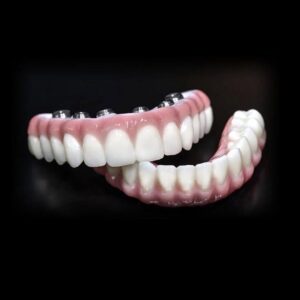
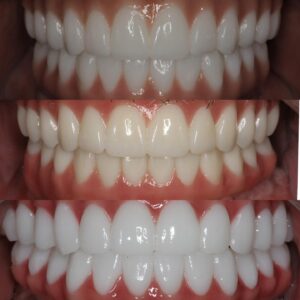
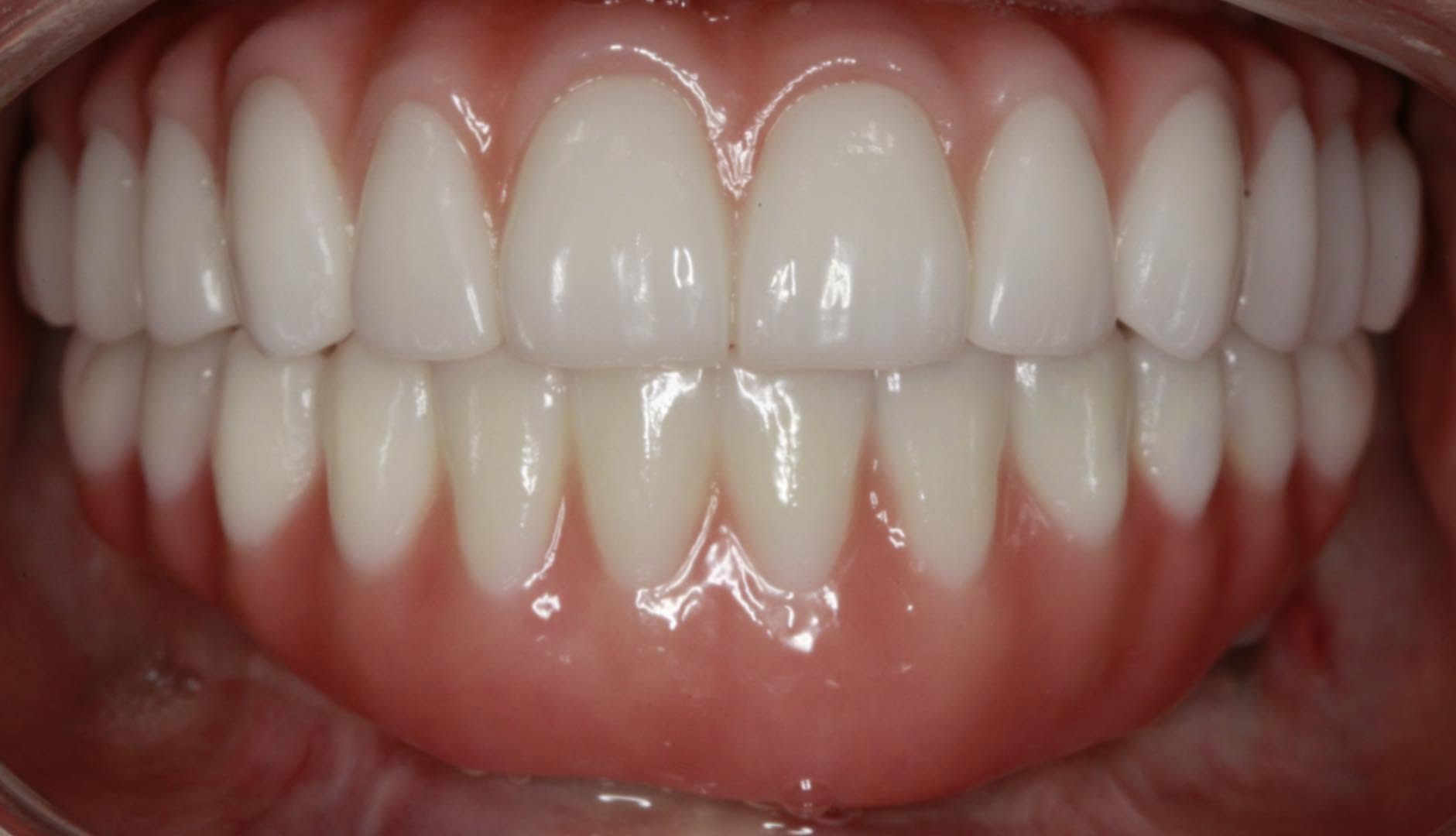
All on 4® treatment is designed for patients who need to replace a full arch of missing or failing teeth.
The treatment uses dental implants placed in the jaw to support a complete arch of replacement teeth. Instead of treating each failing tooth as a separate problem, the treatment addresses the entire arch.
However, this does not mean that everyone with several crowns or fillings needs All on 4® treatment.
It is not a shortcut for healthy teeth.
It is not the right choice for every patient.
A complete evaluation is needed to understand the condition of the teeth, gums, bone, and overall health before making a recommendation.
For some patients, natural teeth can still be treated and maintained successfully.
For others, years of dental disease and repeated repairs have created a situation where full arch treatment may provide a more predictable path forward.
The purpose of a consultation is to understand which situation applies to you.
Signs That It May Be Time for a Bigger Conversation
There is no single moment that tells every patient they need to consider full arch treatment.
However, many people who begin researching All on 4® treatment have similar experiences.
They have several teeth with major dental work.
They have lost multiple teeth over the years.
They experience repeated infections or broken teeth.
They have loose teeth because of advanced gum problems.
They are constantly chewing around painful areas.
They have been told that several teeth have a poor long term outlook.
They are tired of moving from one emergency to the next.
These situations do not automatically mean that full arch dental implants are the answer. However, they are good reasons to ask for a complete evaluation of the mouth rather than only treating the latest problem.
Cost Is Part of the Decision Too
Patients are often uncomfortable talking about money, but cost is a real part of dental treatment decisions.
Repeated dental work can become expensive over time.
A patient may pay for a root canal and crown on one tooth, then need treatment on another tooth several months later. If the overall condition of the mouth is poor, this pattern may continue for years.
That does not mean individual dental treatment is a waste of money. Saving healthy, maintainable teeth can be an excellent investment.
The question is whether each new repair is contributing to a stable long term plan.
Patients deserve to understand the expected outlook of treatment. They should feel comfortable asking how long a repair is expected to last, what other teeth may need treatment in the future, and whether there are different ways to approach the overall situation.
Good treatment planning looks beyond today’s problem.
It considers where the patient may be several years from now.
A Consultation Should Give You Clarity
Many people delay a full mouth evaluation because they are afraid of what they will hear.
Some believe they will be judged for the condition of their teeth.
Others worry they will be pressured into treatment.
Some are simply embarrassed because it has been a long time since they visited a dentist.
A consultation should be about getting clear information.
What is happening now?
Which teeth are healthy?
Which teeth need treatment?
What is the long term outlook?
What options are available?
These are reasonable questions.
At Full Arch Dental Implant Center, we work with patients who have many different dental histories. Some have been wearing dentures for years. Others still have teeth but are dealing with widespread dental problems. Some have had extensive dental work and are frustrated that problems continue to appear.
Every situation is different, which is why treatment should begin with understanding the patient, not making assumptions.
Looking Beyond the Next Repair
There is nothing wrong with repairing a tooth that has a good chance of remaining healthy and functional.
The problem comes when a patient is stuck in a cycle that never seems to create stability.
When dental repairs are no longer enough, it may be time to ask a different set of questions. Instead of only asking how to fix the newest broken tooth, it may be helpful to understand the condition of the entire mouth and what options could provide a more predictable future.
For some patients, the answer will still involve saving and restoring natural teeth.
For others, All on 4® treatment or another full arch solution may be worth exploring.
The goal is not to rush into a decision. The goal is to have enough information to make the right one.
If you have spent years moving from one dental problem to another, you deserve to understand the bigger picture. A complete evaluation can help you learn whether your teeth can be maintained successfully or whether it is time to discuss a different approach.
At Full Arch Dental Implant Center, we believe patients should leave a consultation understanding their options more clearly than when they arrived.
Because when dental repairs are no longer enough, the next step should begin with answers.