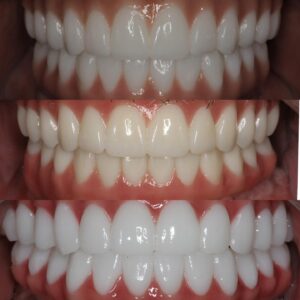
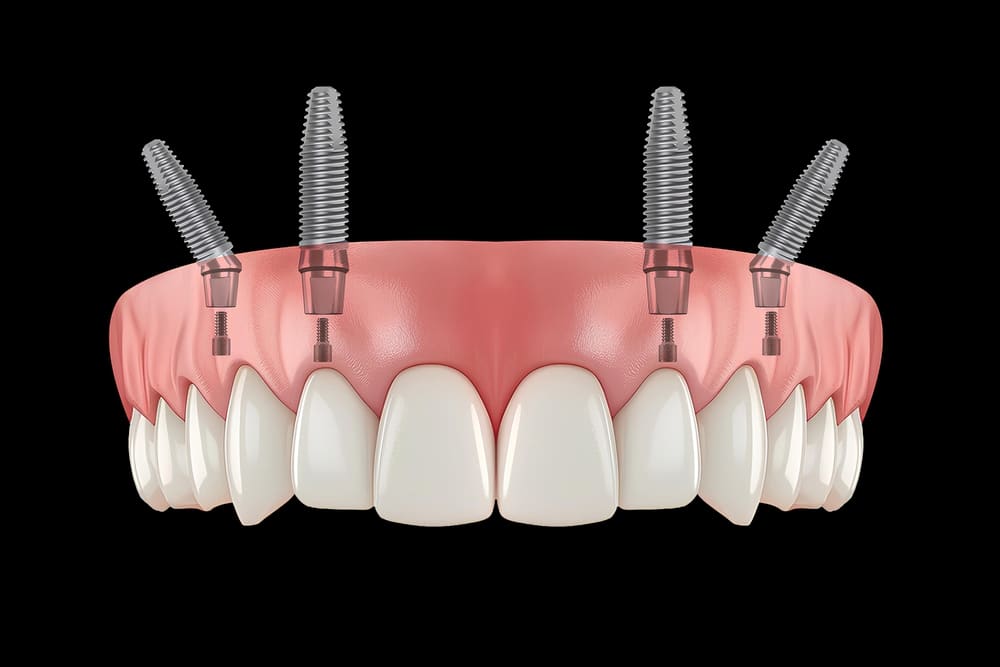
Can you get All on 4 if you have gum disease? If you’ve been searching for that answer, you’re certainly not alone. Gum disease is one of the leading causes of tooth loss in adults, and many people assume that once they’ve been diagnosed with periodontal disease, dental implants are no longer an option. Fortunately, that isn’t always true.
In fact, many patients who receive All on 4® treatment have a history of advanced gum disease. Years of infection may have caused their teeth to become loose, uncomfortable, or impossible to save. Instead of continuing to fight a losing battle, they begin looking for a solution that restores both their smile and their quality of life.
The important thing to understand is that gum disease doesn’t automatically prevent you from getting dental implants. What matters is how healthy your mouth can become before treatment and whether the disease has been properly evaluated and managed.
Understanding What Gum Disease Really Does
Gum disease usually develops slowly. It often begins as mild inflammation caused by plaque and bacteria collecting around the teeth. At first, you may notice bleeding when you brush or floss, persistent bad breath, or gums that look swollen or tender.
If it isn’t treated, the infection gradually spreads deeper below the gumline. Over time, it begins to destroy the tissues and bone that hold your teeth in place. That’s why advanced gum disease often leads to loose teeth, shifting teeth, and eventually tooth loss.
Many patients are surprised to learn that gum disease isn’t usually painful until it becomes quite advanced. That’s one reason people often don’t realize how serious it has become until significant damage has already occurred.
Why Gum Disease Doesn’t Always Eliminate Your Options
Hearing that you have gum disease can be discouraging, especially if you’ve already been told that several of your teeth can’t be saved.
The good news is that this doesn’t automatically mean you’re not a candidate for All on 4® treatment.
Many patients who explore full arch dental implants are doing so because gum disease has already affected most of their remaining teeth. In situations where the damage is too severe to restore those teeth predictably, replacing them may actually provide a healthier long-term solution.
Every case is different, which is why your dentist will carefully evaluate the condition of your teeth, gums, and jawbone before making a recommendation.
Your Consultation Tells the Whole Story
The only way to know whether you qualify is through a complete examination.
During your consultation, your dentist will examine your gums, assess the condition of your remaining teeth, and take advanced three-dimensional images of your jaw. These scans provide valuable information about the amount of bone you have available and whether additional treatment may be needed before implants are placed.
Your medical history, medications, and overall health are also reviewed because healing plays an important role in the long-term success of dental implants.
Many patients arrive expecting to hear they have no options left.
Instead, they leave with a treatment plan they never knew was possible.
What About Bone Loss?
One of the biggest concerns for patients with gum disease is bone loss.
Since periodontal disease gradually destroys the bone supporting your teeth, it’s natural to wonder whether there’s enough bone left for dental implants.
While severe bone loss can make treatment more complex, it doesn’t automatically prevent All on 4® treatment.
Modern implant planning uses advanced technology to identify the strongest areas of the jaw for implant placement. Because All on 4® implants are strategically positioned, many patients with moderate bone loss still qualify.
The only way to know what’s possible is by having your jaw evaluated with modern imaging.
Healthy Habits Still Matter
Receiving dental implants doesn’t mean oral hygiene suddenly becomes less important.
In fact, it’s just the opposite.
Although implants cannot develop cavities like natural teeth, the gums surrounding them still need to stay healthy. Daily brushing, cleaning around your restoration, and regular professional maintenance are essential for protecting your investment.
If gum disease contributed to the loss of your natural teeth, your dental team will also work with you to reduce the risk of future inflammation around your implants.
The healthier your gums remain, the better your long-term results are likely to be.
Don’t Assume You’re Not a Candidate
One of the biggest mistakes people make is deciding they don’t qualify before speaking with an implant dentist.
Maybe you’ve worn dentures for years.
Maybe you’ve already lost several teeth.
Maybe another dentist told you years ago that your only option was traditional dentures.
Dentistry continues to evolve, and today’s treatment options are very different from what was available even ten or fifteen years ago.
If you’ve been wondering, “Can you get All on 4 if you have gum disease?” the answer may be much more encouraging than you expected.
Final Thoughts
Can you get All on 4 if you have gum disease? In many cases, yes. While every patient is different, having gum disease doesn’t automatically prevent you from receiving full arch dental implants. The most important step is having your oral health evaluated so your dentist can determine the healthiest and most predictable treatment for your specific situation.
At Full Arch Dental Implant Center, we understand that many patients come to us after years of struggling with gum disease, loose teeth, and repeated dental problems. Our goal is to provide honest recommendations, advanced technology, and personalized care so you understand every option available to restore your smile with confidence.