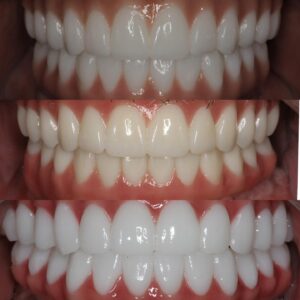
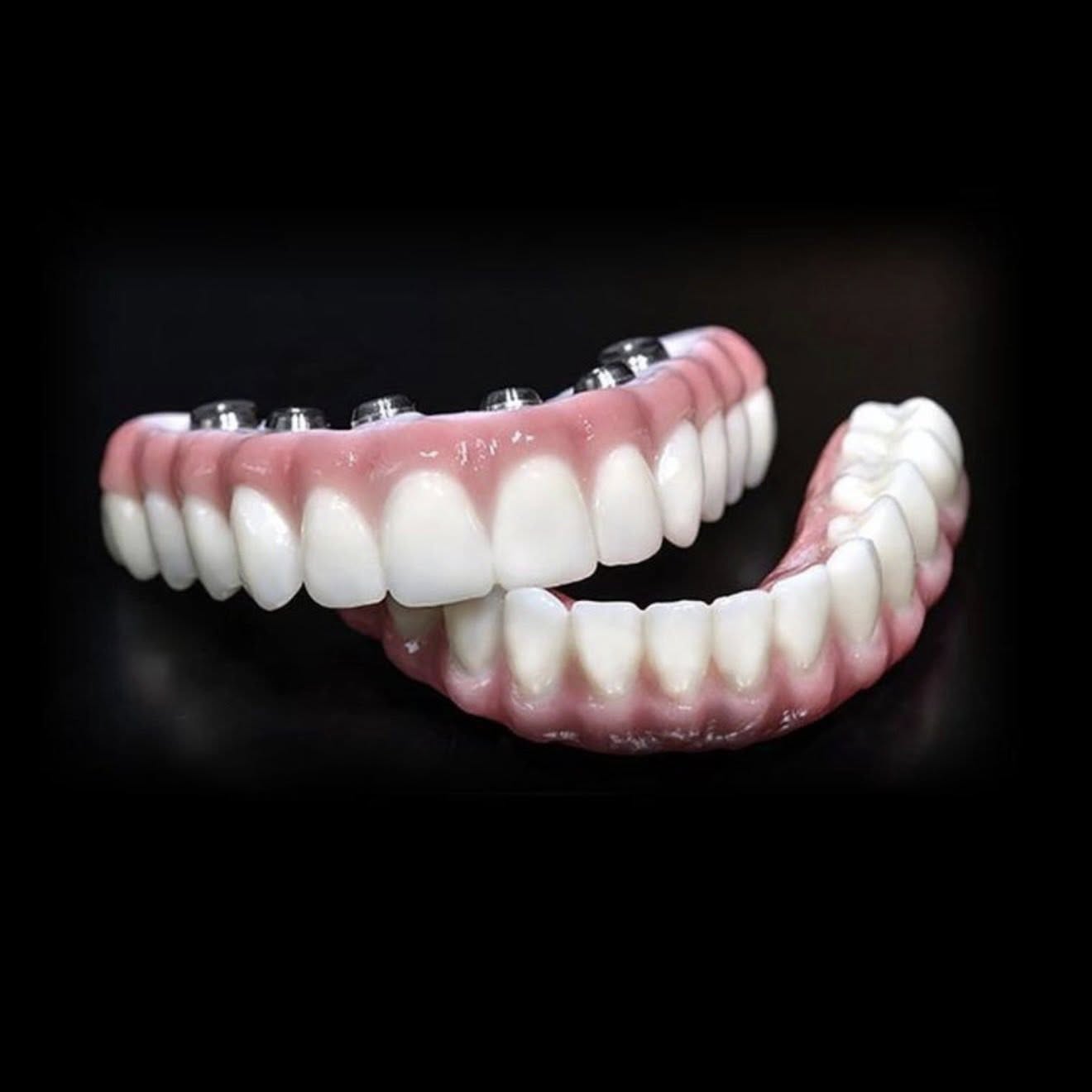
Can you get All on 4 after wearing dentures for years? If you’ve worn dentures for ten, twenty, or even thirty years, you may assume you’ve waited too long for dental implants. Maybe your dentures don’t fit as securely as they once did, or you’ve noticed your face and jaw have changed over the years. You may have even been told in the past that you don’t have enough bone for implants. None of this necessarily means that All on 4® treatment is no longer possible.
Long-term denture wear does create some important considerations, especially when it comes to the jawbone. However, implant dentistry has changed significantly over the years. Someone who was told they weren’t a candidate a decade ago may discover that today’s technology and treatment options provide possibilities that weren’t available to them before.
If you’re comfortable with your dentures, there may be no reason to change them. But if they’ve become a daily source of frustration, it’s worth understanding what other options may be available before deciding you’ve simply worn dentures for too long.
Why Does Your Mouth Change After Years of Wearing Dentures?
Natural tooth roots do more than hold your teeth in place. When you chew, those roots transfer forces into the jawbone and provide stimulation that helps maintain the bone.
Once teeth are removed, that stimulation changes. The body gradually begins remodeling the bone that previously supported the teeth. Over time, the jaw can become smaller and change shape.
This is one reason a denture that fit well when it was first made may eventually begin feeling loose. The denture itself may not have dramatically changed, but the mouth underneath it has.
These changes can continue for years, which is why long term denture wearers may require relines, adjustments, adhesives, or replacement dentures to maintain a comfortable fit.
Why Loose Dentures Become More Common Over Time
A traditional denture rests on the gums and underlying ridge for support. It isn’t anchored into the jaw the way a dental implant is.
As the shape of the jaw changes, maintaining a stable fit can become more challenging. Some people begin using more adhesive. Others learn to chew in a particular way to prevent their dentures from moving. Certain foods may gradually disappear from the menu because they’re simply too difficult or uncomfortable to eat.
Speech can sometimes become frustrating as well. If a denture shifts while you’re talking, you may become more aware of how you pronounce certain words or worry about movement during conversations.
These changes often happen gradually. Someone who has worn dentures for twenty years may not realize how many little adjustments they’ve made to everyday life until they start discussing them with a dentist.
Can You Get All on 4 After Wearing Dentures for Years?
For some patients, yes.
Can you get All on 4 after wearing dentures for years depends much more on your current anatomy and health than on how long you’ve worn dentures. Your dentist needs to evaluate the amount and quality of bone available, your medical history, and other factors that influence implant healing.
This evaluation is particularly important for long term denture wearers because the jaw may have changed considerably since the natural teeth were removed.
Modern three-dimensional imaging gives implant dentists a detailed view of the jaw. Instead of guessing how much bone remains from a traditional dental X-ray alone, a CBCT scan can help your dentist evaluate the bone from multiple angles and plan potential implant positions with much greater precision.
The fact that you’ve worn dentures for decades is useful information, but it isn’t enough by itself to determine whether you qualify.
What If You’ve Already Been Told You Don’t Have Enough Bone?
This can be one of the most discouraging things a patient hears.
Sometimes that information is current and accurate. Other times, the conversation happened many years ago when different techniques or technology were available.
Either way, you deserve an explanation of what “not enough bone” actually means in your individual situation.
All on 4® treatment differs from simply placing individual implants wherever natural teeth once existed. The implants are strategically positioned based on the patient’s anatomy and available bone. This approach may allow some patients with bone loss to receive implant supported teeth even when traditional implant approaches would be more challenging.
That doesn’t mean everyone with severe bone loss automatically qualifies. It means bone loss deserves to be evaluated properly before you assume treatment is impossible.
Will You Need Bone Grafting?
This is another question long term denture wearers frequently ask, and there isn’t one answer that applies to everyone.
Some patients may benefit from additional procedures because of the amount or location of their bone loss. Others may have enough usable bone for their planned treatment without extensive grafting.
Your dentist can only answer this after evaluating your jaw.
If additional treatment is recommended, ask why. Your provider should be able to show you what they’re seeing on your scan and explain how the recommendation fits into the overall treatment plan.
You should understand what is being recommended before making a major decision about your health.
How Different Does All on 4® Feel From Dentures?
This is often what long term denture wearers are most curious about.
Traditional dentures and implant supported teeth rely on very different foundations. A traditional denture sits on the gums. An All on 4® restoration is supported by implants placed in the jawbone.
That difference in support can change how the teeth feel during everyday activities.
Patients are often interested in greater stability while speaking and eating. They may also be tired of denture adhesives or worrying that their teeth will move at an inconvenient moment.
However, it’s important to have realistic expectations. All on 4® teeth aren’t natural teeth, and there is still an adjustment period. You’ll need to learn how to clean your restoration properly, attend maintenance appointments, and protect your implants long term.
The goal isn’t to pretend you’ve grown a new set of natural teeth. It’s to provide a stable tooth replacement solution designed around function, comfort, and long term health.
What About Eating?
Food is often a major reason people begin looking for an alternative to dentures.
Someone who has worn dentures for years may have developed an entire eating routine without thinking about it. Tough meat gets cut into smaller pieces. Nuts are avoided. Apples are sliced instead of bitten. Certain breads are simply more trouble than they’re worth.
After All on 4® treatment, there is an important healing period when you’ll still need to follow dietary restrictions. Having new teeth doesn’t mean the implants underneath them are immediately ready for unrestricted chewing.
Once healing is complete and your dentist has cleared you, however, implant supported teeth are designed to provide a stable foundation for chewing.
For someone who has spent decades thinking about their dentures during every meal, that can be an important quality of life consideration.
Is It Worth Changing After So Many Years?
There is no rule saying you need to replace dentures simply because dental implants exist.
Some people function very well with traditional dentures and are completely satisfied with them. If your dentures are comfortable, stable, and allow you to live the way you want, continuing with them may be perfectly reasonable.
The conversation changes when your dentures are affecting your quality of life.
If you’re constantly using adhesive, struggling to eat, dealing with sore areas, or worrying about your teeth moving while you’re talking, learning about implant supported options may be worthwhile.
Getting information doesn’t commit you to treatment. It simply gives you something to compare with what you’re experiencing now.
Don’t Assume You’ve Waited Too Long
This is perhaps the most important message for anyone researching can you get All on 4 after wearing dentures for years.
Don’t diagnose yourself based on the calendar.
Whether you’ve worn dentures for five years or thirty years, the number that matters isn’t how long you’ve been wearing them. What matters is what your jaw looks like today.
A comprehensive evaluation can show you how much bone remains, whether implants may be possible, and what challenges would need to be addressed.
You may discover you’re a candidate.
You may learn that your situation requires a more advanced approach.
You may also discover that another treatment makes more sense.
All three answers are more useful than spending another several years assuming you have no choice.
Can You Get All on 4 After Wearing Dentures for Years?
Can you get All on 4 after wearing dentures for years? In many cases, long term denture wear does not automatically eliminate dental implants as an option. Bone loss and changes in the jaw need to be carefully evaluated, but modern imaging and implant treatment have made it possible to help patients with a wide range of dental histories.
At Full Arch Dental Implant Center, we understand that someone who has worn dentures for decades may have very different concerns than someone who recently lost their teeth. That’s why treatment begins by understanding your history, examining where your oral health stands today, and explaining your options clearly. If you’ve spent years assuming you’ve waited too long, a consultation can finally give you an answer based on your mouth rather than an assumption.