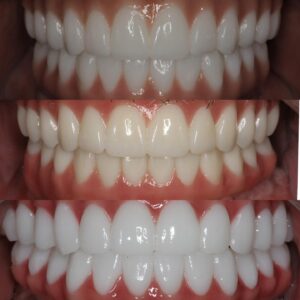
Can you get cavities with All-on-4® dental implants? If you have spent years dealing with tooth decay, fillings, crowns, broken teeth, and painful dental appointments, the possibility of never getting another cavity probably sounds pretty appealing.
There is good news. The replacement teeth used with All-on-4® cannot develop cavities the way natural teeth can. They are not made from natural tooth enamel, so the decay process that creates a cavity in a natural tooth does not happen inside an implant supported restoration.
But that does not mean you can throw away your toothbrush.
Your new teeth may not be able to decay, but the gums and bone supporting your dental implants are still living tissues. Bacteria and plaque still exist in your mouth. Food can still collect around and underneath your restoration.
After All-on-4® treatment, oral hygiene remains extremely important. The goal simply changes.
Why Can’t All-on-4® Teeth Get Cavities?
A cavity develops when acids produced by bacteria damage natural tooth structure.
Natural teeth contain enamel and dentin. Over time, repeated exposure to acids can weaken those structures and eventually create decay.
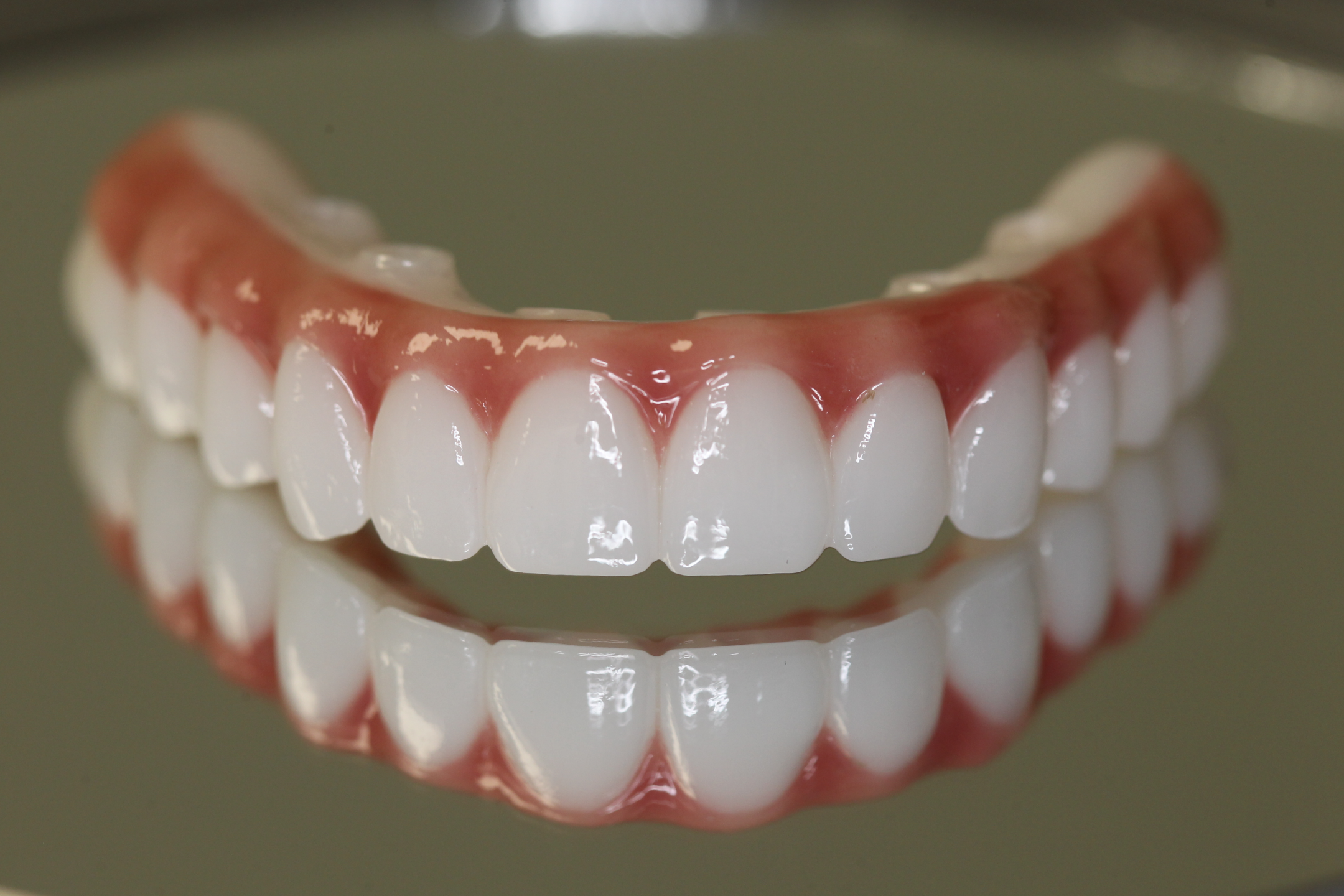
An All-on-4® restoration is made from dental materials rather than natural tooth enamel.
Because there is no natural tooth structure inside the replacement teeth, traditional tooth decay cannot form in them.
That is a significant difference for someone who has struggled with cavities throughout their life.
However, cavity resistant does not mean maintenance free.
The restoration can still experience wear or damage, and the biological tissues supporting the implants still need daily care.
Can You Get Cavities With All-on-4® Dental Implants Underneath the Teeth?
Can you get cavities with All-on-4® dental implants underneath the restoration? If the entire arch has been replaced and there are no natural teeth underneath it, there are no natural teeth there to develop cavities.
What can collect underneath the restoration is plaque, bacteria, and food debris.
That creates a different concern.
Your dental implants are surrounded by gum tissue and supported by jawbone. Keeping those tissues healthy is an important part of maintaining your implants.
This is why cleaning underneath an All-on-4® restoration matters even though there is nothing underneath it that can develop a traditional cavity.
You are protecting the foundation rather than preventing decay inside a tooth.
What Happens If You Stop Brushing?
It is easy to imagine someone getting their new teeth and thinking, “If these cannot get cavities, why do I need to brush twice a day?”
Because your mouth is still your mouth.
Plaque can accumulate on an implant supported restoration just as it can collect on other surfaces in your mouth.
If plaque remains around the gumline and implant areas, the surrounding tissues can become irritated and inflamed.
You may notice redness, swelling, tenderness, or bleeding. Bad breath or an unpleasant taste may also develop if food and bacteria are allowed to accumulate underneath the restoration.
More importantly, persistent inflammation around dental implants can threaten the tissues that help support them.
Brushing is no longer only about cavities. It is about keeping the entire environment around your implants healthy.
Dental Implants Can Have Gum Problems
Patients are often familiar with gum disease around natural teeth but do not realize similar inflammatory problems can develop around dental implants.
Inflammation limited to the soft tissue around an implant may occur when plaque and bacteria accumulate. If disease progresses and supporting bone becomes involved, the situation becomes more serious.
This is one reason your dentist does not want you to disappear after your All-on-4® treatment is completed.
Your implants need monitoring.
A person can have no natural teeth, no cavities, and still develop an oral health problem that needs professional attention.
The absence of tooth decay does not make gum health less important.
How Do You Brush All-on-4® Teeth?
You still brush the visible surfaces of your All-on-4® restoration.
Your dental team can recommend a toothbrush and technique appropriate for your particular restoration. The goal is to clean thoroughly without unnecessarily irritating the gum tissue.
Pay attention to the area where your restoration meets your gums.
However, brushing alone usually cannot reach everything underneath a full arch restoration.
That is where additional cleaning tools become useful.
Depending on the design of your restoration, your dental team may recommend specialized floss, floss threaders, interdental brushes, or a water flosser.
Do not worry if that sounds complicated at first.
Once you have practiced the routine, it can become just as normal as brushing your natural teeth used to be.
Food Still Gets Under Replacement Teeth
Even though All-on-4® teeth are fixed in place, there is still an area between the restoration and your gum tissue that needs to be maintained.
Small pieces of food can sometimes find their way underneath.
If you have ever had food stuck between two natural teeth, you already know how irritating a tiny piece of food can become.
With All-on-4®, you cannot simply floss between every individual replacement tooth because the restoration is constructed differently.
Instead, you learn how to clean underneath the arch.
Rinsing with water after eating can help remove loose debris, but it should not replace your normal cleaning routine.
If food consistently collects in one particular area or suddenly becomes much harder to remove than it used to be, mention it to your dental team.
Can All-on-4® Teeth Get Stained?
No cavities does not mean the restoration can never change in appearance.
The amount of staining or surface wear that occurs can depend on the material used for your restoration as well as your habits.
Coffee, tea, tobacco, and other substances can affect dental restorations differently depending on the material.
The solution is not to scrub your new teeth with abrasive household products.
Ask your dental team which toothpaste and cleaning products are appropriate for your restoration.
A product that is safe for natural tooth enamel is not automatically the best choice for every dental material.
Taking care of your new teeth includes protecting their surface as well as keeping them clean.
Can the Restoration Still Break?
Yes.
Cavities are only one way natural teeth can become damaged. Removing the possibility of decay does not remove the possibility of physical damage.
All-on-4® teeth are designed for everyday function, but they are not indestructible.
Grinding, clenching, biting extremely hard objects, accidents, or years of normal wear can potentially damage a restoration.
If you notice a chip, crack, rough area, movement, or sudden change in your bite, contact your dental team.
Do not assume that because it cannot be a cavity, there is nothing to worry about.
A restoration problem is often much easier to address when it is evaluated early.
Do You Still Need Dental Cleanings?
Yes.
This surprises some patients.
They imagine that once their natural teeth are gone, professional dental cleanings become unnecessary.
Your maintenance appointments simply have a different purpose now.
Your dental team can professionally clean around your implant restoration, examine the gum tissue, evaluate the implants, check your bite, and inspect the restoration for signs of wear or damage.
These visits can also reveal areas you are having difficulty cleaning at home.
If the same area repeatedly has plaque buildup, your dental team can show you a better technique or recommend a different cleaning tool.
Professional maintenance and home care work together.
Neither completely replaces the other.
What If Your Gums Bleed Around All-on-4®?
Do not ignore persistent bleeding simply because your replacement teeth cannot get cavities.
Bleeding gums can be a sign that the tissues are irritated or inflamed.
Sometimes improving oral hygiene may be part of the solution, but you should have persistent changes evaluated rather than diagnosing yourself.
The same is true for swelling, tenderness, drainage, a persistent bad taste, or an unusual odor.
If you have had your All-on-4® restoration for a while, you will become familiar with what your mouth normally feels like.
Pay attention when that changes.
Dental problems do not always begin with severe pain.
Your New Teeth Still Need a Routine
One of the best things you can do after All-on-4® treatment is establish your cleaning routine early.
Keep your toothbrush and recommended cleaning tools somewhere easy to access.
If you use a water flosser, make it part of your normal morning or evening routine rather than something you only remember occasionally.
If you travel, bring the tools you need with you.
Consistency is more valuable than occasionally performing an extremely elaborate cleaning routine.
Your new smile should become part of your normal life, and caring for it should too.
Can You Get Cavities With All-on-4® Dental Implants?
Can you get cavities with All-on-4® dental implants? The replacement teeth themselves cannot develop traditional cavities because they are not made from natural tooth structure. For someone who has spent years battling tooth decay, that can be a major relief.
However, All-on-4® does not eliminate the need for oral hygiene.
Plaque, bacteria, and food can still accumulate around and underneath your restoration. Your gums and the bone supporting your implants remain essential to the long term health of your smile.
At Full Arch Dental Implant Center, we want patients to understand that caring for All-on-4® teeth is different from caring for failing natural teeth, but it is not optional. Daily brushing, cleaning underneath the restoration, and professional maintenance can help protect the tissues supporting your implants. You may finally be finished worrying about cavities in those replacement teeth, but taking care of your smile still matters every day.
What Happens if You Skip All-on-4® Maintenance Appointments?
All-on-4® maintenance appointments can be easy to underestimate once your new teeth feel comfortable and everything seems to be working