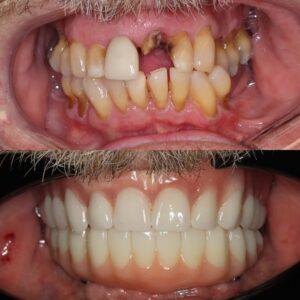
Receiving your final All-on-4® teeth is an exciting milestone. After months of planning, surgery, healing, and wearing temporary teeth, you finally have the restoration designed to serve as your long-term smile. But what happens if something does not feel quite right afterward? Can All-on-4® dental implants be adjusted once the final teeth are finished?
In many situations, adjustments are possible. However, what can be changed depends on the specific concern, the design of your restoration, and whether the issue involves the replacement teeth, the bite, or the implants themselves.
Your final teeth are designed to be durable, but that does not mean you should ignore discomfort or assume nothing can ever be modified.
Understanding the difference between normal adaptation and a problem requiring professional attention can help you feel more confident about your new smile.
Your Final Teeth Are Not Necessarily the End of Treatment
When patients hear the word final, they sometimes assume it means their dental team can never make another change.
That is not quite how restorative dentistry works.
Your final All-on-4® restoration is intended to provide a long-term replacement for your missing teeth. It is carefully designed around your implants, bite, facial proportions, and treatment needs.
However, your mouth is still a living environment.
Your muscles adapt, your gums can change, and the way you use your teeth may reveal concerns that were not immediately noticeable when the restoration was first delivered.
Follow-up appointments and ongoing maintenance remain important even after treatment is complete.
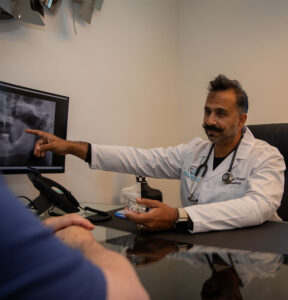
If something needs attention, your dental team can evaluate the situation and explain the available options.
What if Your Bite Feels Uneven?
One reason patients may need an adjustment is an uncomfortable or uneven bite.
Your bite refers to the way your upper and lower teeth come together when you close your mouth.
After receiving a full arch of replacement teeth, this relationship can feel noticeably different from what you experienced with your natural teeth or dentures.
A brief period of adaptation may be expected.
However, if one area consistently seems to contact before the others, you experience discomfort when biting, or your jaw feels strained, let your dentist know.
Your dental team can evaluate how the teeth meet and determine whether an adjustment is appropriate.
Do not attempt to correct an uneven bite by repeatedly clenching your teeth or forcing your jaw into a different position.
Can the Height of All-on-4® Teeth Be Adjusted?
Sometimes patients feel that their new teeth are too tall or that their mouth does not close as comfortably as expected.
This concern requires a proper evaluation.
Your dentist needs to determine whether the sensation is related to the bite, tooth contours, muscle adaptation, or another factor.
Certain adjustments may be possible depending on the restoration material and design.
However, significantly changing the height of an entire restoration is more complicated than making a minor bite adjustment.
Your dental team must preserve the restoration’s strength, appearance, and functional relationships.
This is one reason the temporary restoration stage can be so valuable. It provides an opportunity to evaluate your bite before the final teeth are completed.
What if Your New Teeth Feel Too Big?
A full arch restoration can feel surprisingly large when you first receive it.
If you previously had missing teeth, severely worn teeth, or a removable denture, your tongue may be accustomed to a completely different amount of space.
Your new restoration changes that environment.
You may initially feel that the teeth are too prominent or that your tongue has less room to move.
Some of this awareness can improve as your mouth adapts.
However, if the sensation interferes with speaking, swallowing, comfort, or everyday function, discuss it with your dental team.
The dentist can evaluate the contours and positioning of the restoration to determine whether anything requires attention.
Do not assume you must simply tolerate a persistent problem because the teeth are already finished.
Can You Change the Color After the Final Teeth Are Made?
Color changes are a different situation.
Patients sometimes approve a particular tooth shade during treatment and later decide they would have preferred something brighter or more natural.
Unlike natural teeth, dental restoration materials generally do not respond to conventional whitening treatments.
You cannot assume that whitening toothpaste, strips, or professional bleaching will change the color of your All-on-4® restoration.
Depending on the material and design, changing the shade may require more extensive restorative work or replacement.
That is why discussing your aesthetic preferences before final fabrication is important.
If you are unhappy with the color of your completed teeth, ask your dental team what options are realistically available for your particular restoration.
What About Changing the Shape of Your Teeth?
Minor contour adjustments may sometimes be possible, depending on the restoration.
However, substantially changing tooth length, width, or overall appearance can be more involved.
A full arch restoration is designed as a connected structure. Each tooth is part of an overall arrangement that must support appropriate function.
Changing one area can influence how the restoration looks or performs elsewhere.
For example, making the front teeth significantly longer may affect the bite, speech, or available space.
Your dentist needs to evaluate the entire restoration before recommending a modification.
The goal is not simply to make the teeth look different. It is to preserve a design that remains comfortable and functional.
Can Speech Problems Be Corrected?
Some patients notice changes in pronunciation after receiving their new teeth.
Certain sounds may initially feel unfamiliar because the tongue is interacting with a different tooth arrangement.
This can be particularly noticeable with sounds that require precise contact between the tongue, teeth, and surrounding structures.
Many patients become more comfortable as they practice speaking and adapt to the restoration.
However, persistent speech difficulties should be discussed with your dental team.
The dentist can evaluate whether the issue appears related to normal adaptation or whether the restoration’s contours may be contributing.
Do not attempt to reshape the teeth yourself.
Even a seemingly small change can influence how the restoration functions.
What if Food Keeps Getting Trapped Under the Restoration?
Food becoming trapped beneath a full arch restoration is another concern patients may raise after treatment.
All-on-4® restorations require regular cleaning around the restoration and implant areas.
Depending on the design, there may be spaces that allow access for hygiene.
However, if food is consistently collecting in a particular area or cleaning becomes unusually difficult, tell your dental team.
They can evaluate the restoration, surrounding gum tissue, and hygiene access.
Not every space should be eliminated, because appropriate cleaning access is important.
Your dentist must balance comfort, hygiene, tissue health, and restorative design when determining whether a change is appropriate.
What if Your Gums Change After Treatment?
Your gums can continue changing after implant surgery, particularly as postoperative swelling resolves and the tissues heal.
This is one reason temporary and final restorations are often completed at different stages.
Even after receiving your final teeth, the surrounding tissues require ongoing care and monitoring.
If you notice a new gap, irritation, persistent redness, or difficulty cleaning around your restoration, schedule an evaluation.
The solution depends on the underlying cause.
Sometimes the concern may involve hygiene or tissue inflammation rather than the restoration itself.
Other situations may require a closer examination of the restorative design.
The important thing is to avoid making assumptions based only on how the area looks in the mirror.
Can the Actual Dental Implants Be Adjusted?
This is an important distinction.
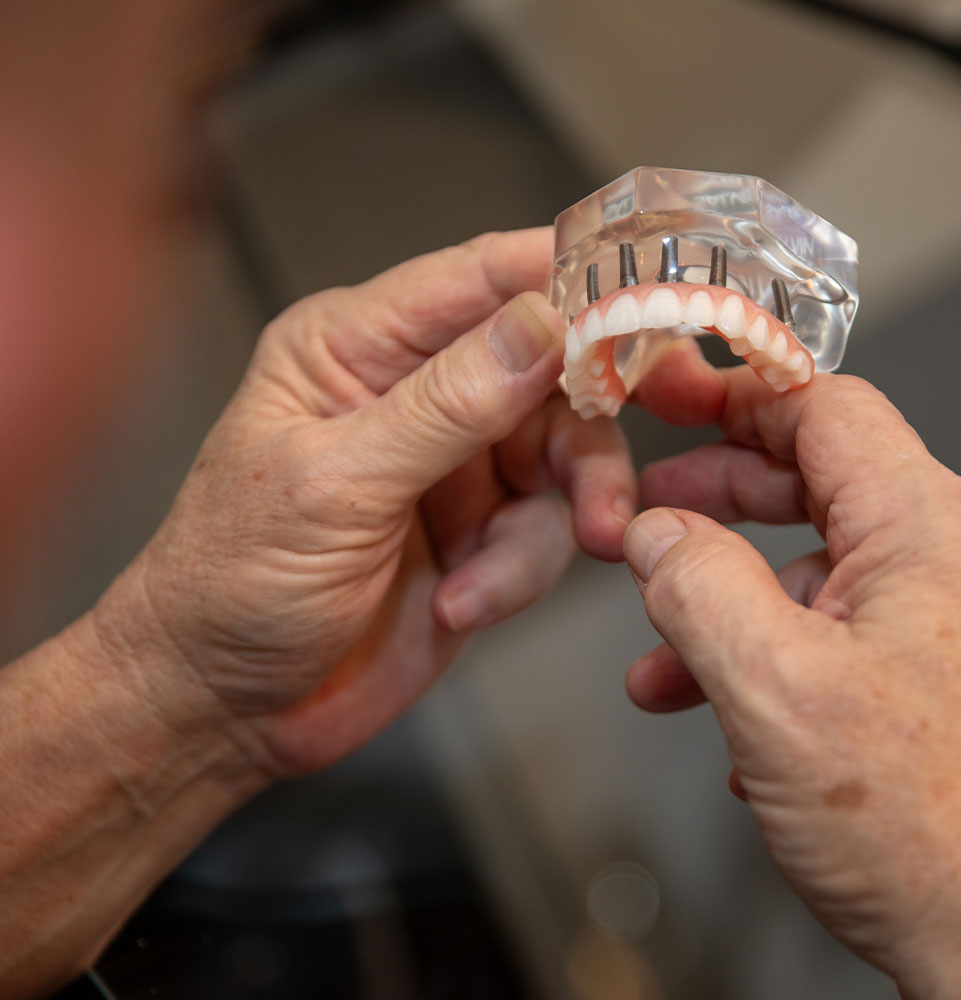
The dental implants themselves are surgically positioned within the jawbone.
Once they have successfully integrated with the surrounding bone, they cannot simply be moved around like adjustable parts of a denture.
The replacement teeth attached to those implants are a separate component of the treatment.
When people talk about adjusting All-on-4®, they are generally referring to evaluating or modifying the restoration rather than repositioning the integrated implants.
If a problem involves the implant itself, your dentist must assess the situation and determine what treatment, if any, is appropriate.
Do not confuse a restorative adjustment with changing the surgical position of an implant.
What if Your Restoration Starts Feeling Loose?
A restoration that suddenly begins moving or clicking needs professional attention.
Do not assume it is simply part of getting used to your new teeth.
All-on-4® restorations contain components that secure the replacement teeth to the implants.
If you notice new movement, a clicking sensation, a sudden change in your bite, or other unusual symptoms, contact your dental team.
A loose restorative component does not automatically mean an implant has failed, but the cause needs to be identified.
Avoid repeatedly biting down to test the movement.
Do not attempt to tighten, glue, or repair anything yourself.
Your dentist has the appropriate instruments and knowledge to evaluate the restoration safely.
Are Adjustments More Difficult With Certain Materials?
The material used to fabricate your final restoration can influence which modifications are possible.
Different restorative materials have different characteristics when it comes to strength, appearance, repairability, and fabrication.
Some changes may be relatively straightforward, while others may require laboratory work or more extensive restorative planning.
Your dental team can explain what is possible based on the material and construction of your particular restoration.
This is also why comparing your experience with another All-on-4® patient may not provide an accurate answer.
Their restoration may have been made using a completely different design or material.
How Long Should You Wait Before Reporting a Problem?
You do not need to wait until your next scheduled maintenance appointment if something feels wrong.
If you experience a sudden bite change, new movement, a crack, increasing pain, swelling, or another concerning symptom, contact your dental team promptly.
For less urgent concerns, such as a persistent feeling of fullness or difficulty pronouncing certain sounds, it is still worth mentioning the issue rather than quietly tolerating it.
Your dentist can help determine whether additional adaptation time is appropriate or whether an examination is needed.
A finished restoration should not mean the end of communication between you and your dental team.
Why Regular Maintenance Still Matters
Even after your final All-on-4® teeth are completed, routine professional care remains necessary.
Dental implants cannot develop cavities like natural teeth, but the surrounding gum tissue and supporting bone still require attention.
Your restoration also needs to be evaluated for wear, function, cleanliness, and the condition of its components.
Regular maintenance appointments provide opportunities to identify changes before they become more complicated.
Your dental team can also review your home cleaning routine and recommend appropriate hygiene tools.
A long-term restoration deserves long-term care.
Can All-on-4® Dental Implants Be Adjusted After They Are Finished?
Yes, certain adjustments to a completed All-on-4® restoration may be possible. The available options depend on whether your concern involves the bite, tooth contours, appearance, hygiene access, or another aspect of the restoration.
The integrated dental implants themselves are different from the replacement teeth attached to them and cannot simply be repositioned through a routine adjustment.
If your new smile does not feel quite right, the best approach is to explain your concern to your dental team and allow them to evaluate it.
At Full Arch Dental Implant Center in Lake Havasu City, we believe receiving your final teeth should be the beginning of enjoying your restored smile, not the end of your relationship with your dental team. Ongoing maintenance, communication, and professional evaluation remain important parts of caring for your All-on-4® restoration.
Your new teeth are designed for long-term use, and making sure they remain comfortable and functional is part of protecting that investment.