When considering a major dental procedure, it is natural to think beyond the immediate results. You may be wondering how your new teeth will hold up in ten, fifteen, or twenty years. Will they still feel comfortable? Will your gums change? What happens if your health changes as you get older?
Understanding what happens to All-on-4® dental implants as you age can help you make informed decisions about treatment and develop realistic expectations for long-term care.
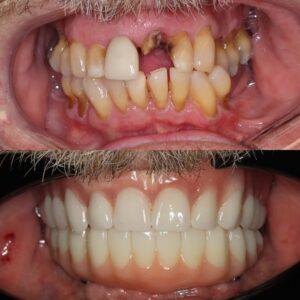
All-on-4® is designed to provide a fixed replacement for an entire arch of missing or failing teeth. Unlike removable dentures, the restoration is supported by dental implants placed within the jawbone.
However, receiving dental implants does not mean your mouth stops changing.
Your gums, jawbone, general health, and daily habits can continue evolving throughout your life. These changes make ongoing professional care an important part of maintaining your new smile.
Do Dental Implants Age Like Natural Teeth?
Dental implants are different from natural teeth.
A natural tooth contains living tissues and is surrounded by structures that help it respond to biting forces. It can also develop decay, become damaged, or experience other dental problems.
A dental implant is typically made from a biocompatible material such as titanium and is designed to integrate with the surrounding jawbone.
The implant itself cannot develop a cavity.
However, the gum tissue and bone supporting it remain living structures that require care.
The restoration attached to the implants can also experience wear over time, just like other dental restorations.
This means that while dental implants are designed for long-term function, they are not completely maintenance-free.
Can Your Jawbone Still Change After All-on-4®?
Your jawbone continues responding to biological and functional changes throughout your life.
When natural teeth are lost, the surrounding bone can gradually shrink because it no longer receives the same stimulation from tooth roots.
Dental implants transfer functional forces to the surrounding bone and can help maintain bone around successfully integrated implants.
However, they do not guarantee that every area of the jaw will remain unchanged forever.
Bone health can be influenced by several factors, including oral health, medical conditions, medications, and changes associated with aging.
Your dental team monitors the supporting bone during maintenance appointments and may recommend imaging when clinically appropriate.
The goal is to identify concerning changes early rather than waiting until you notice a problem.
What Happens to Your Gums as You Get Older?
Your gums continue to require attention after receiving All-on-4®.
Even though your natural teeth may have been replaced, the soft tissues surrounding your implants remain vulnerable to inflammation.
Plaque and bacteria can accumulate around dental implant restorations if they are not cleaned properly.
Inflammation around implants can sometimes progress into a condition called peri-implantitis, which involves inflammation and loss of supporting bone.
This is one reason brushing alone may not be enough to maintain a full arch restoration.
Your dental team can recommend cleaning tools appropriate for your particular design, which may include specialized brushes, flossing aids, or a water flosser.
Maintaining healthy gum tissue is important at every age.
Will Your All-on-4® Teeth Wear Down Over Time?
The replacement teeth attached to your implants are designed to withstand everyday function, but restorative materials can experience wear.
Over many years, chewing, clenching, grinding, and other forces may affect the restoration.
The amount and type of wear depend partly on the materials used and how the teeth are maintained.
For example, someone who frequently grinds their teeth may place different demands on their restoration than someone who does not.
Your dental team can monitor the condition of the teeth during routine appointments.
If you have a history of grinding or clenching, they may recommend a professionally designed protective appliance when appropriate.
Do not assume that because your teeth are artificial, they cannot chip, fracture, or wear.
Can Your Bite Change as You Age?
Your bite can change throughout your lifetime.
Even after receiving a fixed full arch restoration, changes in the opposing teeth, restorative wear, jaw function, or other factors may affect how your teeth come together.
You might eventually notice that one area seems to contact differently or that chewing feels less balanced than it once did.
These changes should be evaluated rather than ignored.
Your dentist can examine the restoration and determine whether any adjustments or additional treatment are appropriate.
A sudden change in your bite, particularly if accompanied by movement, clicking, or discomfort, deserves prompt attention.
Your All-on-4® restoration should not suddenly begin feeling loose or unstable.
What if You Develop New Medical Conditions?
Your health at age 55 may be different from your health at age 75.
Over time, you may develop medical conditions or begin taking medications that were not part of your history when your implants were originally placed.
Conditions such as diabetes, certain bone disorders, and other systemic health concerns can influence oral health and treatment planning.
Some medications may also affect the mouth or require additional considerations during dental procedures.
This does not mean developing a medical condition automatically puts your implants at risk.
It means your dental team needs an updated medical history.
Always inform your dentist when your medications or health conditions change, even if the change does not seem directly related to your teeth.
Can You Still Receive Dental Care if Your Mobility Changes?
One aspect of aging that patients do not always consider is how their ability to maintain daily oral hygiene may change.
Conditions affecting hand strength, dexterity, or mobility can make certain cleaning techniques more difficult.
For someone with All-on-4®, maintaining access beneath and around the restoration remains important.
If using your usual cleaning tools becomes challenging, tell your dental team.
They may be able to recommend alternatives that are easier to handle.
Caregivers may also need guidance when helping an older adult maintain their dental restoration.
The cleaning routine that works well today may need to be adapted in the future.
What if You Can No Longer Clean Under Your Restoration Easily?
Do not stop cleaning the area simply because it becomes difficult.
Plaque accumulation around implants can contribute to inflammation and other complications.
If you struggle to reach certain areas, your dental team can evaluate your technique and recommend tools suited to your restoration.
Some patients benefit from modified brush handles or other hygiene aids that make daily care more manageable.
Professional maintenance is also important, but it does not replace home care.
The goal is to establish a routine you can realistically continue as your needs change.
Will You Need to Replace Your All-on-4® Teeth Eventually?
This is an important distinction.
The dental implants placed within your jawbone and the restoration attached to them are separate parts of your treatment.
Successfully integrated implants may function for many years, but no dental implant treatment comes with a lifetime guarantee.
The replacement teeth may eventually require maintenance, repair, or replacement due to wear, damage, or changes in your oral condition.
That does not automatically mean the implants themselves must be removed.
Your dentist can evaluate the condition of the supporting implants and determine what options are available.
Understanding this difference helps patients avoid assuming that any future restorative work means their original treatment has failed.
What if One Implant Develops a Problem Years Later?
A concern involving one implant does not automatically mean every implant in the arch has failed.
However, because All-on-4® restorations function as connected structures, a problem with an individual implant needs careful evaluation.
Your dental team may assess the implant, surrounding bone, gum tissue, restoration, and overall bite.
The appropriate treatment depends on the specific findings.
If you notice persistent bleeding, swelling, drainage, pain, or movement, schedule an examination.
Do not wait for symptoms to become severe before asking for help.
Can Older Adults Still Maintain Healthy Dental Implants?
Absolutely. Age alone does not determine whether someone can maintain healthy dental implants.
An older adult who follows an appropriate hygiene routine, attends maintenance appointments, and manages relevant medical conditions may continue enjoying their restoration for many years.
The important considerations are individual health, the condition of the supporting tissues, and the ability to maintain the restoration.
Dental implant care should evolve alongside the patient.
If your health or physical abilities change, your dental team can help you adapt your maintenance routine.
There is no reason to assume that reaching a certain birthday automatically makes your implants less useful.
Why Regular Maintenance Becomes Even More Important
Some patients assume that once their natural teeth have been replaced, they no longer need routine dental appointments.
That is a misconception.
Dental implants eliminate the possibility of cavities developing in the artificial teeth, but they do not eliminate the need to monitor gum health, bone support, restorative components, and bite function.
Professional maintenance appointments allow your dental team to examine areas you cannot easily evaluate at home.
They can also identify changes in cleaning effectiveness, wear, and the condition of the restoration.
Your recommended maintenance schedule should be based on your individual needs.
Keeping these appointments becomes particularly valuable as your medical history and oral health change over time.
Can All-on-4® Help You Continue Enjoying Food as You Age?
One reason people pursue All-on-4® treatment is to regain the ability to eat more comfortably.
Missing teeth and unstable dentures can make certain foods difficult to manage.
A fixed full arch restoration can provide a more stable chewing surface, potentially making a wider variety of foods easier to enjoy once healing is complete and normal function has been approved by your dental team.
Nutrition remains important throughout adulthood, particularly as people get older.
However, All-on-4® teeth are not indestructible.
You should continue avoiding habits such as chewing ice, cracking hard shells with your teeth, or using your restoration as a tool.
Maintaining your ability to chew comfortably means protecting the restoration as well as the implants supporting it.
Planning for the Future Starts Today
If you are considering All-on-4®, think of the treatment as a long-term commitment rather than a procedure you complete and never revisit.
Ask your dental team what maintenance will involve, how to clean the restoration, and what changes you should watch for as the years pass.
It is also worth understanding which parts of your restoration may eventually require servicing.
These conversations are not reasons to feel discouraged about treatment.
They help establish realistic expectations and prepare you to care for your new smile over time.
What Happens to All-on-4® Dental Implants as You Age?
All-on-4® dental implants as you age can continue providing valuable function, but your mouth and overall health will naturally change throughout your lifetime.
Your gums, supporting bone, bite, and restoration all require ongoing attention. While the implants themselves do not develop cavities, the surrounding tissues can still experience inflammation, and the replacement teeth may eventually need maintenance or repair.
At Full Arch Dental Implant Center in Lake Havasu City, we encourage patients to think beyond the day they receive their new teeth. Long-term success involves proper treatment planning, consistent home care, professional maintenance, and adapting your routine as your needs change.
A new smile is an investment in your future. Taking care of it throughout the years is how you give that investment the attention it deserves.