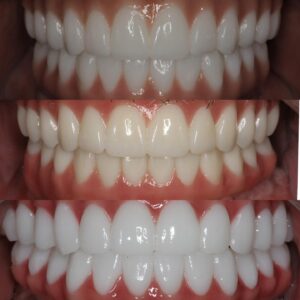

Planning when you can go back to work after All-on-4® surgery is about more than whether you will technically be able to get out of bed the next morning. Full arch dental implant treatment is a significant procedure, and your body needs time to begin healing. You may also be dealing with swelling, changes in your diet, medications, and the simple adjustment of having a completely new set of teeth.
For some patients, returning to a desk job may be possible relatively quickly. Someone with a physically demanding job may need more time.
There is no single number that applies to everyone.
If you are trying to schedule your procedure around work, it is better to understand what recovery can actually look like rather than assuming you will be completely back to normal within a day or two.
The First Few Days After All-on-4® Surgery
The first several days are generally when you want to give yourself the most flexibility.
Your mouth has just undergone surgery. Some swelling, tenderness, bruising, and fatigue can occur during the early healing period.
You will also be adapting to your temporary teeth if they were placed as part of your treatment plan.
Even if you feel surprisingly good, your body is still healing.
This is not usually the time to schedule a packed workday, spend hours talking on the phone, or immediately return to strenuous physical activity.
Following your postoperative instructions during these early days is more important than proving you can return to your normal routine quickly.
How Soon Can You Go Back to Work After All-on-4® Surgery?
When you can go back to work after All-on-4® surgery depends heavily on what you do for a living.
Someone who works from home at a computer has a very different workday from someone who works construction, lifts heavy equipment, works outside in the Arizona heat, or spends eight hours continuously talking to customers.
For a relatively sedentary job, some patients may feel comfortable returning within several days, depending on their recovery and their dentist’s instructions.
A physically demanding job may require additional time away.
Your implant dentist can give you more personalized guidance because they know the extent of your surgery, your health history, and how your treatment was performed.
Why Your Type of Job Matters
Imagine two patients have All-on-4® surgery on the same day.
One works from home answering emails.
The other spends the day lifting heavy objects in a warehouse.
Even if their surgeries were nearly identical, it would not make sense to automatically give both patients the exact same return-to-work plan.
Physical exertion can be an important consideration after oral surgery.
Your dental team may temporarily restrict strenuous activity while the surgical areas begin healing.
If your job involves heavy lifting, bending, climbing, repetitive physical activity, or intense exercise, tell your dentist before surgery.
They can help you plan appropriately instead of having you discover after treatment that your normal job duties conflict with your recovery instructions.
What If Your Job Requires a Lot of Talking?
This is something people often forget to consider.
You may feel physically capable of working but still find that speaking for hours is tiring.
Your mouth may be swollen. Your muscles are adjusting, and your tongue is learning how to interact with a new restoration.
If you work in sales, customer service, teaching, healthcare, public speaking, or another profession where you talk throughout the day, you may want a little more recovery time than someone who can work quietly.
Your speech may also sound slightly different to you at first.
That does not necessarily mean anything is wrong with your teeth.
Your tongue has spent years learning exactly where to move against your natural teeth. Suddenly changing the shape of those teeth can temporarily affect certain sounds.
Most people adapt as they continue speaking.
Swelling Can Affect How You Feel About Returning
Even if discomfort is manageable, swelling can influence when you personally feel ready to return to work.
You may not want to attend meetings or interact with customers while your face is visibly swollen or bruised.
That is not a medical problem. It is simply a practical consideration.
Swelling after surgery does not necessarily disappear overnight.
Ask your dental team what they typically expect during the first several days after the type of procedure you are having.
If appearance matters for your job, consider giving yourself some extra room in your schedule instead of planning an important presentation immediately after surgery.
What About Pain Medication?
Medication is another reason to think carefully about your return to work.
Depending on what your dentist prescribes or recommends, certain medications can affect alertness or your ability to safely drive, operate machinery, or perform other job duties.
Follow the instructions provided with your medication.
Do not assume that because a medication was prescribed by your dentist it is automatically safe to take before driving or working.
If you are unsure how a medication could affect your work, ask your dentist, pharmacist, or prescribing healthcare provider.
This is especially important if your job involves driving, heavy equipment, heights, machinery, or responsibility for other people’s safety.
Your Diet Will Be Different Too
Returning to work also means figuring out how you are going to eat during the day.
After All-on-4® surgery, you will receive specific dietary instructions while your implants and surrounding tissues heal.
You cannot simply return to work and assume you can grab whatever is available for lunch.
Plan ahead.
Bring foods that fit your postoperative diet and are easy to eat.
If your workplace normally involves restaurant lunches, vending machines, or fast food, preparing appropriate meals before your procedure can make your first week back significantly easier.
Remember that feeling better does not automatically mean your implants are ready for hard or crunchy foods.
Follow the diet your dental team gives you for the full recommended period.
Feeling Better Is Not the Same as Being Healed
This is one of the most important things to understand about All-on-4® recovery.
You may feel much better before the biological healing process is complete.
That is a good thing, but it can also make patients overconfident.
Once the swelling decreases and discomfort improves, you may feel ready to do everything you normally do.
Your implants, however, are still going through an important healing process within the jawbone.
Follow your restrictions even when you feel good.
Your recovery plan is based on what is happening underneath the gums, not only on whether your mouth hurts.
Should You Schedule All-on-4® Before a Weekend?
For many working patients, scheduling can make recovery easier.
If your dental team offers a surgery date near the end of your workweek, the following days may give you some built-in recovery time before you need to return.
However, do not assume that a weekend automatically gives you enough time.
Your individual procedure, work demands, and recovery still matter.
It is also smart to avoid scheduling major obligations immediately after surgery.
If possible, leave yourself some flexibility.
A little extra time off that you end up not needing is usually much less stressful than discovering you need another day while your boss expects you at work.
What If You Work From Home?
Remote work can make returning easier, but it does not eliminate the need to recover.
It may be tempting to schedule surgery and plan to answer emails from bed the next morning.
Give yourself permission to actually rest.
Even though you are not commuting, your body still underwent surgery.
Once you feel ready, remote work can provide some advantages. You can control your schedule, take breaks, keep appropriate food nearby, and avoid worrying as much about temporary swelling.
If possible, start with a lighter workload rather than jumping immediately into a full day of video meetings.
What If You Feel Worse After Going Back?
Listen to what your body is telling you.
If returning to work leaves you exhausted or seems to aggravate your symptoms, contact your dental team if you are concerned.
Increasing pain, significant swelling, persistent bleeding, fever, drainage, or other symptoms your postoperative instructions identify as concerning should not be dismissed because you are busy at work.
You also should not try to push through a problem simply because you already used your vacation days.
Your dental office would rather hear from you and determine that everything is healing normally than have you ignore something that needs attention.
Planning Your Time Off Before Surgery
If you know you will need All-on-4® treatment, talk about work before your surgery date.
Tell your dental team what your job actually involves.
Do you sit at a desk?
Are you on your feet all day?
Do you lift heavy objects?
Do you work outside?
Do you drive for a living?
Do you speak constantly?
Those details can change the advice you receive.
You can also ask what documentation your employer may need if you are taking medical leave.
Planning ahead removes one source of stress during a week when your main focus should be healing.
Do Not Compare Your Recovery With Someone Else’s
You may find someone online who says they went back to work two days after surgery and felt fantastic.
Someone else may say they needed a week.
Neither person’s experience tells you exactly what yours will be.
The amount of treatment performed, your overall health, your body’s healing response, your occupation, and many other factors can influence recovery.
Use other people’s experiences to understand the range of possibilities, not as a deadline you have to beat.
Your recovery is not a competition.
How Soon Can You Go Back to Work After All-on-4® Surgery?
How soon you can go back to work after All-on-4® surgery depends on your individual recovery and the physical demands of your job. A person with a quiet desk job may be ready sooner than someone whose work involves heavy lifting, constant talking, driving, or strenuous physical activity.
The safest plan is to discuss your occupation with your implant dentist before surgery and give yourself some flexibility afterward.
At Full Arch Dental Implant Center, we want patients to plan for the real-life side of treatment, not just the procedure itself. Work, meals, medications, swelling, and daily responsibilities are all part of recovery. Taking a little time to heal properly can make your transition back into everyday life much easier, while giving your new All-on-4® smile the start it deserves.
What Happens if You Skip All-on-4® Maintenance Appointments?
All-on-4® maintenance appointments can be easy to underestimate once your new teeth feel comfortable and everything seems to be working