If you’re wondering whether it’s time to stop repairing your teeth, chances are this question didn’t come up overnight. Most people don’t start researching full arch dental implants because of one cavity or one broken tooth. They start looking for answers after years of dental work that never seems to end.
Maybe you’ve had fillings replaced several times.
Maybe you’ve had a root canal on one tooth, a crown on another, and now another tooth is starting to hurt.
Maybe every time you think you’re finally caught up with your dental health, something else happens.
If that sounds familiar, you’re not alone.
Many patients eventually reach a point where they stop asking, “How do I fix this tooth?” and start asking a much bigger question.
“Am I fixing the problem, or am I just buying more time?”
There isn’t one answer for everyone, but understanding the difference can help you make a more informed decision about your future.
Saving Natural Teeth Is Always Worth Discussing
One of the biggest misconceptions about All on 4® treatment is that dentists are eager to remove natural teeth.
In reality, healthy natural teeth are valuable. If a tooth can be treated successfully and has a good long term outlook, preserving it is often the best option.
Dentists use fillings, crowns, root canals, and periodontal treatment every day to help patients keep their natural teeth.
The challenge comes when multiple teeth are failing at the same time.
If your mouth has reached the point where nearly every visit focuses on another broken tooth, another infection, or another expensive repair, it may be time to look at the bigger picture instead of treating each problem separately.
When Dental Repairs Become a Pattern
Think back over the last several years.
How many dental emergencies have you had?
How many crowns have been replaced?
How many teeth have needed root canals?
How many times have you thought, “I hope this is the last major dental procedure I’ll need?”
For some patients, dental treatment becomes a cycle.
A tooth breaks.
It gets repaired.
A different tooth breaks.
That gets repaired.
Another crown comes loose.
An old filling fails.
A root canal becomes necessary.
Eventually, patients stop feeling like they’re making progress. Instead, they feel like they’re constantly trying to stay one step ahead of the next problem.
Living with that uncertainty can be exhausting.
Looking Beyond the Tooth That Hurts
When you have a toothache, it’s natural to focus on the tooth that’s causing pain.
However, one painful tooth doesn’t always tell the whole story.
Imagine taking your car to a mechanic because one tire is flat. If the mechanic notices the brakes are worn out, the suspension is failing, and the engine has major issues, simply replacing the tire won’t solve the larger problem.
Your mouth works the same way.
One broken tooth may simply be one broken tooth.
Or it may be part of a much larger pattern involving worn teeth, gum disease, bone loss, or years of extensive dental work.
That’s why a complete evaluation is so important.
Instead of asking how to repair one tooth, your dentist can evaluate the health of your entire mouth and help you understand the long term outlook.
Every Tooth Has a Story
No two mouths are exactly alike.
Some teeth have never needed treatment.
Others have large fillings that have been replaced multiple times.
Some have crowns.
Some have root canals.
Some may already have small cracks that aren’t causing symptoms yet.
When dentists evaluate your mouth, they don’t just look at today’s problem.
They look at the history of every tooth.
A tooth that has already been heavily restored may not have the same long term outlook as a tooth that has only needed one small filling.
That doesn’t mean it can’t be treated.
It simply means treatment decisions should be based on the whole picture instead of one moment in time.
The Cost of Constant Repairs
Most people immediately think about money.
And yes, repeated dental work can become expensive.
But the financial cost is only part of the story.
There is also the emotional cost.
The stress of wondering when the next tooth will break.
The frustration of missing work for another appointment.
The disappointment of cancelling dinner plans because your mouth hurts.
The worry every time you bite into something crunchy.
Many patients tell us they have stopped enjoying food because eating has become unpredictable.
Some avoid smiling because they are embarrassed by broken or missing teeth.
Others simply feel tired.
Tired of fixing the same problem over and over again.
When All on 4® Becomes Part of the Conversation
All on 4® treatment is not designed for every patient.
If your teeth can be successfully treated and maintained for many years, preserving them may still be the best option.
However, when an entire arch of teeth has a poor long term outlook, repairing one tooth after another may not provide the stability you’re looking for.
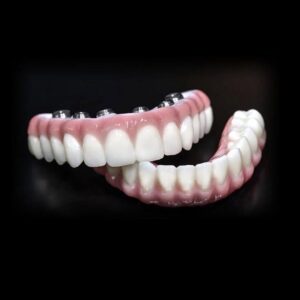
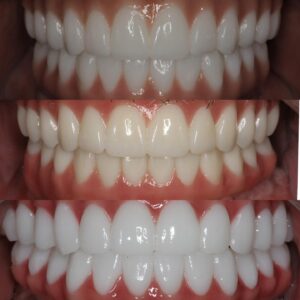
All on 4® treatment replaces a full arch of failing or missing teeth using dental implants to support a custom restoration.
Instead of solving one emergency at a time, the goal is to restore the entire arch.
For many patients, that means thinking less about the next repair and more about long term function, comfort, and confidence.
How Do You Know When It’s Time?
There isn’t a certain age.
There isn’t a specific number of crowns or root canals.
There isn’t a checklist that automatically tells you it’s time for full arch treatment.
Instead, there are patterns.
You may have several teeth with large restorations.
You may continue breaking teeth.
You may have advanced gum disease.
You may have been told that multiple teeth have a poor long term prognosis.
Or maybe you’ve simply reached the point where you’re asking whether continuing to repair your teeth still makes sense.
Those are all good reasons to schedule a comprehensive evaluation.
A Consultation Should Give You Clarity
One of the biggest benefits of a consultation is that it replaces assumptions with information.
You don’t have to guess whether your teeth can still be saved.
You don’t have to rely on stories you read online.
You don’t have to decide on your own whether All on 4® treatment is right for you.
A thorough examination allows your dental team to evaluate your teeth, gums, jawbone, and overall oral health.
From there, they can explain your options honestly.
Maybe saving your natural teeth is still the best path.
Maybe a combination of treatments makes sense.
Or maybe replacing an entire arch will provide a more predictable long term outcome.
The important thing is making a decision based on facts instead of frustration.
Think About Your Future, Not Just Your Next Appointment
It’s easy to focus on today’s problem.
A broken tooth needs attention.
An infection needs treatment.
Pain needs relief.
But it’s also worth asking yourself a different question.
Where do you want your oral health to be five or ten years from now?
Will another repair help you get there?
Or is it time to have a conversation about a more complete solution?
At Full Arch Dental Implant Center, we believe every patient deserves clear answers and honest recommendations. If your natural teeth can be preserved with a good long term outlook, we’ll explain why. If an entire arch is failing and All on 4® treatment may provide a better solution, we’ll explain that too.
If you’ve been wondering whether it’s time to stop repairing your teeth, you don’t have to answer that question by yourself.
A comprehensive evaluation can help you understand the condition of your mouth, your treatment options, and what is most likely to give you a healthy, stable smile for years to come.