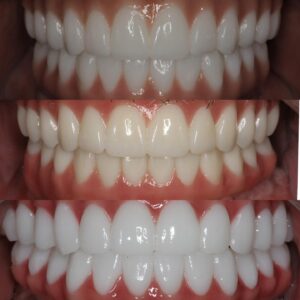
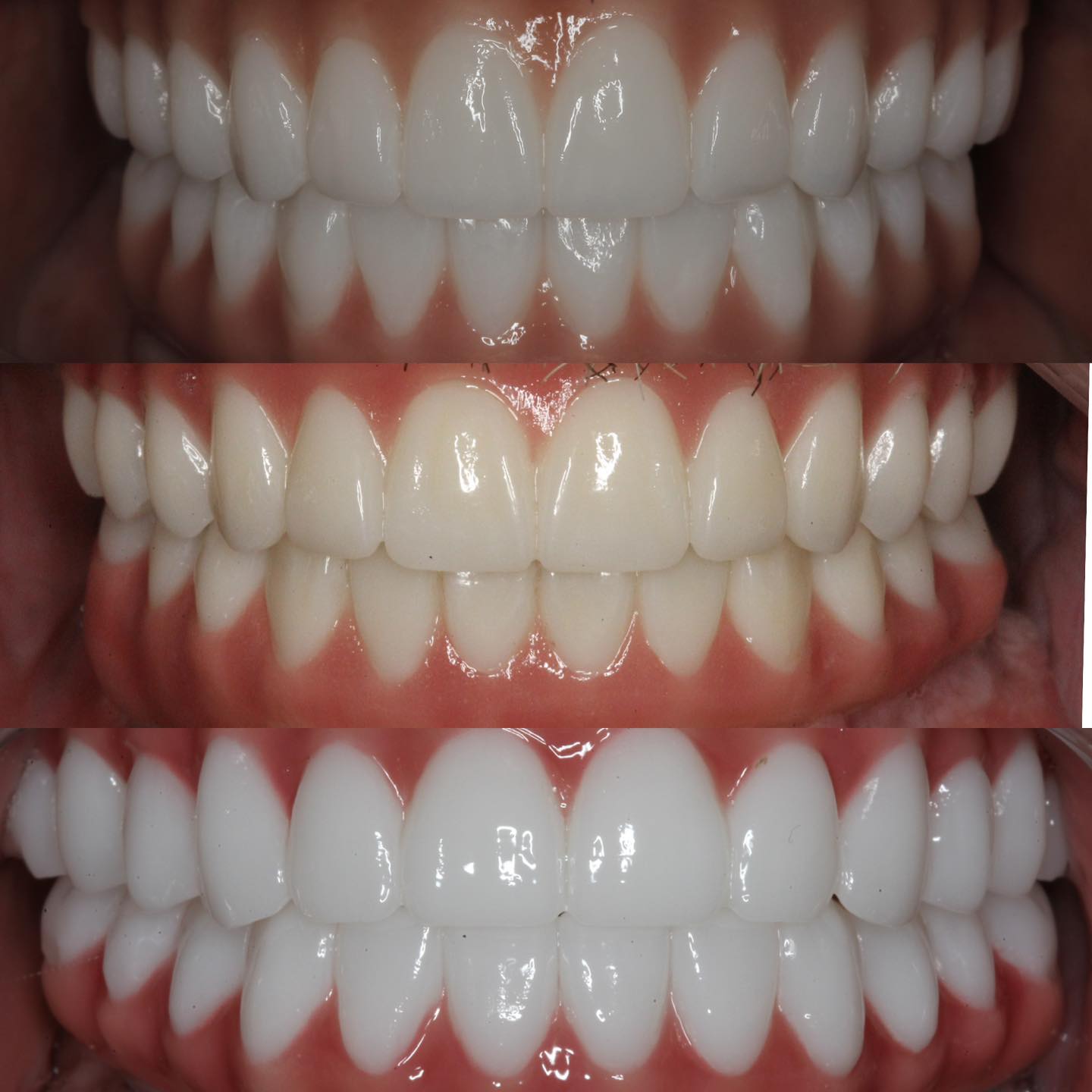
If your All-on-4® teeth feel too big, bulky, or simply different from what you expected, you are not necessarily imagining it. Receiving an entire arch of replacement teeth creates a major change inside your mouth, and your tongue, lips, cheeks, jaw, and brain all need time to adjust.
Some patients look at their new smile and love what they see but immediately notice that the teeth feel enormous with their tongue. Others become hyperaware of the material behind the teeth or the way the restoration meets their gums.
Then the worry begins.
Are the teeth actually too big? Is this how they are always going to feel? Did something go wrong?
Sometimes an adjustment may be appropriate, but very often the sensation of having “huge” teeth is part of adapting to a completely new dental restoration.
Your Tongue Notices Everything
Your tongue is remarkably sensitive.
Think about how distracting one tiny piece of food can feel when it becomes stuck between two teeth. Your tongue can locate it almost instantly and will probably keep returning to that spot until the food is removed.
Now imagine replacing an entire arch of teeth.
Suddenly, almost every surface your tongue has known for years is different.
The shape behind the teeth may be different. The thickness may be different. The position of the teeth may have changed. The way the restoration transitions into the gum area may also feel unfamiliar.
Your tongue notices all of it.
A difference that looks relatively small when you see the restoration can feel dramatically larger inside your mouth.
Why All-on-4® Teeth Feel Too Big at First
There are several reasons All-on-4® teeth feel too big during the early adjustment period.
Before treatment, you may have had missing, broken, worn, shifting, or severely damaged teeth. Your bite may have changed gradually over many years without you realizing how much it had changed.
You became accustomed to that version of your mouth.
All-on-4® can restore tooth structure that had been missing or worn away.
That means your new teeth may occupy spaces that have felt empty for a long time.
The restoration also needs to be designed to function as a complete arch supported by dental implants. It is not simply a collection of individual crowns replacing your old teeth one by one.
That difference in design can take time to get used to.
Swelling Can Change the Way Everything Feels
If you recently underwent surgery, swelling can make it even harder to judge the size and shape of your new teeth.
The gum tissue and surrounding areas may be swollen.
Your lips and cheeks may feel different.
Your mouth may feel tight.
Your tongue may also be navigating around areas that are tender.
All of this can exaggerate the sensation that your restoration is too large.
As swelling decreases, your mouth may begin feeling very different.
This is why the first few days after surgery are generally not the best time to decide exactly how your restoration feels.
Give the initial healing process a chance to progress.
Your Old Teeth May Have Been Smaller Than You Realized
Teeth can wear down gradually.
Grinding, clenching, erosion, decay, fractures, and years of dental problems can change their shape and size.
Because these changes happen slowly, your brain adapts along the way.
You may have become accustomed to shorter teeth or a collapsed bite without consciously noticing it.
When a new restoration restores lost tooth structure, the difference can feel dramatic.
Your new teeth may not necessarily be unusually large.
They may simply be larger than the worn or damaged teeth your mouth had become accustomed to.
This is one reason before-and-after treatment can feel like such a significant physical adjustment even when the new smile looks natural.
Your Lips and Cheeks Are Adjusting Too
Your tongue is not the only part of your mouth adapting.
Your lips and cheeks interact with your teeth constantly.
They move across them when you speak, smile, eat, laugh, and make facial expressions.
Changing the shape of an entire arch can temporarily alter those familiar movements.
You may feel more support behind your lips than you did before.
Your cheeks may brush against different surfaces.
Your smile may even feel strange despite looking good in photographs.
The muscles surrounding your mouth need an opportunity to adapt to those new contours.
Over time, movements that initially require conscious thought can become automatic again.
Temporary All-on-4® Teeth May Feel Different From Final Teeth
Depending on your treatment plan, the restoration you wear during the healing stage may not be your final set of teeth.
Temporary All-on-4® teeth serve an important purpose while the implants and surrounding tissues heal.
This stage also gives your dental team useful information.
How does your bite feel?
How is your speech?
How do the teeth look when you smile?
Are there areas that consistently feel uncomfortable?
How does your mouth function as swelling decreases?
Your experience during the temporary stage can help inform later decisions about your final restoration.
This is why communicating with your dental team matters.
Do not assume you are complaining if you tell them something feels unusual.
That information can be useful.
What if the Teeth Look Too Big?
Feeling too big and looking too big are two different concerns.
Sometimes a patient loves the appearance of the teeth but says they feel bulky with their tongue.
Other patients look in the mirror and believe the teeth themselves appear too long, wide, prominent, or full.
If the appearance concerns you, discuss it with your dental team.
Smile design involves more than choosing white teeth.
Tooth proportions, facial features, lip position, bite, speech, and function all play a role.
If you are still in the temporary phase, your dentist may be gathering feedback that helps guide the final design.
Do not wait until the very end to mention an aesthetic concern you have noticed repeatedly.
Will Your Speech Be Different?
It can be.
Your tongue uses your teeth and the surrounding structures to form certain sounds.
When those structures suddenly change, speech may temporarily sound different.
You might notice certain words are harder to pronounce or that particular sounds seem slightly different.
That can make the restoration feel even larger because you are constantly noticing it while talking.
Practice can help your tongue learn its new environment.
Reading aloud, having conversations, and simply using your new teeth allows your speech patterns to adapt.
If a speech issue persists rather than improving, tell your dental team.
There may be an area of the restoration they want to evaluate.
Do Not Constantly Test Your New Teeth
This is easier said than done.
When something feels unfamiliar, your tongue wants to investigate it constantly.
You may run your tongue behind the restoration hundreds of times during the first few days.
You might repeatedly bite your teeth together to check your bite.
The more you focus on the sensation, the more noticeable it can become.
You obviously cannot completely ignore an entire new set of teeth.
But try to give your brain time to adapt naturally rather than checking every surface every few minutes.
As the restoration becomes familiar, your brain should gradually stop treating it as something that requires constant attention.
When Does “Different” Become a Problem?
There is an important difference between unfamiliar and painful.
A restoration feeling strange shortly after treatment can be expected.
A restoration causing persistent pain, creating a sharp area, repeatedly biting your cheek or tongue, or producing a bite that feels significantly uneven deserves attention.
The same is true if you notice movement.
Your All-on-4® restoration should not suddenly become loose or begin shifting.
Contact your dental team if something feels physically wrong rather than simply unfamiliar.
You do not need to wait until your next scheduled appointment if you are concerned.
Can All-on-4® Teeth Be Adjusted?
In some situations, adjustments can be made.
Your dentist can evaluate your bite, the contours of the restoration, your speech, and areas that are causing discomfort.
However, this does not mean you should immediately ask to have material removed because the restoration felt bulky for the first 24 hours.
Adjustments should be intentional.
Removing material unnecessarily is not the goal.
Your dental team needs to determine whether the issue is the restoration itself or simply the normal adjustment process.
That is why giving clear feedback is helpful.
Instead of only saying, “They feel weird,” try to explain where.
Do the teeth feel too thick behind your front teeth?
Does one side contact before the other?
Does your tongue repeatedly rub against one particular area?
Does something feel sharp?
Specific information gives your dental team much more to work with.
Your Brain Has to Learn Your New Smile
One of the least discussed parts of full arch treatment is neurological adaptation.
Your brain has spent years learning exactly where your teeth are.
You know how far to open your mouth to take a bite without thinking about it.
You know where your tongue goes when you pronounce words.
You know how your upper and lower teeth come together.
Then an entire arch changes.
Your brain needs new information.
With repetition, the unusual becomes familiar.
You stop consciously thinking about where the restoration begins and ends.
You stop exploring it with your tongue.
Speaking becomes automatic again.
Eating becomes less of a deliberate process.
That adaptation can be just as important to your experience as the physical healing taking place around your implants.
Give Yourself Time, but Speak Up
Patience is important after All-on-4® treatment, but patience does not mean staying silent.
Give your mouth time to adjust while keeping your dental team informed.
If something is gradually becoming less noticeable, that is useful information.
If something continues bothering you without improvement, that is useful too.
If your bite suddenly changes, the restoration moves, or you develop significant pain or swelling, contact your dental team promptly.
The goal is not for you to spend years thinking about your replacement teeth every waking minute.
The goal is for them to eventually feel like a normal part of your life.
Why Do My All-on-4® Teeth Feel Too Big?
When All-on-4® teeth feel too big, the sensation can come from swelling, restored tooth dimensions, the shape of a full arch restoration, or simply your tongue and facial muscles adapting to a completely new environment.
What feels enormous during the first few days may become much less noticeable as healing progresses and your brain adjusts.
At Full Arch Dental Implant Center in Lake Havasu City, we encourage patients to communicate what they are experiencing throughout the All-on-4® process. Getting used to new teeth is both a physical and mental adjustment, and understanding what feels normal, what may improve with time, and what deserves an evaluation can make that transition much easier.
What Happens if You Skip All-on-4® Maintenance Appointments?
All-on-4® maintenance appointments can be easy to underestimate once your new teeth feel comfortable and everything seems to be working