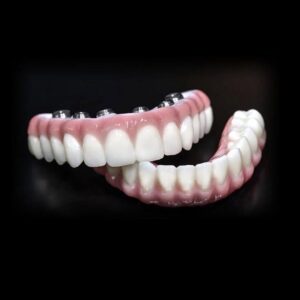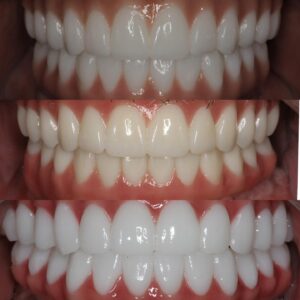
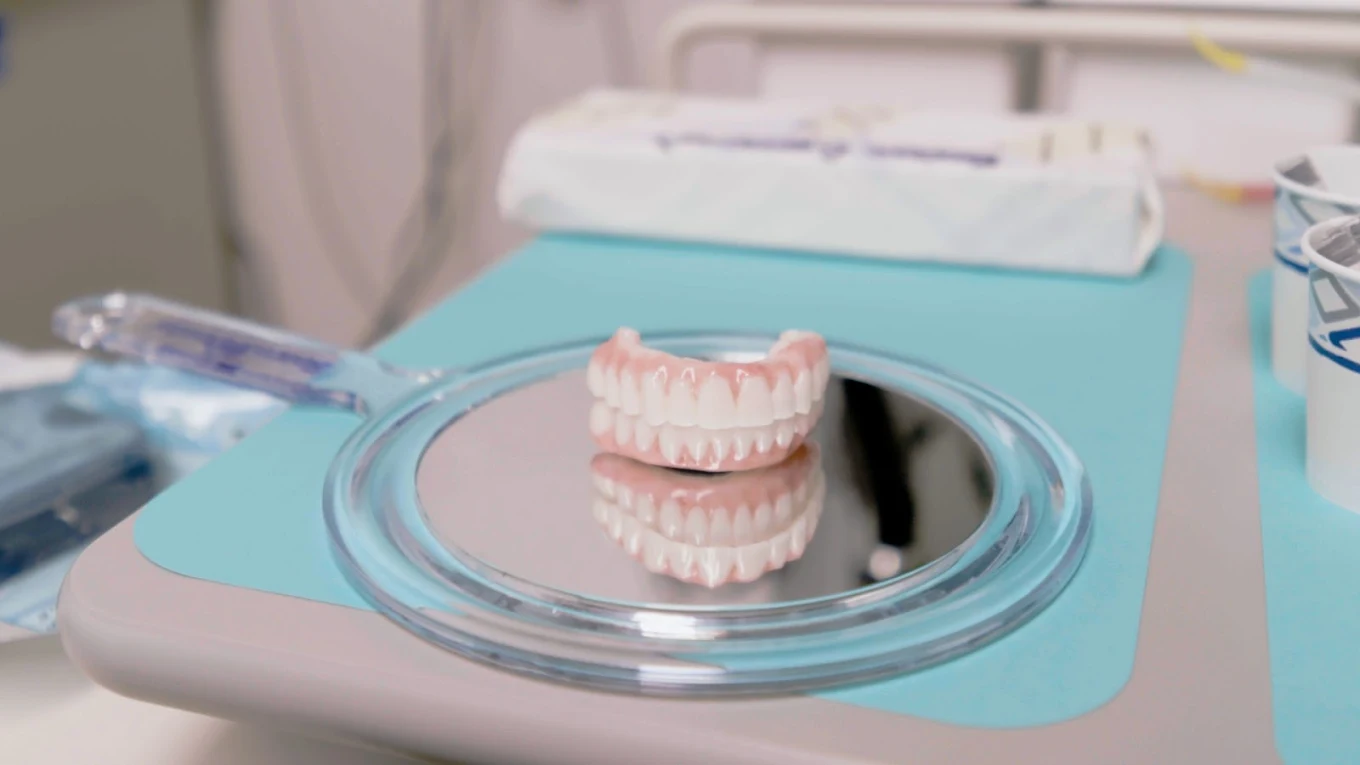
Switching from dentures to All on 4® treatment is something many longtime denture wearers begin considering after years of dealing with movement, changes in fit, food limitations, or the daily use of adhesives. Traditional dentures have helped many people replace missing teeth, but some patients eventually reach a point where they want to know if a more stable option is available.
Maybe your dentures worked well when you first received them, but they do not feel the same anymore.
Perhaps they move when you eat.
Maybe you have become tired of using adhesive every morning.
You might miss foods you have not comfortably eaten in years.
Or perhaps you simply want to know what has changed in dentistry since you first lost your teeth.
These are all common reasons people begin looking into full arch dental implants.
Why Dentures Can Feel Different Over Time
One of the most confusing experiences for denture wearers is having a denture that once fit comfortably begin to feel loose.
Patients sometimes assume something is wrong with the denture itself. However, the mouth can change after teeth are lost.
Natural tooth roots provide stimulation to the jawbone when you bite and chew. After teeth are removed, that stimulation is no longer present in the same way. Over time, the shape of the jaw can change.
Because a traditional denture rests on the gums, changes underneath the denture can affect its fit.
This is why a denture that felt secure years ago may begin moving more than it used to.
Adjustments and relines can help in many situations. However, some patients become frustrated with the ongoing changes and start researching other options.
That is often when the conversation about switching from dentures to All on 4® begins.
What Is Different About All on 4® Treatment?
The biggest difference is the foundation supporting the teeth.
A traditional denture is removable and rests on the gums.
All on 4® treatment uses dental implants placed in the jaw to support a complete arch of replacement teeth.
This means the replacement teeth are supported by implants rather than relying only on the gums.
For many patients, stability is the main reason they are interested in treatment.
They are not necessarily looking for perfect teeth or a dramatic cosmetic transformation. They simply want teeth that feel secure when they speak, smile, and eat.
That desire is completely understandable.
After years of thinking about denture movement, adhesives, and food choices, the idea of greater stability can be very appealing.
Can You Get All on 4® After Wearing Dentures for Years?
This is one of the first questions longtime denture wearers ask.
The answer depends on the individual patient.
Wearing dentures for many years does not automatically mean that All on 4® treatment is impossible. However, the doctor needs to evaluate the condition of the jawbone, gums, and overall health before recommending treatment.
Detailed imaging helps the doctor understand what is happening beneath the gums.
This is important because you cannot determine implant candidacy simply by looking in the mirror.
Some patients assume they have waited too long because they have worn dentures for ten, fifteen, or even twenty years. Others assume that because their dentures feel loose, there must not be enough bone for implants.
Those assumptions may not tell the full story.
The only way to understand your options is through a proper evaluation of your individual anatomy.
What About Bone Loss?
Bone loss is a common concern for longtime denture wearers.
After natural teeth are lost, the jaw can gradually change over time. The amount of change is different for every person.
This is why careful planning matters.
The doctor needs to see where bone is available and understand the shape of the jaw before discussing implant treatment.
Some patients may be candidates for All on 4® treatment, while others may need a different approach.
The important thing is not to rule yourself out before having an evaluation.
Dentistry has changed significantly over the years. If you were told a long time ago that dental implants were not an option, it may be worth having a new conversation based on your current health and today’s available treatment approaches.
Eating Is Often the Biggest Motivation
When we talk to patients who have worn dentures for years, appearance is not always their biggest concern.
Often, it is food.
Many denture wearers have quietly changed the way they eat.
They may cut food into very small pieces.
They may avoid biting with the front teeth.
They may stay away from foods that are difficult to chew.
Sometimes these changes happen so slowly that the person no longer notices them.
They simply accept that certain foods are no longer for them.
This is one reason replacing dentures with dental implants becomes interesting to many patients. They want to know whether greater stability could help them feel more comfortable while eating.
All on 4® treatment is designed to provide a stable, implant supported foundation. However, patients still need to understand that there is a healing process after implant surgery.
You will not be told to immediately test your new teeth on the hardest food you can find.
Healing matters.
Your dental team will give you instructions about what to eat during different stages of recovery. Following those instructions is an important part of protecting the treatment.
What Happens to the Daily Denture Routine?
People who have never worn dentures may not realize how much time can go into managing them.
There is the cleaning routine.
There may be adhesive.
There can be concern about movement.
Some people remove their dentures at certain times.
Others are constantly aware of food getting underneath them.
After years of this routine, it becomes part of normal life.
Switching from dentures to All on 4® treatment changes the type of daily care required, but it does not eliminate oral hygiene.
This is important to understand.
Implant supported teeth still need to be cleaned properly. The gums and tissues around the implants need care, and professional maintenance remains an important part of long term oral health.
Your dental team will explain how to clean around the restoration and which tools may be helpful for your individual situation.
The routine is different from caring for removable dentures, but there is still a routine.
Does All on 4® Feel Like Natural Teeth?
Patients deserve a clear answer to this question.
Dental implants and implant supported restorations are not natural teeth. They are a replacement for teeth that have been lost or cannot be predictably maintained.
However, the goal is to create a stable and functional restoration.
Many patients are especially interested in the difference between a removable appliance and teeth supported by implants.
The experience can feel different because the source of support is different.
Traditional dentures rest on the gums. An All on 4® restoration is supported by dental implants.
During a consultation, the dental team can explain what patients can realistically expect from treatment. Clear expectations are important because patients should understand both the benefits and the responsibilities of caring for their new smile.
What Is the Treatment Process Like for a Denture Wearer?
The process begins with a consultation and evaluation.
The doctor will want to understand your dental history, how long you have worn dentures, what problems you are currently experiencing, and what you hope to change.
Imaging is used to evaluate the jaw and plan treatment.
If you are a candidate for All on 4® treatment, the dental team will explain the recommended plan, the surgical process, recovery, and long term maintenance.
This is the time to ask questions.
How long will healing take?
What will I be able to eat?
How do I clean my new teeth?
What kind of maintenance will I need?
What should I expect during the different stages of treatment?
These are practical questions, and patients deserve practical answers.
Why Some Patients Wait Years Before Asking
Many denture wearers assume they simply have to live with the problems they are experiencing.
They received dentures years ago, so they continue using them even as their quality of life changes.
Sometimes they do not know that other options exist.
Sometimes they believe they are too old for dental implants.
Sometimes they assume they have too much bone loss.
Sometimes they are nervous about the procedure.
And sometimes they have simply become used to living with the limitations.
There is no harm in asking questions.
A consultation does not mean you have already decided to move forward with treatment. It is an opportunity to understand your current oral health and learn whether other options may be available.
Is Age the Most Important Factor?
Many older patients worry that they are too old for dental implants.
Age alone does not tell the entire story.
The doctor needs to consider overall health, oral health, medications, medical history, bone condition, and other individual factors.
A healthy older adult and a younger person with uncontrolled health problems may have very different treatment considerations.
This is why implant candidacy should be evaluated individually.
If your concern is that you have simply had dentures for too long or reached a certain age, do not make the decision for yourself before speaking with a qualified dental professional.
The goal of treatment is not to meet an age requirement.
The goal is to determine whether treatment is appropriate and can be planned responsibly for the individual patient.
Life Beyond Loose Dentures
For someone who has never worn dentures, a small amount of movement may not sound like a major problem.
For the person experiencing it every day, it can affect much more than expected.
It can change what you order at a restaurant.
It can make you nervous during conversations.
It can affect the way you laugh.
It can make a family meal less enjoyable because you are thinking about your teeth instead of the people around you.
Over time, those small frustrations can become exhausting.
This is why many patients begin researching a permanent alternative to dentures. They are looking for stability and the chance to stop planning everyday life around their teeth.
All on 4® treatment may be one option worth discussing.
Finding Out What Is Possible
Switching from dentures to All on 4® treatment is a personal decision, and the first step is understanding whether you are a candidate.
At Full Arch Dental Implant Center, we meet patients with many different stories. Some have recently received dentures and are unhappy with the experience. Others have worn them for decades and are only now learning about implant supported options.
There is no need to feel embarrassed about how long you have waited.
The important question is where you are today and what options may be available now.
A consultation can help you understand the condition of your jaw, your treatment options, and what the process would involve for your individual situation.
If your dentures have become loose, uncomfortable, or limiting, you do not have to guess about what comes next.
Switching from dentures to All on 4® may be possible for some patients, even after years of wearing traditional dentures. The best way to find out is through a careful evaluation and a clear conversation about your goals.
Sometimes the first step toward a more stable smile is simply learning that you have options.