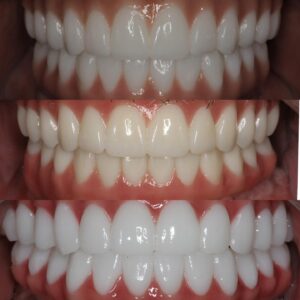
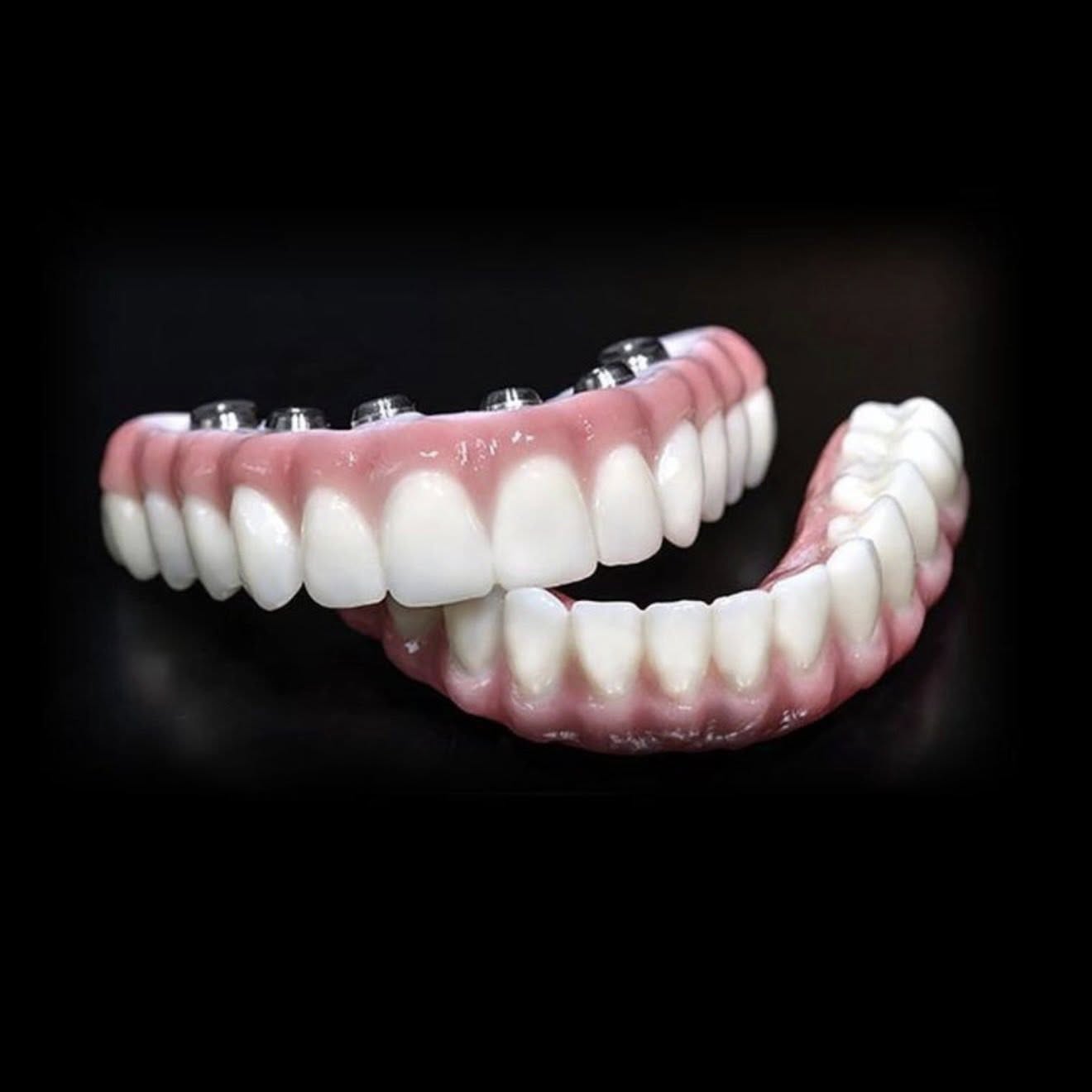
All-on-4® maintenance appointments can be easy to underestimate once your new teeth feel comfortable and everything seems to be working normally. You brush every day, clean underneath your restoration, and have no pain. So do you really need to keep going back to the dentist?
Yes.
Dental implants may replace missing or failing teeth, but they do not eliminate the need for professional dental care. In fact, maintaining the gums, bone, implants, bite, and restoration becomes an important part of protecting your investment over the long term.
Skipping one appointment does not mean your implants are suddenly going to fail. The concern is what can happen when routine maintenance turns into months or years without professional evaluation.
Problems do not always hurt when they begin.
That is exactly why these appointments matter.
Why Do All-on-4® Teeth Need Maintenance?
One of the biggest misunderstandings about All-on-4® is that artificial teeth require no maintenance because they cannot develop cavities.
It is true that the replacement teeth themselves do not decay like natural enamel.
But that is only one part of the picture.
Your dental implants are supported by living bone and surrounded by living gum tissue. Plaque and bacteria can still accumulate around those tissues. Your restoration can also experience normal wear from years of chewing.
Your bite can change.
Components can loosen or wear.
Areas underneath the restoration can become difficult to clean.
Professional maintenance gives your dental team an opportunity to evaluate the entire system, not just the visible teeth.
What Happens at All-on-4® Maintenance Appointments?
An All-on-4® maintenance visit is about much more than polishing your replacement teeth.
Your dental team may evaluate the health of the tissues surrounding your implants, check your restoration, examine your bite, and look for areas where plaque or debris is accumulating.
They may also recommend imaging when appropriate to evaluate structures that cannot be seen during a regular visual examination.
The exact maintenance process depends on your restoration and individual needs.
This is also an opportunity to talk about anything that has changed.
Maybe food has started collecting underneath one area.
Perhaps your bite feels slightly different.
Maybe you have noticed bleeding while cleaning.
Or perhaps everything feels fantastic.
All of that information is useful.
Small Problems Can Be Easy to Miss at Home
Most people judge their dental health by pain.
If nothing hurts, they assume nothing is wrong.
Unfortunately, dental problems do not always announce themselves with a dramatic toothache.
Inflammation around an implant may begin before you experience significant discomfort.
Plaque may accumulate in an area you consistently miss.
A bite issue may create uneven stress without immediately causing pain.
A component of the restoration may begin showing wear long before it actually breaks.
You cannot necessarily see these changes in your bathroom mirror.
Routine maintenance allows your dental team to look for them.
Plaque Can Still Build Up Around Dental Implants
All-on-4® teeth cannot get cavities, but plaque does not care whether your teeth are natural or artificial.
Bacteria can still accumulate around your restoration and the gum tissue surrounding your implants.
This is especially important underneath a full arch restoration.
Your toothbrush may do an excellent job on the visible surfaces while missing areas beneath the arch.
That is why your home routine may include a water flosser, specialized floss, interdental brushes, or other cleaning tools recommended by your dental team.
Professional visits provide another layer of protection.
Your hygienist can identify where you are doing well and where your routine may need improvement.
Skipping All-on-4® Maintenance Appointments Can Allow Inflammation to Progress
Healthy gum and bone tissue are important to the long-term stability of dental implants.
Inflammation around dental implants can begin in the soft tissues. If disease progresses and begins affecting supporting bone, the situation becomes more serious.
You may hear terms such as peri-implant mucositis and peri-implantitis when discussing implant health.
You do not need to memorize the terminology.
What matters is understanding that the tissues around dental implants can develop problems even though the artificial teeth cannot develop traditional tooth decay.
Regular monitoring gives your dental team a better opportunity to identify concerning changes.
Your Bite Needs to Be Checked Too
Your bite is not permanently frozen the day your All-on-4® teeth are placed.
The way your upper and lower teeth come together matters because chewing forces are transferred through the restoration to the implants underneath.
If certain areas begin receiving more pressure than intended, your dentist may want to address the issue.
This can be particularly important for people who clench or grind their teeth.
You may not even realize you are doing it.
Many people grind while sleeping and only learn about it because a dentist notices signs of wear.
Routine maintenance gives your dentist an opportunity to monitor those forces and determine whether anything needs attention.
What About the All-on-4® Restoration Itself?
Dental restorations are designed to withstand everyday function, but they are not magically immune to wear.
Think about how often you use your teeth.
Breakfast.
Lunch.
Dinner.
Snacks.
Talking.
Swallowing.
Occasional clenching.
Possibly nighttime grinding.
That adds up to an enormous number of contacts over the years.
Depending on the material and design of your restoration, your dental team may monitor for wear, chips, cracks, changes in the bite, or other concerns.
If something small can be addressed before it becomes a larger repair, that is usually preferable to discovering it after something breaks.
Professional Cleaning Can Reach Areas You Miss
Even patients who are extremely committed to oral hygiene can have difficult areas.
Maybe your water flosser does not reach one spot as effectively as you thought.
Maybe the angle underneath the back of your restoration is difficult to access.
Maybe plaque consistently collects in one location.
A professional cleaning can help address buildup while also showing you where your home routine needs improvement.
Ask questions during your appointment.
If your hygienist tells you there is buildup in one area, ask them to show you exactly where it is.
Then ask how to reach it at home.
That turns a maintenance appointment into something you can use every day.
Do All-on-4® Teeth Need to Be Removed During Every Cleaning?
Not necessarily.
Patients sometimes assume their entire restoration must be unscrewed and removed at every routine appointment.
Whether and when a fixed restoration should be removed depends on the specific restoration, your oral health, your dentist’s protocols, and whether there is a clinical reason to remove it.
Your dental team will determine what is appropriate for your situation.
Do not try to remove a fixed All-on-4® restoration yourself.
These are not removable dentures.
If the restoration needs to be removed for professional care, that should be handled by the appropriate dental professionals.
How Often Do You Need All-on-4® Maintenance Appointments?
There is no single schedule that applies perfectly to every patient.
Your dentist will recommend an interval based on your health, hygiene, implant condition, restoration, history of gum disease, smoking status, and other risk factors.
Some patients may need more frequent monitoring than others.
Follow the schedule recommended specifically for you.
If you are told to return in a certain number of months, put the appointment on your calendar while you are still at the office if possible.
The easiest appointment to forget is the one you planned to schedule “later.”
What if Your All-on-4® Teeth Feel Completely Fine?
Great.
Maintenance is not only for people experiencing problems.
In fact, the ideal maintenance visit may be fairly uneventful.
Your dental team examines everything, cleans what needs to be cleaned, confirms that the tissues look healthy, and sends you home.
That is a good appointment.
Preventive care can feel unnecessary precisely because nothing dramatic happens.
The goal is not to wait until something hurts badly enough to require urgent treatment.
The goal is to help keep things stable.
What if You Haven’t Been to the Dentist in Years?
Make an appointment.
Do not avoid going because you are embarrassed.
Maybe life became busy.
Maybe you moved.
Maybe your insurance changed.
Maybe your implants felt fine and several missed appointments gradually became several years.
Whatever happened, you cannot change the missed appointments.
You can restart your maintenance now.
Tell the dental team how long it has been and whether you have noticed any changes.
They can evaluate the current condition of your implants and restoration and recommend what happens next.
Waiting longer because you feel guilty accomplishes nothing.
Home Care Still Matters Between Visits
Professional maintenance does not replace daily cleaning.
You still need to care for your All-on-4® restoration every day.
Brush according to your dental team’s recommendations.
Clean underneath the restoration using the tools they have shown you.
Pay attention to bleeding, swelling, persistent odor, bad taste, discomfort, or changes in the way your restoration feels.
If something changes between scheduled appointments, you do not have to wait for your next cleaning.
Call the office.
Maintenance appointments are part of your routine care, not a rule that prevents you from being seen sooner when there is a concern.
Protecting a Long-Term Investment
Full arch dental implant treatment represents a significant investment.
There is the financial investment, but there is also the time involved in consultations, surgery, healing, follow-up appointments, and adapting to your new smile.
After going through all of that, maintenance is not the part to ignore.
You change the oil in a car even when the engine sounds fine.
You maintain a home before something falls apart.
The same basic principle applies here.
Your All-on-4® teeth are meant to function every single day.
Giving your dental team regular opportunities to evaluate them is part of protecting that function.
What Happens if You Skip All-on-4® Maintenance Appointments?
Skipping All-on-4® maintenance appointments does not mean an immediate problem will occur, but repeatedly missing professional care can allow plaque buildup, inflammation, bite changes, restoration wear, or other concerns to go unnoticed.
Your replacement teeth may be artificial, but the foundation supporting them is biological.
That foundation deserves regular attention.
At Full Arch Dental Implant Center in Lake Havasu City, we want patients to think beyond the day their new smile is delivered. All-on-4® is a long-term investment, and professional maintenance combined with consistent home care can help you protect your implants, restoration, gums, and the smile you worked hard to restore.
What Happens if You Skip All-on-4® Maintenance Appointments?
All-on-4® maintenance appointments can be easy to underestimate once your new teeth feel comfortable and everything seems to be working